Table of Contents
ARTICLE 07 | MANUFACTURING & QUALITY
CORE KEYWORD 3 wick scented candles bulk wholesale
3 wick scented candles bulk wholesale programs often begin with the visual appeal of a broad, substantial jar. The three flames can create a different presentation from a single-wick product, but they also make the vessel, wick spacing, wax, fragrance and burn behavior an integrated engineering problem. A buyer cannot approve a three-wick candle by multiplying a single-wick recipe. It needs a representative finished-product development and quality plan before bulk resale.
Daye Porcelain’s published capabilities cover custom ceramics, so a brand can approach it about a wide porcelain vessel and lid. The public information does not establish Daye as a finished candle manufacturer. A specialist candle partner should choose wax and wicks, fill the vessel, evaluate the completed configuration, prepare formula-based labels and release finished goods. This article focuses on the buyer’s handoff between ceramic manufacturing and candle manufacturing, with a practical inspection plan for wholesale orders.
Key takeaways
- Have the candle specialist review the proposed vessel geometry before the ceramic mold is approved.
- Test the exact finished three-wick configuration across its intended burn life, including container condition and end-of-life behavior.
- Record wick layout, fill weight, wax, fragrance, vessel revision and label for every saleable SKU.
- Inspect ceramics, filled candles and shipping packs at separate gates, then connect results by lot.
Why three wicks change the design brief
A wide vessel provides room for multiple flames, but its opening, wall profile and base determine how the wax pool and heat develop. Wick placement needs to be consistent relative to one another and to the rim and wall. Uneven placement can create an uneven melt pattern, poor appearance and a different heat exposure. The candle maker should specify its proposed layout, usable internal diameter, fill level and tolerance needs before Daye develops ceramic tooling. A larger jar also changes the packed weight and the way a retailer displays and ships the product.
Do not infer wick count solely from vessel size. Wax blend, fragrance, wick type, fill depth, intended use and the complete geometry all affect the specialist’s decision. A two-wick or single-wick version may be more suitable for a particular form. Marketing can ask for a dramatic three-flame product, but technical approval should determine whether the requested configuration is viable. The initial brief should allow the filler to reject or revise a design before bulk ceramic production.
The porcelain form should be measured at the points that matter to filling and use. Capture the internal opening, shape down the wall, base flatness, rim quality, nominal capacity, useful fill line and production variation. A decorative inner shoulder may look refined but complicate pouring or cleaning; a sculpted lid must fit real fired pieces and remain separate from the burning candle during use as directed. Mark intended label and warning positions before finalizing decoration. A large object deserves an especially careful pack trial because its mass increases the consequences of weak dividers.
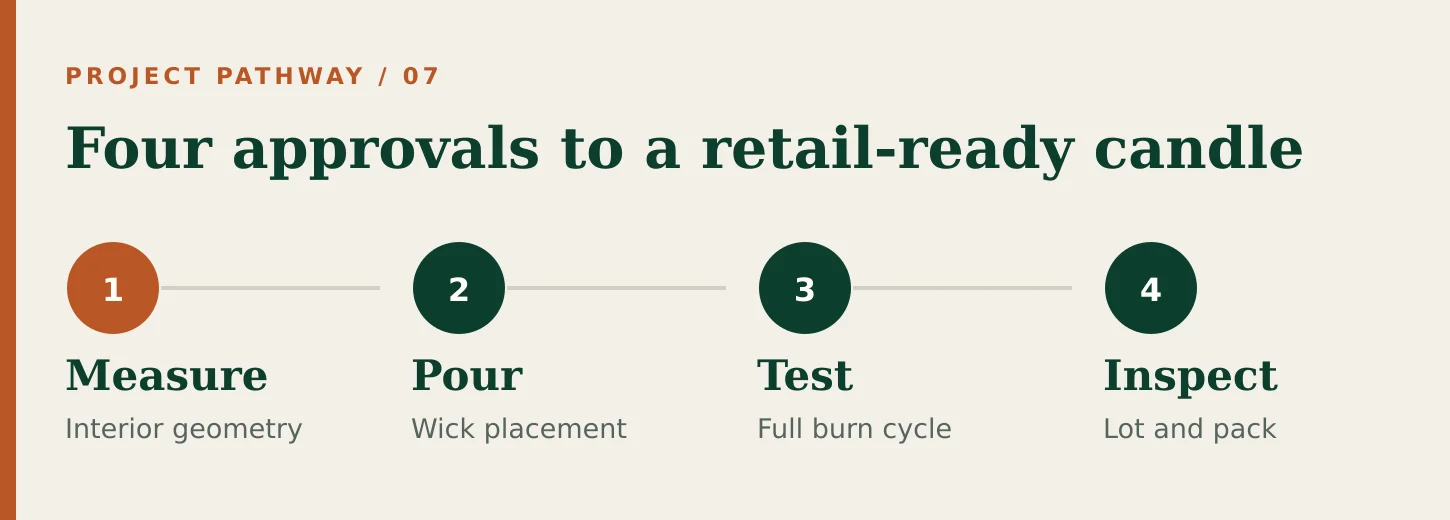
Illustrative approval sequence for the buyer, ceramic maker and finished-candle specialist.
Develop the vessel and candle in stages
First, align a dimensioned concept between brand, ceramic maker and candle specialist. Next, review fired ceramic samples made by the proposed process. Then the filler should make a small run of representative three-wick candles, including actual fragrance variants and packaging where relevant. Finally, review test evidence, artwork and a packed pilot before a production purchase order. Each gate has a different purpose; a visual mockup cannot replace a fired sample, and a fired sample cannot replace a burn-tested filled candle.
Daye’s prototyping and mold development and manufacturing information can guide the ceramic inquiry. Supply Daye with the filler-approved opening and internal profile, outer silhouette, finish, lid, decoration, expected quantity and inspection points. Ask for an approved fired master and a plan for measuring production variation. The filler should confirm which ceramic deviations could change pouring, wick layout or burn results. A mug or tableware test does not establish suitability for a three-wick candle.
Retain a sample from the filled pilot. Record ceramic revision and lot, wax, fragrance reference, wick specification and spacing, fill mass, cure and test conditions as the specialist determines, and final label revision. The exact test plan is the specialist’s responsibility and should reflect the intended market and current applicable standards. If the brand adds a luxury fragrance, a different wick or a new interior glaze, treat it as a technical change and ask what revalidation is required.
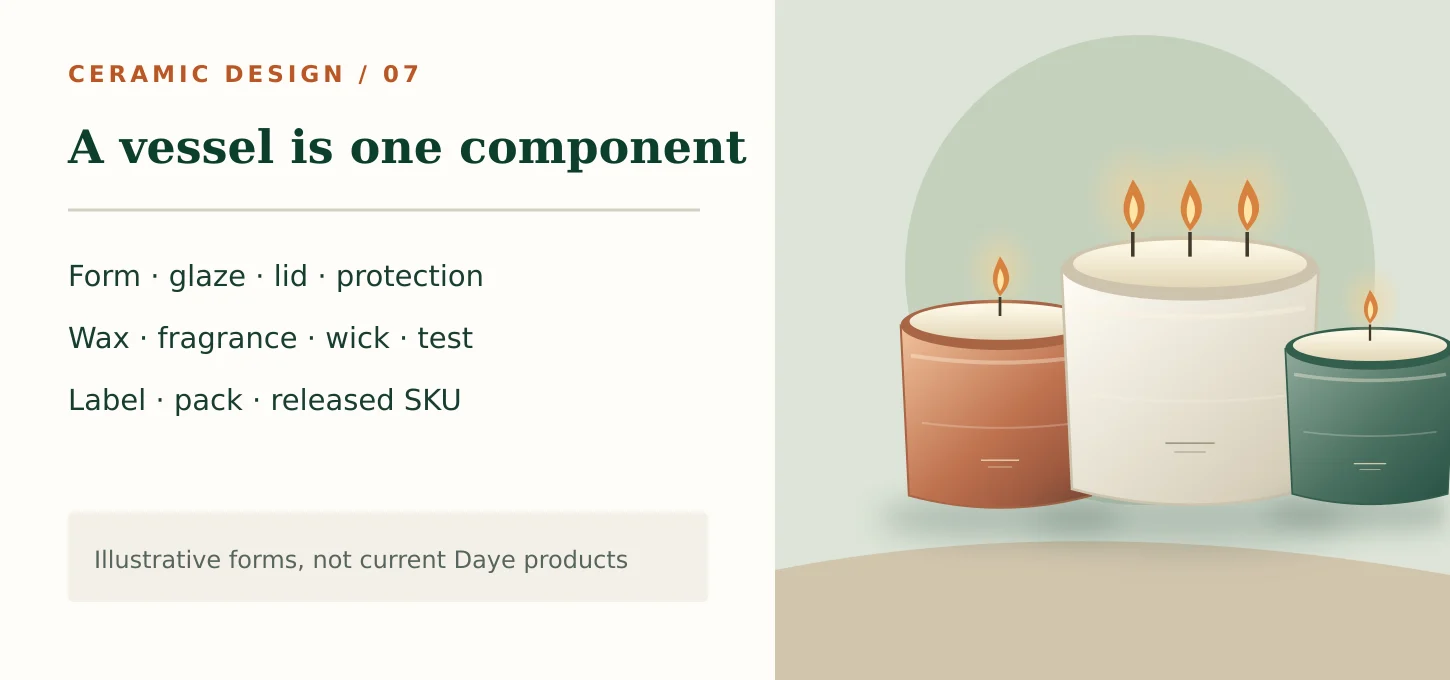
Conceptual porcelain candle-vessel illustration. These are not current Daye products.
Evaluate the whole burn, not a launch photograph
A wholesale buyer should request evidence that the finished candle was evaluated throughout its intended use. Relevant observations can include flame behavior, wick stability, melt-pool progression, visible emissions, vessel condition, external heat and end-of-life behavior. The responsible specialist determines methods and acceptance criteria against current standards and the actual product. A short demonstration that all three wicks light and smell pleasant does not show what happens later in the burn cycle.
The U.S. Consumer Product Safety Commission lists voluntary standards for candle fire-safety labeling and candle fire safety, among other candle guidance. Applicable editions and destination-market requirements should be confirmed at release. Fragrance information should be checked with the appropriate supplier documentation and market rules. IFRA standards address safe use of fragrance ingredients, but an IFRA certificate does not substitute for finished burn testing. A ceramic vessel supplier can inspect its component; the candle maker must evaluate the whole assembly.
A test report should identify the exact configuration so it can be matched to stock. If it says “large scented candle” without vessel revision, fragrance, wax and wick details, the buyer cannot know whether the shipped SKU was represented. Look for results from more than one representative unit and note how the specialist handles variability. If a result requires a design change, update the master specification and repeat the appropriate approval steps. A failed pilot is useful when it prevents a costly bulk run.
Build quality control across suppliers
Ceramic inspection begins before filling. Agree on acceptance examples for cracks, chips, sharp rims, unstable bases, internal glaze defects, decoration, shade variation and lid fit. Measure critical dimensions against the drawing and compare visual finish with a retained fired master. Daye’s quality control information is a starting point for discussing its production checks, but a candle-specific acceptance plan must be agreed with the buyer and filler. Segregate rejected vessels so they are not accidentally filled to meet an order count.
At filling, the candle specialist should control wick position and fixation, wax fill, fragrance identification, surface appearance, container cleanliness and traceable lot records. A three-wick candle makes placement particularly visible. The finished unit should be checked against an approved sample for wick alignment, fill line, correct scent label, warning legibility, lid and box. Inspection criteria should specify sampling method, defect categories and disposition. “Looks good” is not a reproducible release criterion.
Finally, test the actual shipping format. The vessel should not rub against another ceramic surface or shift inside the gift box. Check a master carton for total load, dividers, compression and handling in the intended route. For direct-to-consumer delivery, trial the parcel pack as well. Record damage by lot and route, so corrective actions address the packaging rather than silently increasing replacement stock.
|
Stage |
Record |
Release question |
|---|---|---|
|
Fired porcelain |
Drawing revision, sample, dimensions and visual limits |
Are vessels fit for the filler? |
|
Candle pilot |
Formula, wick layout, fill, burn evidence |
Is this configuration approved? |
|
Final sales unit |
Label, box, product photo and SKU |
Does stock match the approved unit? |
|
Bulk inspection |
Lot, sample plan, defects and action |
Can this batch be released? |
|
Delivery |
Carton test and damage feedback |
Can it survive the chosen route? |
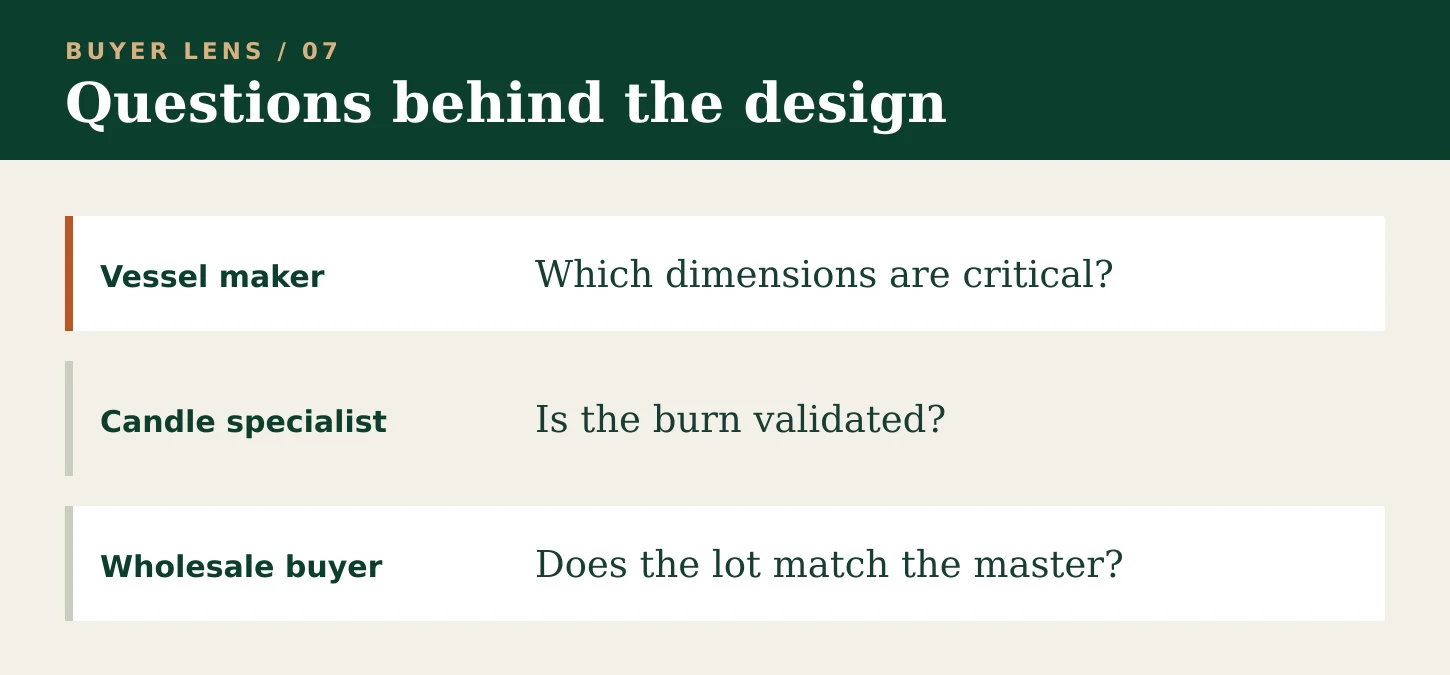
Buyer questions that guide scope, quality evidence and replenishment.
Assess labels and product claims
The final party placing the product on the market needs formula-specific and market-specific label review. In the U.S., CPSC candle guidance identifies relevant safety-labeling and fire-safety standards. In the UK, product-safety responsibilities and chemical classification can affect candle labels; GB and Northern Ireland should be assessed according to the actual destination. The vessel maker’s component label or a generic warning downloaded online does not complete the finished-candle file.
A three-wick candle may invite marketing claims about longer burn, stronger scent throw or superior performance. Those are product-specific claims that need testing under defined conditions. Three flames do not automatically mean longer life or more fragrance value than a well-designed single-wick candle. State only what the approved product evidence supports. Use photographs of the actual final candle and show the correct wick count and vessel finish. A conceptual illustration is useful for discussion but should never be passed off as stocked product.
If a retailer asks for “wholesale oem 3 wick scented candles,” clarify whether it seeks a private-label finished product, exclusive fragrance, bespoke porcelain form or all three. Contract and quote each part. Identify who owns the ceramic mold and brand artwork, who holds formula records, and who answers consumer complaints. This clarity makes the first production and subsequent reorders safer.
Quote and reorder without losing the specification
Ask for a cost breakdown: ceramic tooling and samples, fired vessel, lid, protective component pack, transit to the filler, wax, fragrance, three wicks and fixtures, filling, test work, label, gift box, inspection and final freight. A large vessel may use more material and a larger carton; its landed cost should be modeled, not inferred from a smaller candle’s unit price. Compare offers as finished saleable units with equivalent evidence and delivery terms. Minimums for the ceramic run, glaze, fragrance and box can differ.
Keep a master file for each SKU and a written change-control process. A reorder should reference the same vessel drawing, fired finish master, wax and fragrance specifications, wick layout, fill, label, box and inspection plan. If the filler proposes a substitute wick or the ceramic maker changes a glaze, document who reviews the effect and what new tests or samples are needed. Link lot numbers between empty vessels, poured candles and finished cartons where practical. A retailer needs to know that a repeat order represents the approved product, not merely a similar design.
For a Daye inquiry, submit the vessel dimensions, preferred finish and lid, planned three-wick concept, quantity, target market, pack and details of the candle specialist. Invite the filler to comment on Daye’s fired sample before tooling and bulk release. Daye’s project inquiry can begin the ceramic discussion. The responsible candle manufacturer must make the final technical decision on wick count and complete finished-product evaluation.
Keep a failed pilot as a development record
When a pilot shows excessive heat, wick migration, poor wax-pool behavior or visible container damage, preserve the sample and record the conditions. The correction might require a different wick, revised spacing, wax change or new vessel geometry. Do not treat a pass on the revised design as evidence for the original design. Retaining both versions helps the team understand why the final specification exists and prevents an old component from returning unnoticed during a later production run.
When evaluating scale-up, compare the pilot and bulk process rather than assuming identical equipment and operators yield identical results. The candle specialist should document controls for wick setting, fragrance identification, fill and cure steps as it considers appropriate. Daye should control the ceramic dimensions and finish against the approved master. Review first production units together, including the packed version, before releasing the rest of the order. If a change is required, stop and record which lots it affects. This extra gate can prevent an attractive but technically different wholesale shipment from being accepted simply because it resembles the marketing image.
FAQ
Is a three-wick candle just a larger single-wick candle?
No. Wick count, spacing, wax, fragrance and vessel geometry interact. A specialist needs to develop and evaluate the exact finished configuration.
Can Daye certify a completed three-wick candle?
Its published information establishes porcelain manufacturing, not finished candle production. It can discuss ceramic component quality; the responsible candle specialist must evaluate and document the filled product.
Can one test cover several fragrance variants?
Do not assume so. The candle specialist should determine which configurations need separate assessment and record the technical basis, especially when fragrance or wick changes.
What ceramic defects matter before filling?
Cracks, chips, unstable bases, sharp rims, internal finish problems and out-of-limit dimensions can affect quality or suitability. Define measurable acceptance criteria with the filler and vessel manufacturer.
What should appear on a bulk purchase order?
Identify each SKU and quantity, ceramic revision, finish master, formula and wick reference held by the specialist, label and box revision, inspection criteria, test evidence, delivery terms and change approval route.