CUSTOM PORCELAIN TABLEWARE
Everyday pieces.
One coherent collection.
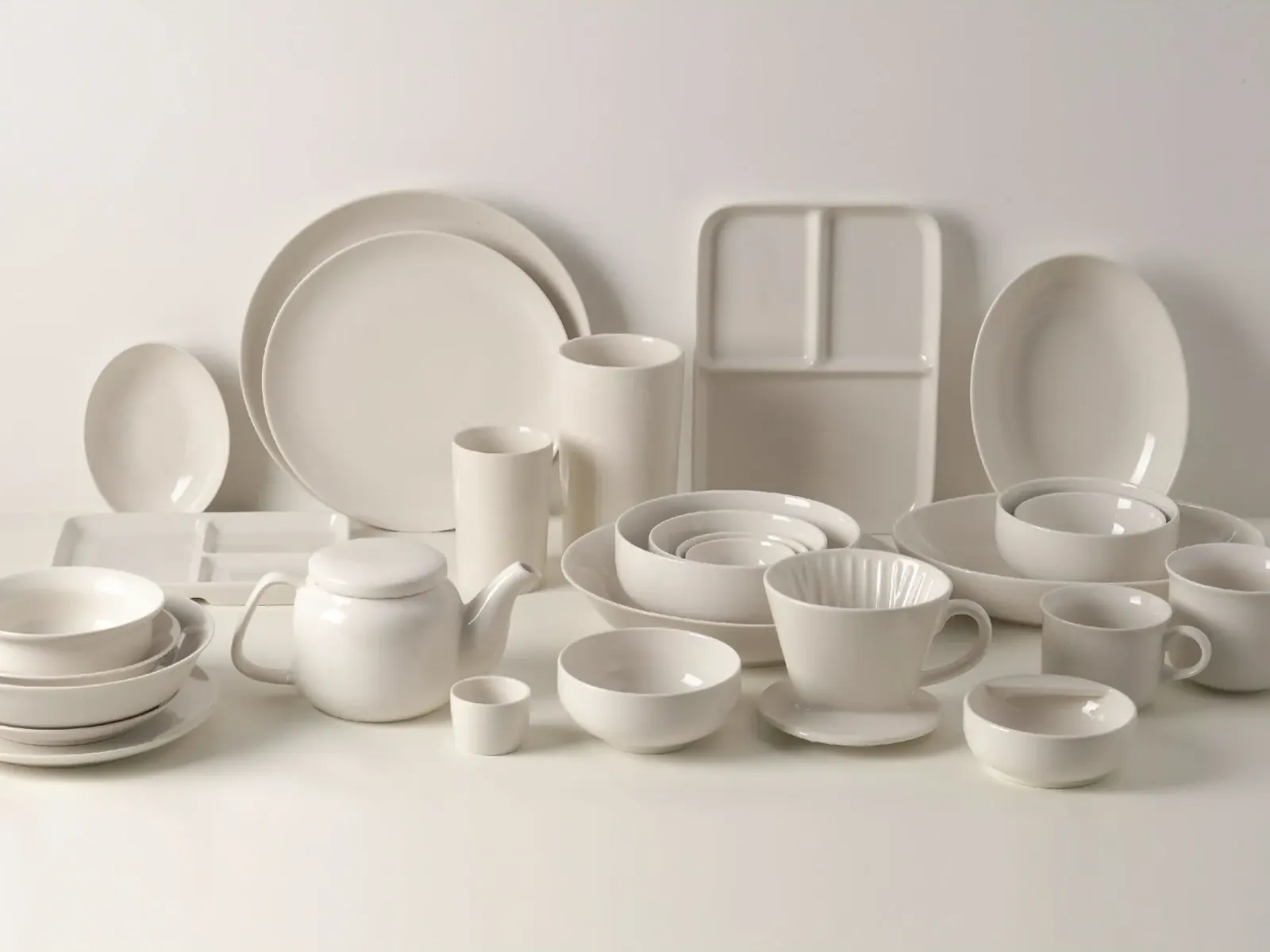
Coordinate plates, bowls, cups and serving pieces around your brand, use case and recurring purchasing program.
WHAT YOUR BUYING TEAM NEEDS TO KNOW
Develop the range
as one collection.
01
Range architecture
Define the required pieces and sizes, how they are sold and which items must coordinate as a set.
02
Form & finish
Review rims, profiles, feet and glaze appearance across the full range rather than approving one item in isolation.
03
Supply program
Share launch quantities, set configurations and expected replenishment so the scope reflects the purchasing plan.
01 / PRODUCT DEVELOPMENT
The right mark.
In the right place.
The profile shows logo engraving on a porcelain saucer. A brand mark must be reviewed on the actual surface, with its position and scale defined for each piece.
Define the decoration method, artwork revision and acceptance reference across the range. Check the complete set alongside the individual item samples.

02 / MANUFACTURING DETAIL
Simple appearance.
Careful execution.
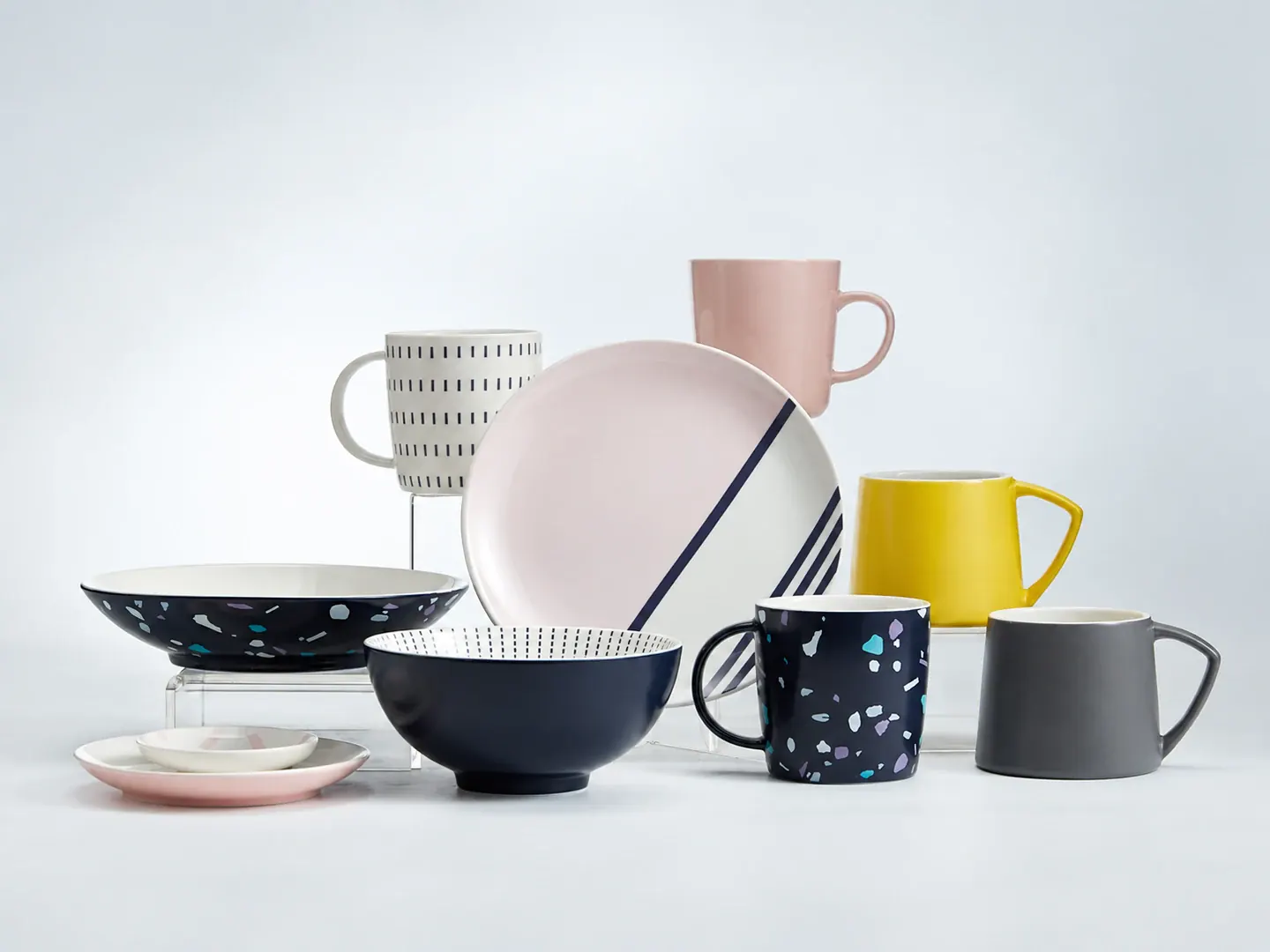
Minimal tableware makes the profile, rim and glaze especially visible. A clean surface still requires a clear specification and inspection reference.
Review the finish, size relationships, handling and packing of each SKU. For recurring programs, retain the approved references and record any requested changes.
BUYER’S WORKING CHECKLIST
A brief with fewer unknowns.
| Decision | What to define | Why it matters |
|---|---|---|
| SKU list | Piece type, dimensions and quantities | Defines the full collection and order mix. |
| Set composition | Open stock, boxed sets and mixed cartons | Aligns production with the sales format. |
| Appearance | Glaze tone, profile and visual references | Creates a coherent collection standard. |
| Use | Home, hospitality or retail requirements | Guides handling and performance review. |
| Packing | Protection, presentation and carton labels | Supports correct delivery of a multi-piece range. |
FROM REVIEW TO RELEASE
A clear route to approval.
01
Define the family
List the required forms, variants, quantities and use conditions.
02
Develop the sample
Review dimensions, structure, finish and decoration on a physical product.
03
Confirm acceptance
Agree the reference sample, test scope and packing configuration.
04
Plan production
Review the order mix, release requirements and production schedule.
03 / BEFORE THE FIRST ORDER
Approve the product.
Plan the delivery.
A product specification should connect the approved sample with the order: artwork revision, variant quantities, packing arrangement and labeling all need to agree.
Share your destination market, required arrival window and any retailer or distribution requirements early. The quotation and schedule should reflect the complete scope.
Ready for the whole range.
01 / Piece list and set configuration
02 / Separation between ceramic surfaces
03 / Carton weight and handling
04 / Pack sample and labeling approval
PROCUREMENT QUESTIONS
The details worth asking.
Can we develop a coordinated set?
Yes. Provide the piece list, dimensions, finish direction and set configurations so the collection can be reviewed as a whole.
Can we use the MUJI reference as a standard product?
The image is a project reference. Your product scope, design rights, dimensions and finish must be agreed separately.
How are different sizes approved?
Review the individual pieces and the complete set, recording critical dimensions and the visual relationships that should remain consistent.
What should we send for a quotation?
Include the drawings or reference images, dimensions, target quantities, finish, packaging and intended market. Add the target launch date and any required test or inspection scope.
CONTINUE YOUR EVALUATION
Build the complete picture.
01
Manufacturing
Understand the production route and where consistency is controlled.
Explore manufacturing
03
Sampling & tooling
Resolve product details before production commitment.
Explore sampling & tooling
LET’S BUILD YOUR NEXT PROGRAM
A clearer brief.
A better starting point.
Send your design files, estimated quantities and target market. We will use your brief to define the development and production scope.