DAYE INSIGHTS / KNOWLEDGE FOR BUYING TEAMS
Know what to ask. Know what to approve.
Practical guides to porcelain sourcing, product development, materials and manufacturing. Explore the topics that matter to your next collection.
Showing 1–6 of 39 articles
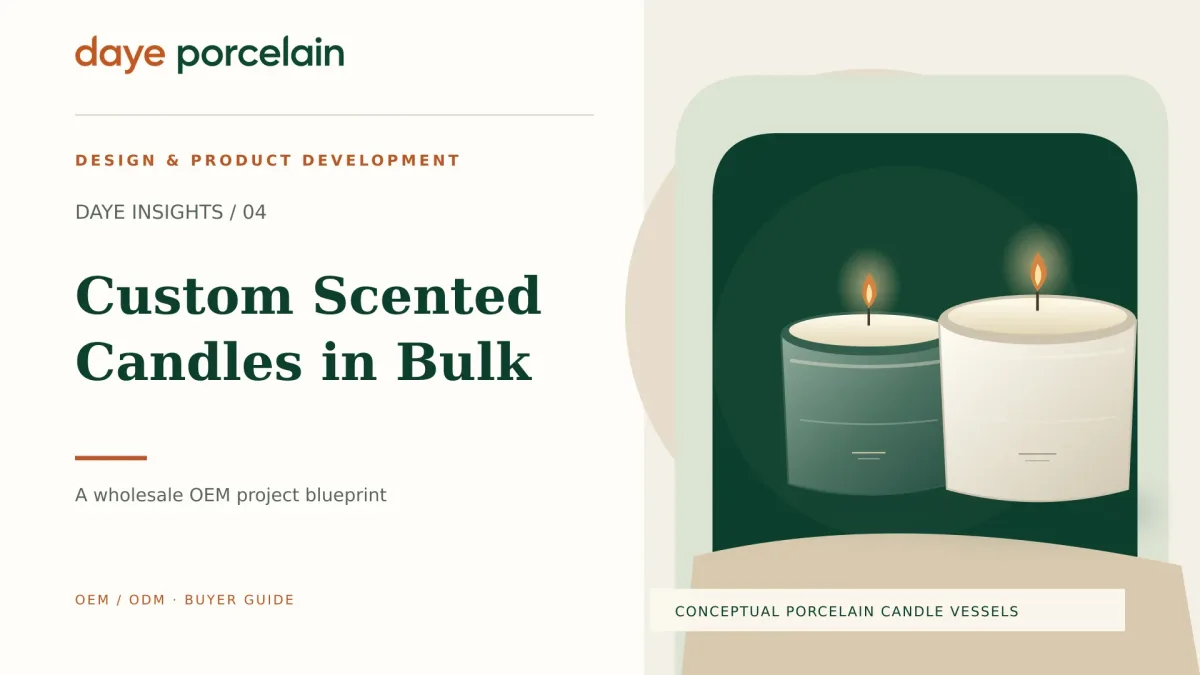
Custom Scented Candles in Bulk Wholesale: An OEM Project Blueprint
ARTICLE 04 | DESIGN & PRODUCT DEVELOPMENTCORE KEYWORD custom scented candles in bulk wholesaleCustom scented candles in bulk wholesale are a coordinated product-development project, not a logo printed on a stock jar…
Read article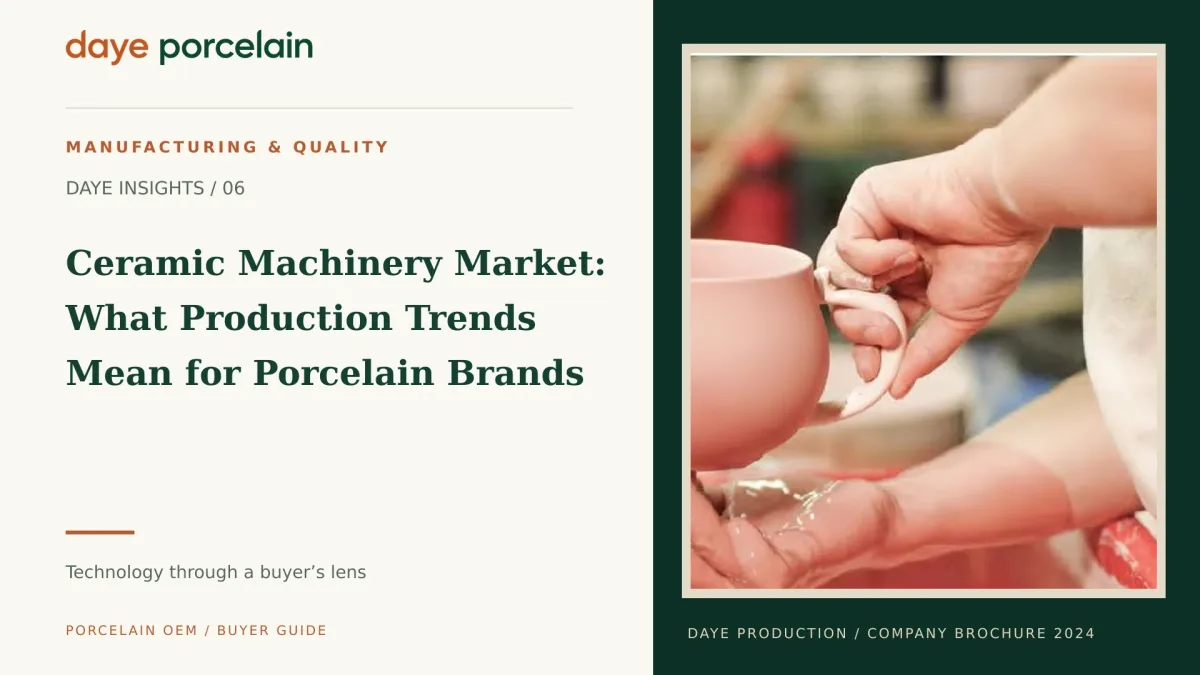
Ceramic Machinery Market: What Production Trends Mean for Porcelain Brands
ARTICLE 06 | MANUFACTURING & QUALITYCORE KEYWORD ceramic machinery marketThe ceramic machinery market is often discussed in terms of new lines, automation, energy, and throughput. A brand buying custom porcelain mugs…
Read article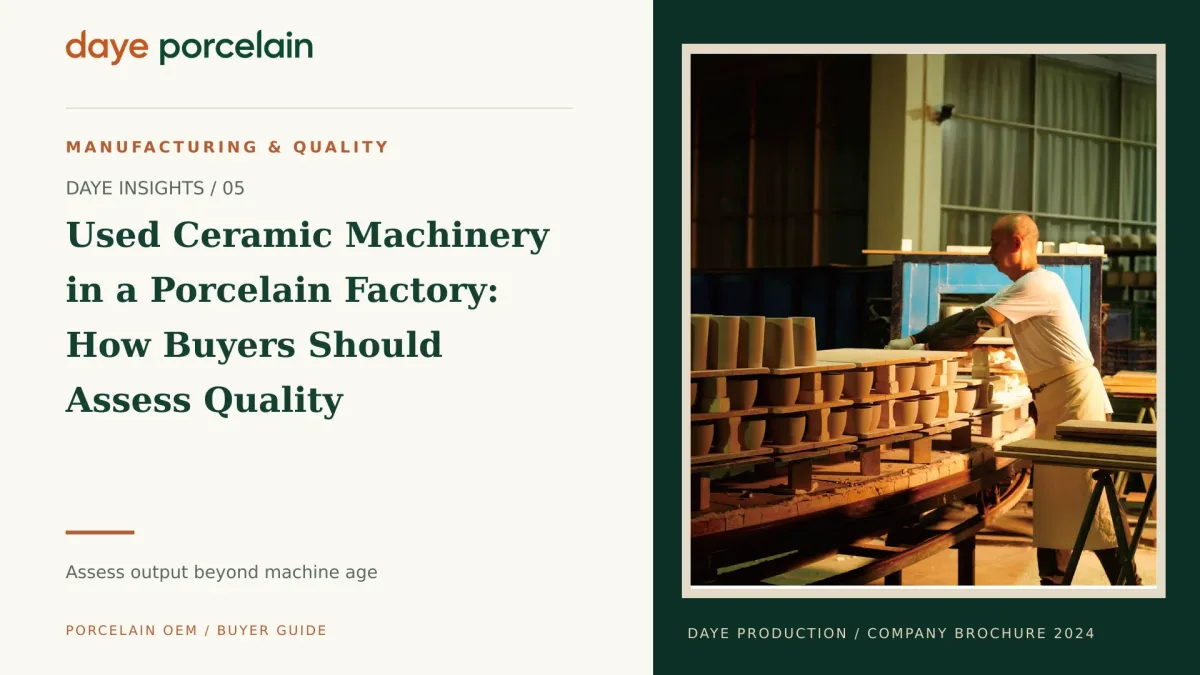
Used Ceramic Machinery in a Porcelain Factory: How Buyers Should Assess Quality
ARTICLE 05 | MANUFACTURING & QUALITYCORE KEYWORD used ceramic machineryUsed ceramic machinery is common enough in industrial sourcing discussions that buyers sometimes treat equipment age as a shortcut for judging a…
Read article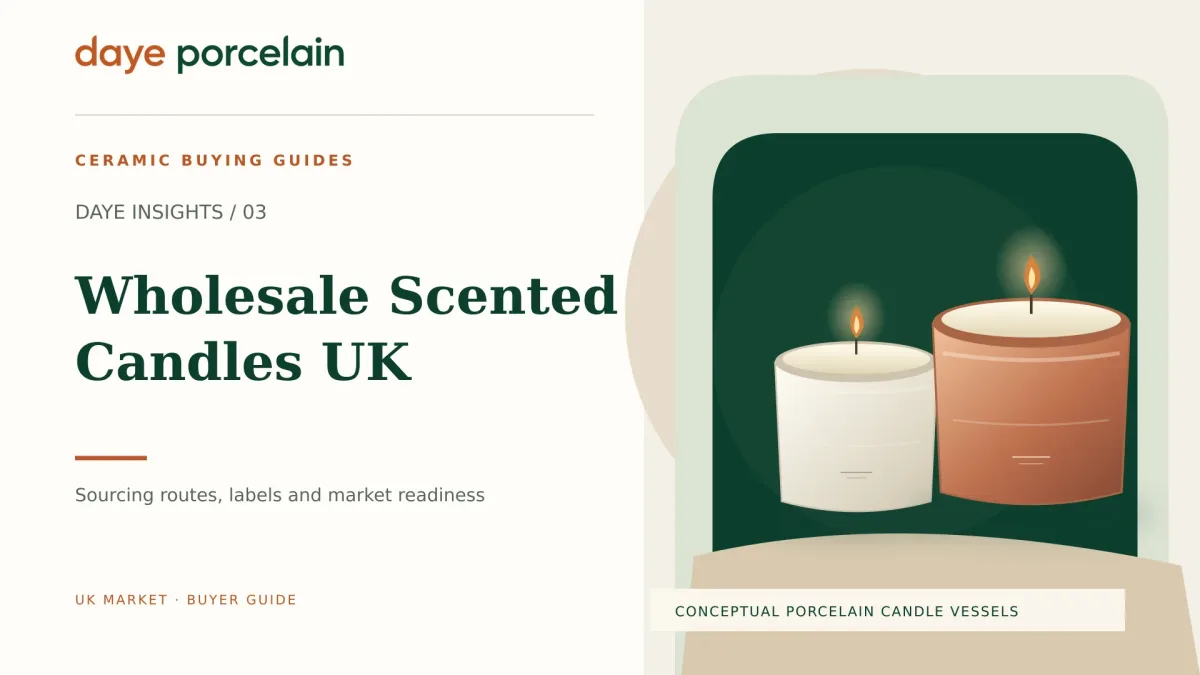
Wholesale Scented Candles UK: A Buyer’s Guide to Sourcing and Product Readiness
ARTICLE 03 | CERAMIC BUYING GUIDESCORE KEYWORD wholesale scented candles UKWholesale scented candles UK buyers look for may come from a domestic stockist, a private-label candle maker, or a coordinated supply chain…
Read article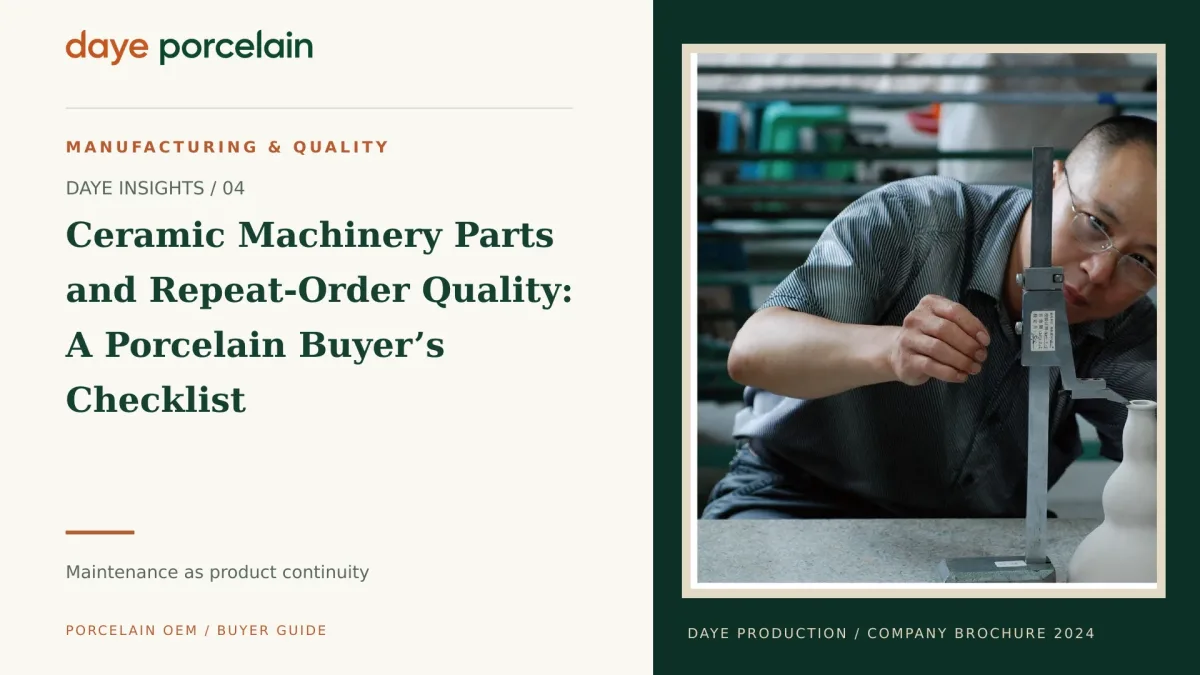
Ceramic Machinery Parts and Repeat Order Quality: A Porcelain Buyer’s Checklist
ARTICLE 04 | MANUFACTURING & QUALITYCORE KEYWORD ceramic machinery partsCeramic machinery parts usually appear in a brand buyer's thinking only when a production line stops. Their influence can be more gradual. Worn…
Read article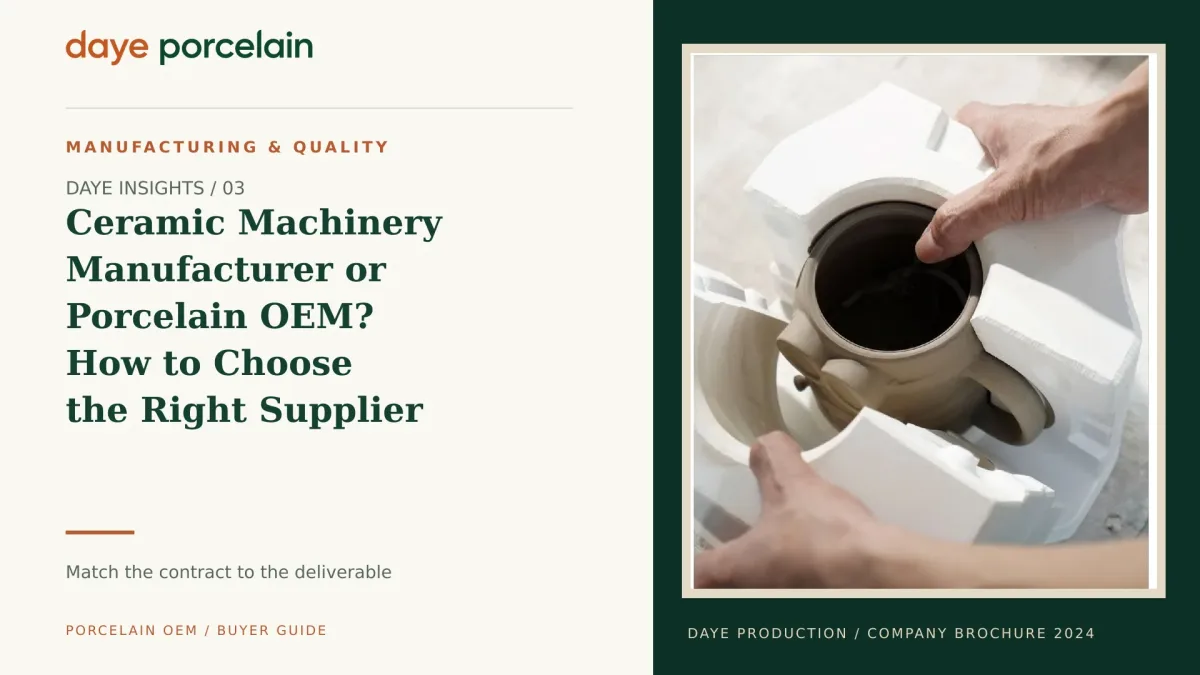
Ceramic Machinery Manufacturer or Porcelain OEM? How to Choose the Right Supplier
ARTICLE 03 | MANUFACTURING & QUALITYCORE KEYWORD ceramic machinery manufacturerA search for ceramic machinery manufacturer often hides two very different procurement tasks. One buyer needs a jiggering machine, casting…
Read article01 / START YOUR EVALUATION
Three questions before the quotation.
01
What are we buying?
Define the form, finish, quantities and sales channel. A clear SKU list is more useful than a broad request for a ceramic product.
02
What must be proven?
Separate factory qualification, product inspection and performance testing. Each addresses a different purchasing question.
03
What must be approved?
Identify the sample, artwork, packing and review milestones that govern production release.
02 / MANUFACTURING KNOWLEDGE
Understand the route
behind the product.
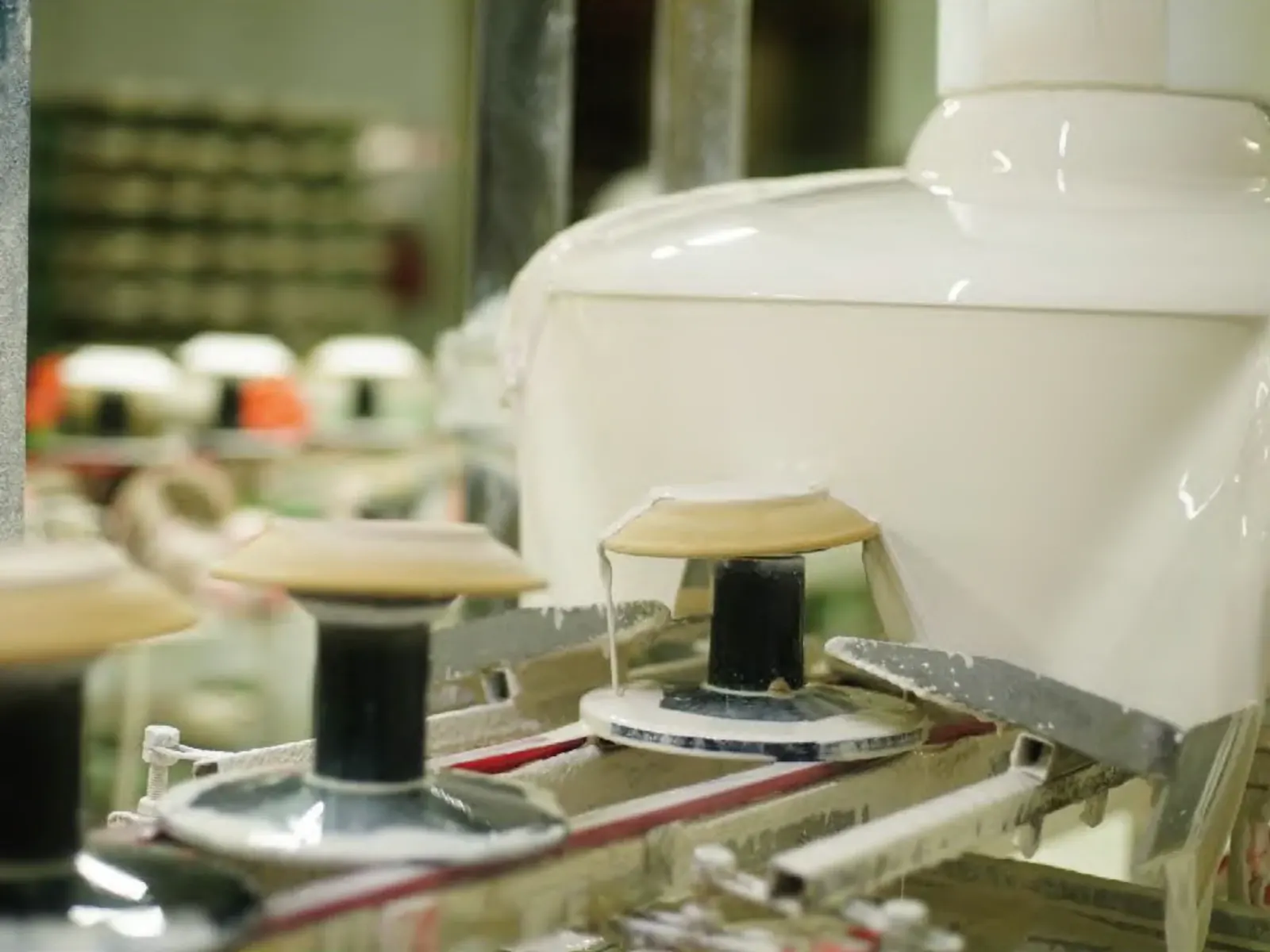
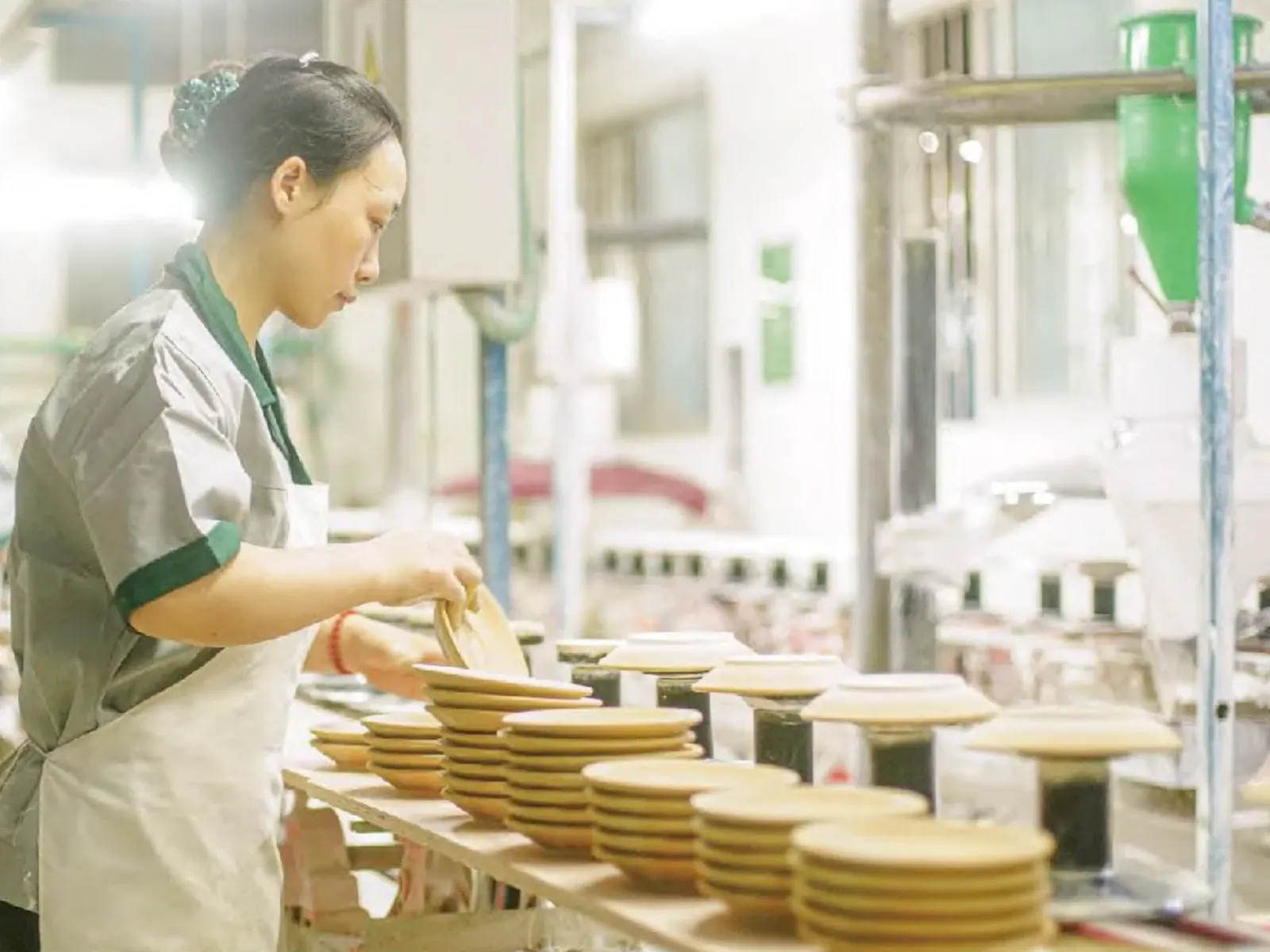
Forming, assembly, glazing, firing and decoration contribute different things to the finished object. Knowing the route helps a buyer ask where a critical feature is created and checked.
Explore the manufacturing page for a process overview and the quality page for the relationship between reference samples and inspection.
BUYER’S WORKING CHECKLIST
Build a supplier review checklist.
| Decision | What to define | Why it matters |
|---|---|---|
| Capability | Product route, equipment and specialist operations | Tests whether the brief fits the manufacturing offer. |
| Development | Tooling, samples and revision control | Clarifies the work before mass production. |
| Quality | Acceptance standard and inspection plan | Connects expectations with a review method. |
| Testing | Sample identity, method and acceptance criteria | Supports specific product claims. |
| Delivery scope | Packing, labels and release requirements | Completes the production brief. |
CONTINUE YOUR EVALUATION
Build the complete picture.
01
Sampling & tooling
Resolve product details before production commitment.
Explore sampling & tooling
02
Testing laboratory
Understand the questions behind a product test report.
Explore testing laboratory
03 / DESIGN & DEVELOPMENT
The sample is
a decision tool.
A physical sample makes the form, handling, finish and decoration tangible. Consolidated feedback helps separate essential corrections from optional changes.
A physical sample gives the team a shared reference for shape, finish and handling. Record your approval criteria and any required revisions against the final sample.
04 / PRODUCT GUIDES
Prepare a category-specific brief.
01
Custom Ceramic Mugs
Develop branded mugs for promotional programs, retail collections and repeat coffee supply.
Read the product requirements
02
Coffee Cups & Saucers
Coffee service porcelain for roasters, café groups and hospitality buyers, with coordinated form, finish and repeat-order requirements.
Read the product requirements
03
3D & Character Mugs
Specialist porcelain development for licensed characters, sculptural merchandise and design-led brand collections.
Read the product requirements
04
Special-Structure Ceramic Cups
Review double-wall and other special ceramic constructions through product-specific feasibility, sampling and testing.
Read the product requirements
05
Custom Porcelain Tableware
Coordinate plates, bowls, cups and serving pieces around your brand, use case and recurring purchasing program.
Read the product requirements
PROCUREMENT QUESTIONS
The details worth asking.
Can these guides replace our product specification?
No. They help you prepare the right questions. Your project still needs an agreed specification, approved sample and relevant evidence.
Where can we ask a specific technical question?
Use the project form and include the drawing, intended use and the decision you need help with. That context makes the review more useful.
Are portfolio claims automatically valid for a new design?
No. Each new design requires its own development and verification scope. Treat references as evidence of experience, not a substitute for approval.
LET’S BUILD YOUR NEXT PROGRAM
A clearer brief.
A better starting point.
Send your design files, estimated quantities and target market. We will use your brief to define the development and production scope.