PORCELAIN QUALITY CONTROL
Quality needs
a shared standard.
Incoming, in-process, final and outgoing checks connect the approved product with the order delivered to your team.
WHAT YOUR BUYING TEAM NEEDS TO KNOW
Agree the standard.
Control the result.
01
Define acceptance
Agree appearance, dimensions, component fit and packing requirements using the approved sample and written specification.
02
Inspect at stages
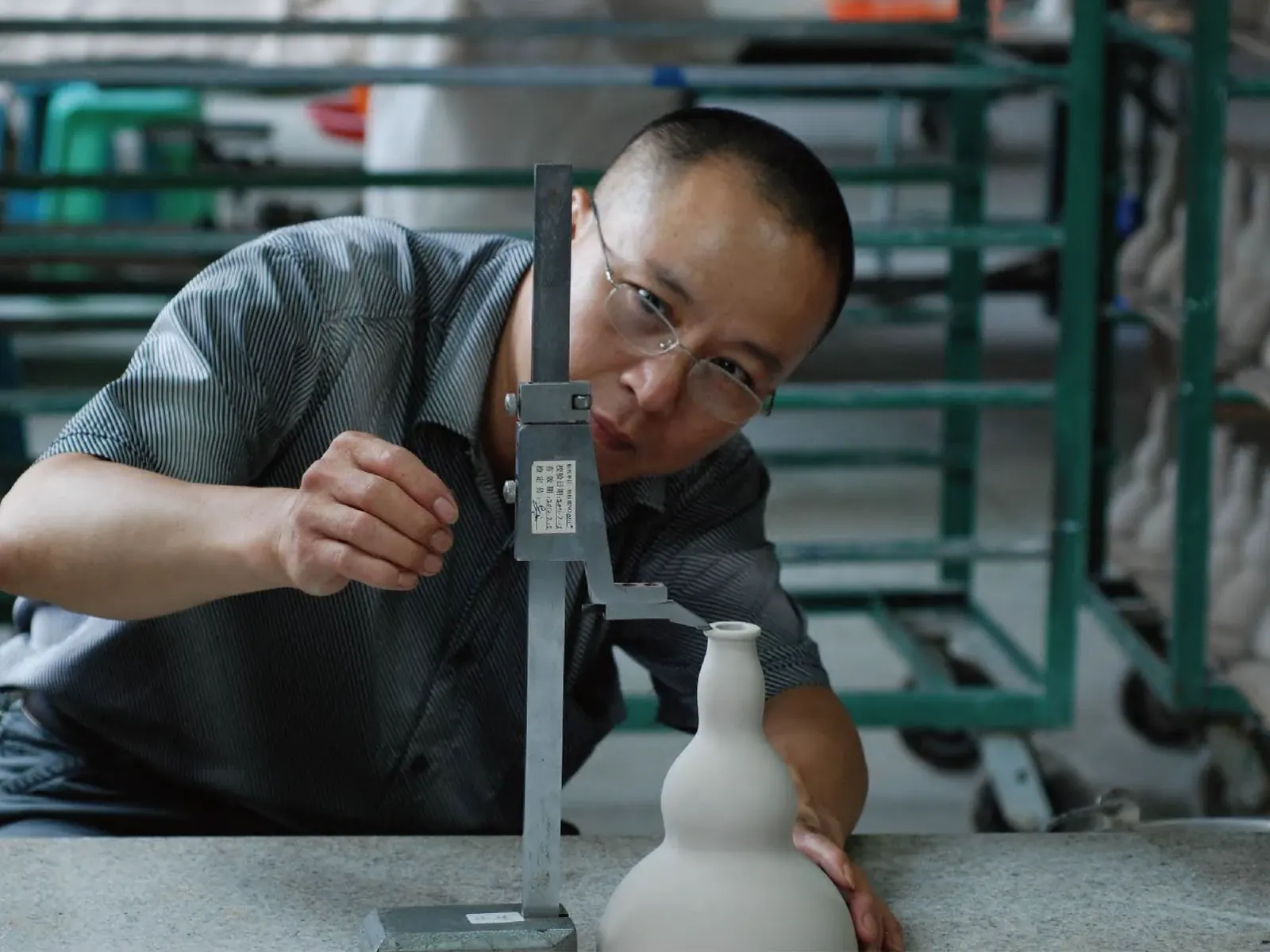
The profile documents IQC, IPQC, FQC and OQC. Review how those stages apply to your particular product.
03
Connect testing
Keep product performance tests distinct from visual inspection, and define both before production release.
01 / IN-PROCESS REVIEW
Catch issues while
they can be addressed.
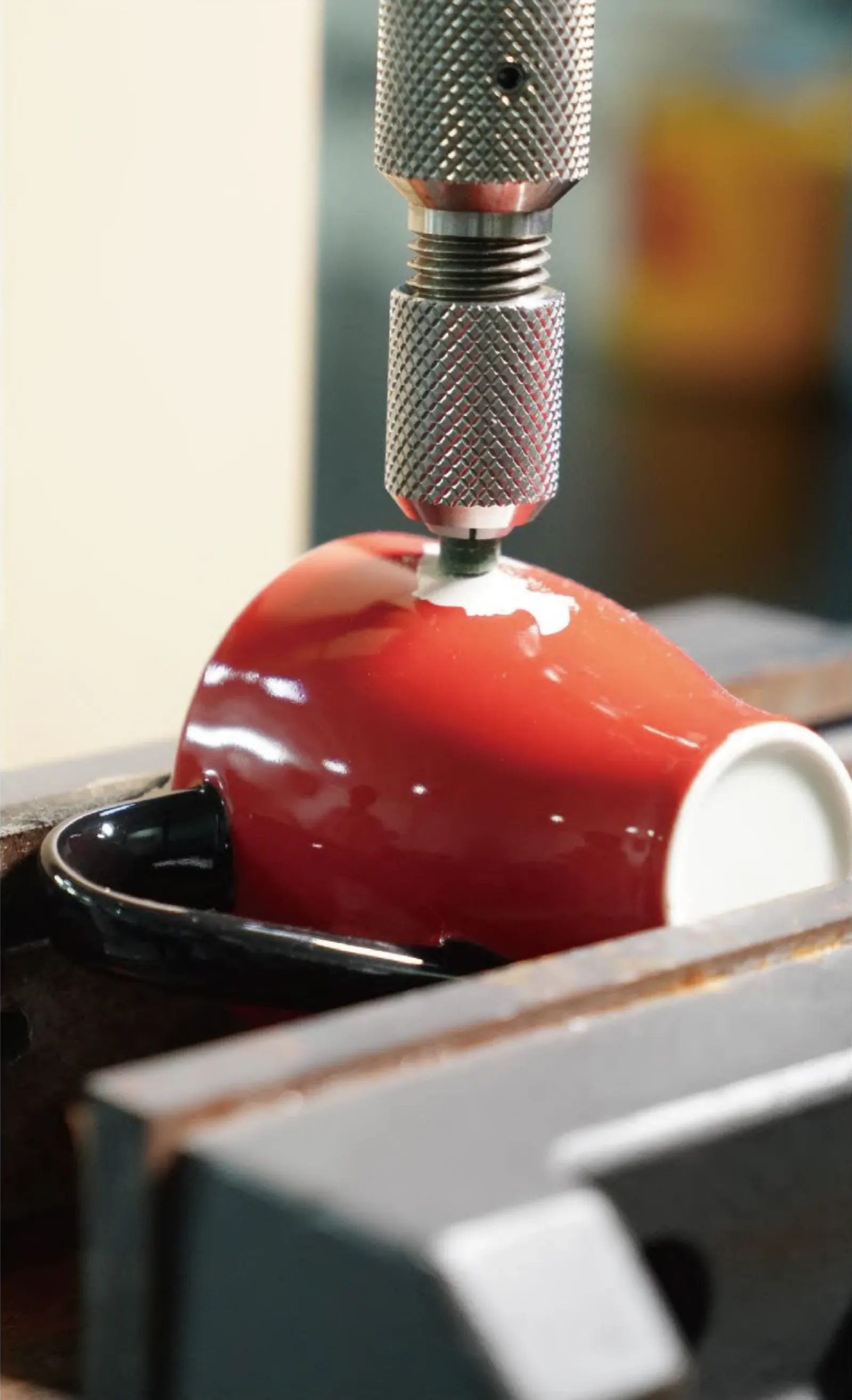
Material preparation, forming, assembly, glazing and decoration each introduce different inspection needs. The profile includes white-body, semifinished and finished-product inspection stages.
A buyer’s specification should identify the critical features at each stage, from the rim and handle to visible glaze surfaces and artwork registration.

02 / FINISHED PRODUCT
The approved sample
remains the reference.
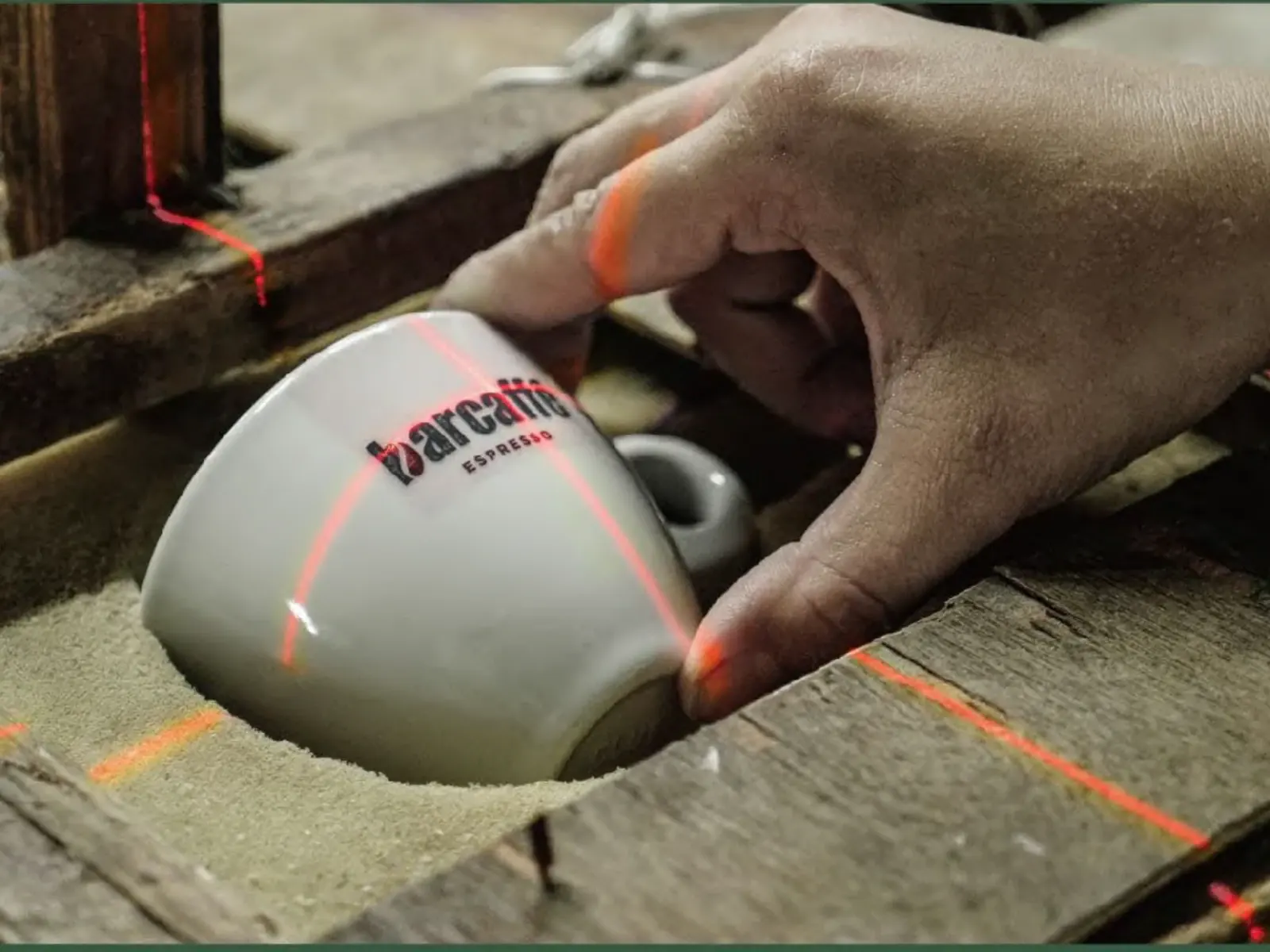
Final review brings together the shape, finish, decoration and packing requirements. For a coordinated range, assess differences between SKUs as well as consistency within one item.
Agree defect descriptions and the inspection arrangement in advance. Where sampling plans or third-party inspection are required, record them in the purchase specification.
BUYER’S WORKING CHECKLIST
A brief with fewer unknowns.
| Decision | What to define | Why it matters |
|---|---|---|
| Appearance | Glaze, visible surfaces, decoration and color range | Creates a common visual acceptance reference. |
| Dimensions | Critical measurements and agreed tolerances | Makes dimensional decisions measurable. |
| Assembly | Handle, lid, accessory and component fit | Focuses checks on use and handling. |
| Inspection plan | Sampling approach and defect definitions | Avoids differing interpretations at final review. |
| Packing | SKU labels, count and protective arrangement | Connects product quality with order accuracy. |
FROM REVIEW TO RELEASE
A clear route to approval.
01
Set the standard
Confirm the product sample and the written acceptance requirements.
02
Review the process
Identify the points where critical characteristics should be checked.
03
Verify the result
Complete the agreed inspection and product test scope.
04
Release the order
Review the required records and packing before shipment preparation.
03 / PERFORMANCE EVIDENCE
Inspect the surface.
Test the use case.
Visual inspection cannot establish every performance claim. The in-house laboratory shown in the profile supports physical testing such as thermal shock, water absorption and handle strength.
Select the test scope for the product and its intended market. Ask for reports that identify the sample, method and applicable acceptance criteria.
PROCUREMENT QUESTIONS
The details worth asking.
Do you use one quality standard for every order?
A project needs its own approved specification. Product type, intended use and buyer requirements determine the inspection and testing scope.
Can our inspection company be involved?
Discuss the required inspection arrangement, access and timing with the project team, and record those requirements before production.
Does inspection establish food-contact compliance?
No. Visual inspection and market-specific product compliance are different requirements. Define the applicable laboratory evidence for your target market.
How should sample approval be documented?
Keep a clear reference to the approved physical sample, drawings, artwork revision, finish references and any agreed tolerance or defect criteria.
CONTINUE YOUR EVALUATION
Build the complete picture.
01
Testing laboratory
Review the physical tests documented in the factory profile.
Explore testing laboratory
02
Factory audits
Evaluate supplier documentation separately from product tests.
Explore factory audits
03
Sampling & tooling
Resolve product details before production commitment.
Explore sampling & tooling
LET’S BUILD YOUR NEXT PROGRAM
A clearer brief.
A better starting point.
Send your design files, estimated quantities and target market. We will use your brief to define the development and production scope.