Table of Contents
ARTICLE 04 | MANUFACTURING & QUALITY
CORE KEYWORD ceramic machinery parts
Ceramic machinery parts usually appear in a brand buyer’s thinking only when a production line stops. Their influence can be more gradual. Worn molds, inconsistent fixtures, glazing components, kiln furniture, or handling parts can contribute to shifts that show up in a mug’s shape, finish, or reject rate. Not every visible defect is a machinery fault: body preparation, drying, artwork, and operator decisions also matter. But a supplier’s ability to maintain and replace critical parts is part of its ability to repeat an approved SKU.
This is a buyer’s guide to supply continuity, not a spare-parts catalog. Daye Porcelain publicly offers custom ceramic products, with documented manufacturing and quality processes; it is not presented as a vendor of ceramic machinery parts. A brand, trading company, or distributor can use the questions here to discuss preventive maintenance and change control with any porcelain OEM, including Daye, without asking for proprietary technical details that are not needed to approve the goods.
Key takeaways
- Identify product characteristics that could drift when molds, tooling, handling, or application components change.
- Ask how the factory detects a trend before defects reach packing or shipment.
- Require a new product approval when a part replacement changes a controlled dimension or appearance.
- Build delivery plans around accepted output, maintenance windows, and a realistic recovery route.
Why parts matter to someone buying mugs
An equipment supplier’s service program is designed to preserve plant performance. SACMI-SAMA explicitly offers spare parts, preventive maintenance, technical assistance, and upgrades for its equipment. This does not establish what equipment Daye owns. It establishes a general operational principle: machine condition and its service plan affect a factory’s ability to run a stable process. The porcelain buyer’s task is to translate that principle into product evidence.
|
Production area |
Possible change to watch |
Buyer-facing evidence |
|---|---|---|
|
Mold and forming tool |
Shape, rim, wall or base variation |
Finished measurements, mold revision, master comparison |
|
Joining and trimming fixture |
Handle placement, seam, foot finish |
Visual standard and functional sample checks |
|
Glaze application |
Coverage, thickness appearance, drips |
Approved finish range and inspection records |
|
Kiln furniture and transport |
Marks, warpage, contact damage |
Fired-lot checks and defect trend |
|
Decoration tooling |
Logo registration or color variation |
Artwork proof and retained approved sample |
|
Packing equipment or insert |
Breakage or wrong pack-out |
Packed sample, carton trial, final count |
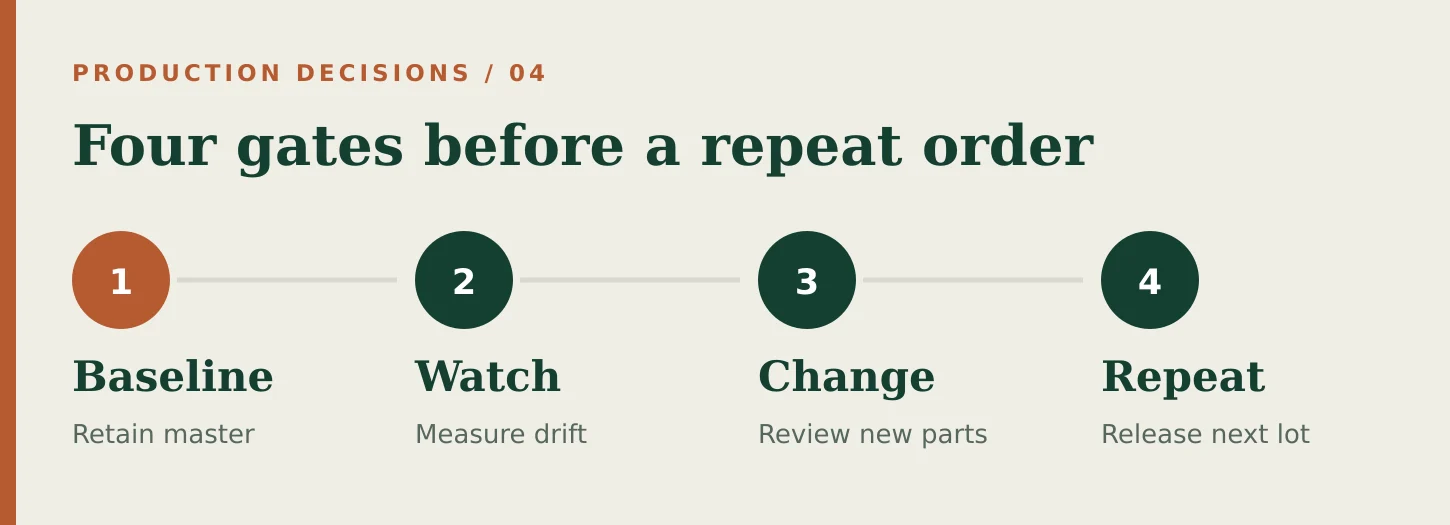
Illustrative decision sequence for product development and repeat-order control.
The matrix lists potential relationships to investigate, not a diagnostic rule. A thin glaze may result from material or application settings rather than a failing part; a warped cup may have several causes. Ask the factory to investigate with its process team. The buyer should describe the observable result and acceptance limit, then request the correction and its effect on the approved product. This keeps a commercial quality discussion precise without pretending the importer can diagnose a kiln remotely.
Establish the approved baseline
Before monitoring change, define what “same mug” means. Keep a signed fired and decorated master from the intended route. Record the drawing revision, actual dimensions and useful capacity, body and glaze identifiers if the factory can disclose them, artwork file and placement, surface finish range, lid or saucer relationship, care claims, and packaging. A sample without a written specification can become a source of disagreement: one person sees a minor glaze nuance while another sees an unacceptable shelf mismatch.
Daye’s prototyping and mold development offer makes tooling an explicit early conversation. For a custom mug, ask how mold identity and revisions are recorded, what the tooling fee covers, whether replacement tooling is included, and how a worn mold is evaluated against the signed master. Tool life should not be presented as one universal number; it depends on the material, process, design, maintenance, and acceptance tolerances. The commercial agreement can instead state how a replacement will be approved.
For a long-running assortment, reserve the right to compare a new lot with prior stock. Retailers notice differences when replacement mugs sit next to the old shade on one shelf. Ask the factory to retain a master and to flag any planned change in mold, body, glaze, firing, decoration, or pack. A maintenance replacement that reproduces the approved output may need a documented check, while a changed form or material may need full sampling and testing. Define the distinction before urgency compresses the decision.
Detect drift at the right stage
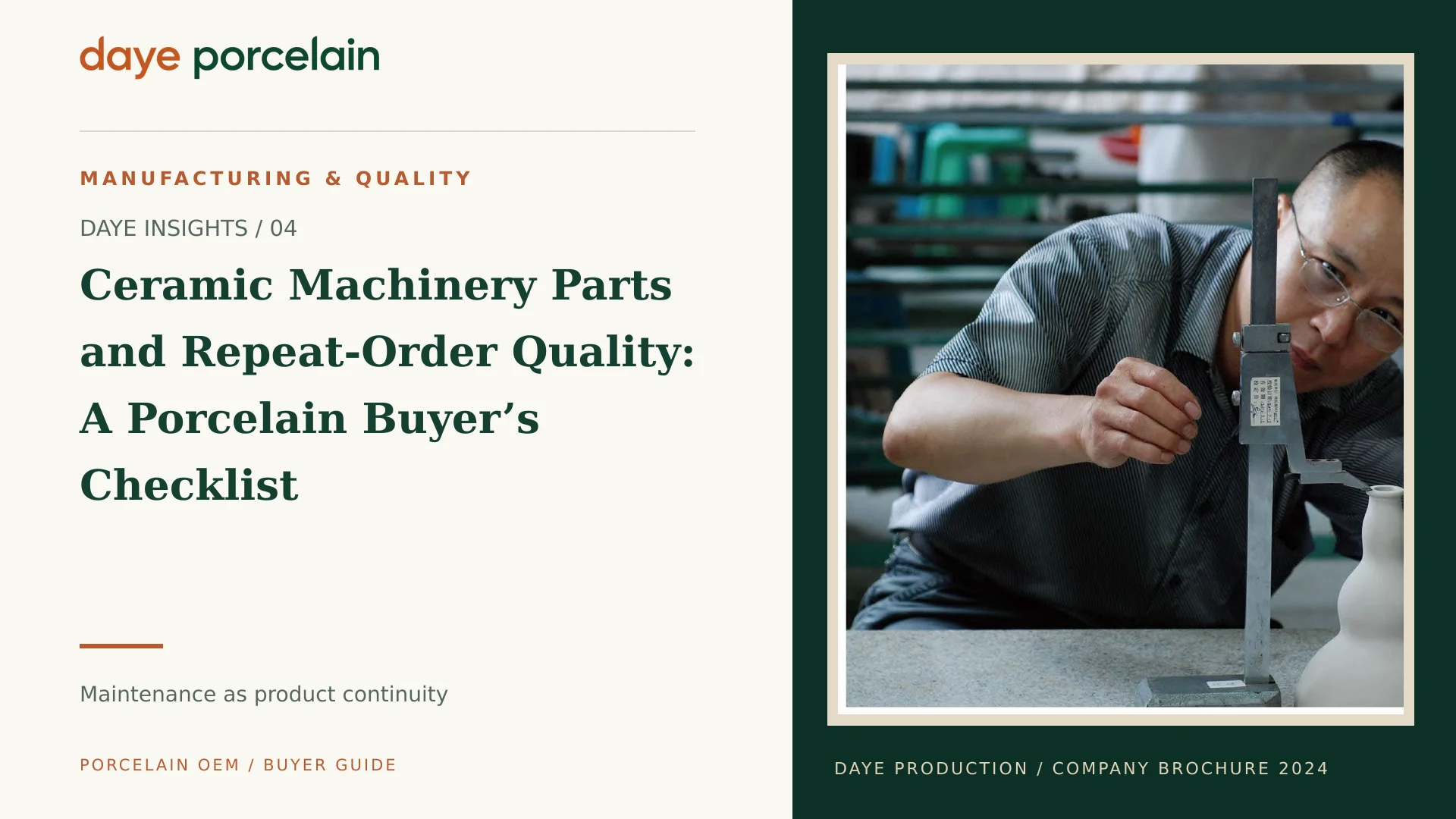
Final inspection catches some faults, but it may waste a completed batch if a trend began much earlier. Discuss checks at forming, after drying or biscuit firing, after glaze firing, after decoration, and before packing. Daye’s 2024 company brochure depicts in-process and final inspection stages and lists testing activities. Ask what current checks apply to your SKU, how frequently a sample is measured, and what happens when a result approaches a tolerance limit. The factory owns the control method; the buyer needs a credible report and escalation path.
Use a small number of critical dimensions rather than an impractical drawing filled with tight tolerances. A lid fit, opening diameter, base stability, or handle clearance may matter more than an invisible cosmetic dimension. Pair measurements with visual criteria: glaze coverage, pinholes, seams, specks, color range, and decoration registration. Define where a small variation is allowed and where a defect is unacceptable. This helps the supplier distinguish a process trend from normal handmade character.
Trend reports should be understandable. A count of defects by type and stage, examples of accepted and rejected pieces, and a note on corrective action often tell the buyer more than an overall “pass” label. If rejects rise after a tooling change, ask whether the plant has identified cause and whether the next lot has returned to the approved baseline. Avoid assuming a single pass rate proves stability; the mix of designs, inspection criteria, and denominator can all change.
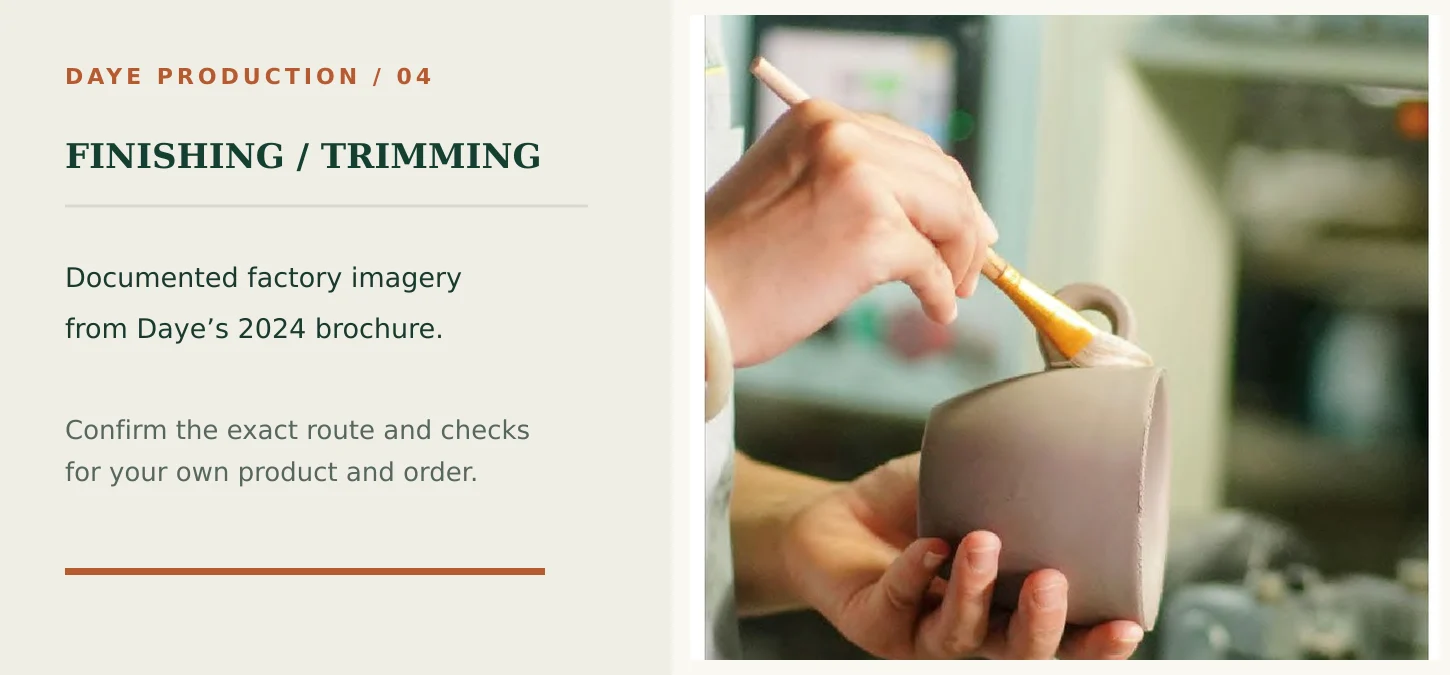
Factory photograph from Daye Porcelain’s 2024 company brochure. Confirm the production route for the specific order.
Plan for planned and unplanned downtime
A brand can ask about maintenance without requesting the supplier’s full maintenance manual. Which stages are capacity bottlenecks for the order? Is there a scheduled maintenance window during the delivery period? Which critical part has a long replacement lead time? Is there an alternate route, and would it change the sample or tests? Who will tell the buyer if the schedule or process changes? The answers can be summarized in a risk plan for the particular PO.
An alternate machine or factory is not automatically interchangeable. Different forming tools, firing conditions, or glaze application can produce a different look. If the supplier proposes a transfer, request a representative fired, decorated, and packed sample from the new route before approving mass production. If timing is too tight, negotiate the delivery plan openly rather than quietly accepting a visibly different product. The right remedy may be staged shipment of approved stock, adjusted launch timing, or an agreed revised sample.
For a seasonal promotion, forecast early and reserve inspection time. Do not plan only from a nominal machine speed. Account for forming, drying, kiln loading, decoration, defect allowance, retail packing, final checks, and freight. A spare part can restore a line while an approved design still needs days of subsequent processing. The customer-facing promise should be tied to packed accepted units and the shipment milestone, not merely to restarting a machine.
Keep replacement parts within change control
Some replacements are like for like; others alter the product or process window. Ask the factory to classify changes and notify the brand when a controlled characteristic is affected. A replacement mold made from the same drawing can still produce a different fired dimension. A new glaze applicator may change the visible finish. A decoration fixture may move a logo a few millimeters. The decision point is the finished product, not whether the technician calls the work routine maintenance.
Specify the evidence for release: a first-off inspection, a small production sample, comparison with the physical master, dimensional records, and updated artwork proof when relevant. Escalate to a new test if material composition or intended use changes. A quality agreement can define who signs off and what may proceed while the review is open. This reduces the temptation to meet a shipment date by shipping a technically unapproved variation.
Daye’s quality control and manufacturing pages provide a basis for this discussion, but they do not reveal a universal machine-parts inventory or guarantee that a particular line is redundant. Ask Daye for the current process and risk controls for your design. A strong supplier may provide a concise explanation without disclosing proprietary settings. The goal is a repeatable product relationship, not ownership of the factory’s maintenance department.
Turn the discussion into a purchase-order attachment
Attach the approved product specification, master sample identification, defect definitions, test plan, pack configuration, production and inspection milestones, and a change-notification rule. State the accepted quantity and whether replacement pieces are required for breakage. Identify the contact who can approve a deviation and the documents needed before shipment. For multiple variants, use a line item and a master for each relevant combination of shape, glaze, decoration, and pack.
During the first reorder, compare actual arrival quality with the previous lot and feed the result back to the OEM. Distinguish damage from manufacture, transit, and receiving. If the same fault repeats, ask for corrective action and verify it in the next sample or lot. If the product stays consistent, record that evidence too. Over time, a practical quality history gives the buyer a firmer basis for volume commitments and the supplier a clearer picture of what matters commercially.
An example: a lid that gradually stops fitting
Imagine a branded mug with a ceramic lid that fit the signed master. A later shipment arrives with a small but noticeable wobble. The buyer should first measure several lids and mug openings from different cartons, compare them with retained approved pieces, and document the proportion affected. The manufacturer can then examine the mold, forming and drying conditions, firing route, and inspection records. It would be premature to blame a specific machine part from a photograph. The investigation should identify the actual source and whether any delivered pieces remain within the agreed fit standard.
The corrective action might be a tool adjustment, a replacement mold, a process setting, or a revised tolerance agreed by both parties. Ask for a representative fired sample from the corrected route and check it against both old stock and the specification. If the lid and mug are made in separate batches, include the assembled pair in inspection; measuring each part in isolation may miss a fit problem. The retailer may also need an agreed handling plan for units already in distribution.
This example shows why spare-part availability matters commercially without turning the brand into a technician. A delayed replacement can affect lead time; an unverified replacement can affect fit; an approval process can control both. The same reasoning applies to artwork fixtures, glazing application, and packing inserts. Define the observable customer requirement, let the factory investigate its process, and release the next lot only when the evidence matches the agreed result.
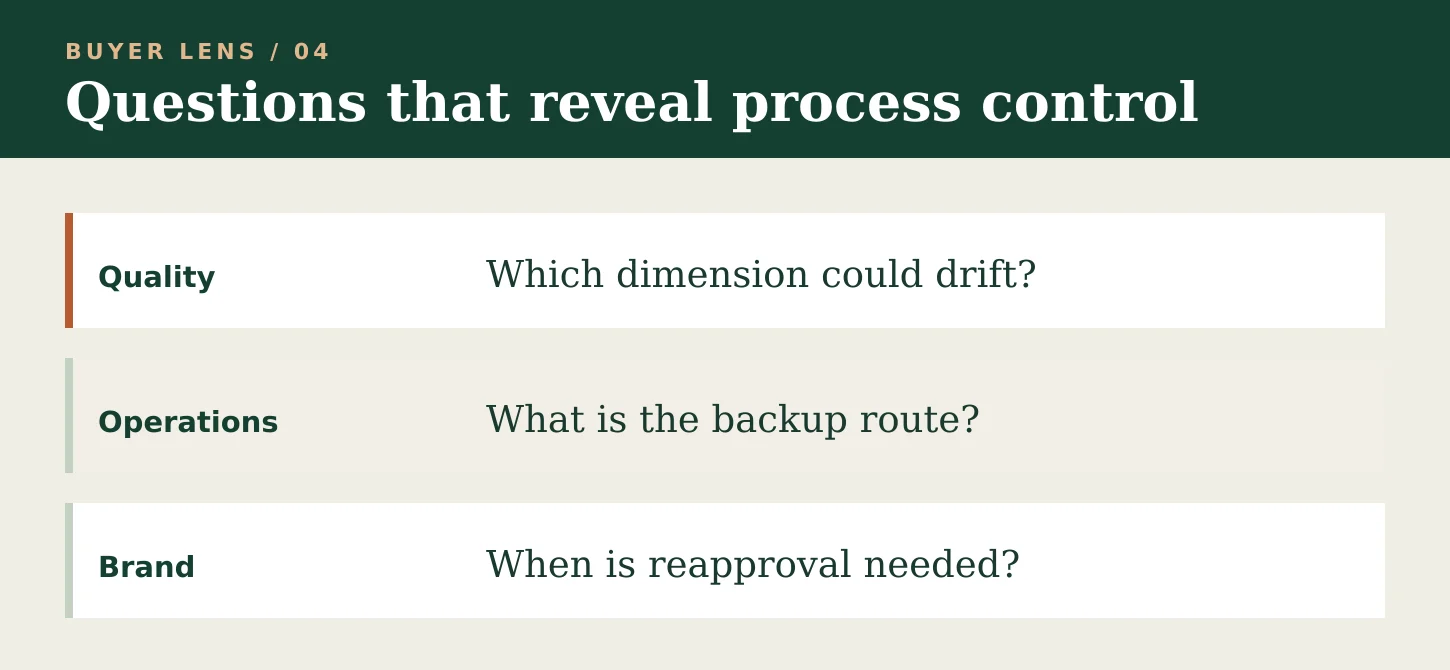
Buyer questions that connect process evidence to the approved ceramic product.
FAQ
Does Daye sell ceramic machinery parts?
Its public offer describes custom porcelain products and manufacturing services. An equipment spare-parts order belongs with the relevant machine maker or authorized service channel.
Should a buyer request a complete maintenance log?
Usually a concise project-specific assurance is more useful: affected stages, maintenance or replacement risk, escalation contact, and evidence that accepted product specifications remain controlled.
When does a replacement mold need reapproval?
When it could change controlled dimensions, form, fit, finish, or production results. Compare fired units from the new tool with the approved master before release.
Can final inspection compensate for equipment drift?
It can remove some nonconforming pieces, but it may not recover lost capacity or prevent late delivery. In-process checks and corrective action are important for repeat orders.
What is the most useful parts-related question for a brand?
Ask what happens to the approved SKU if a critical tool or machine stage changes, and what sample, measurement, and approval will prove the replacement route is equivalent.