Table of Contents
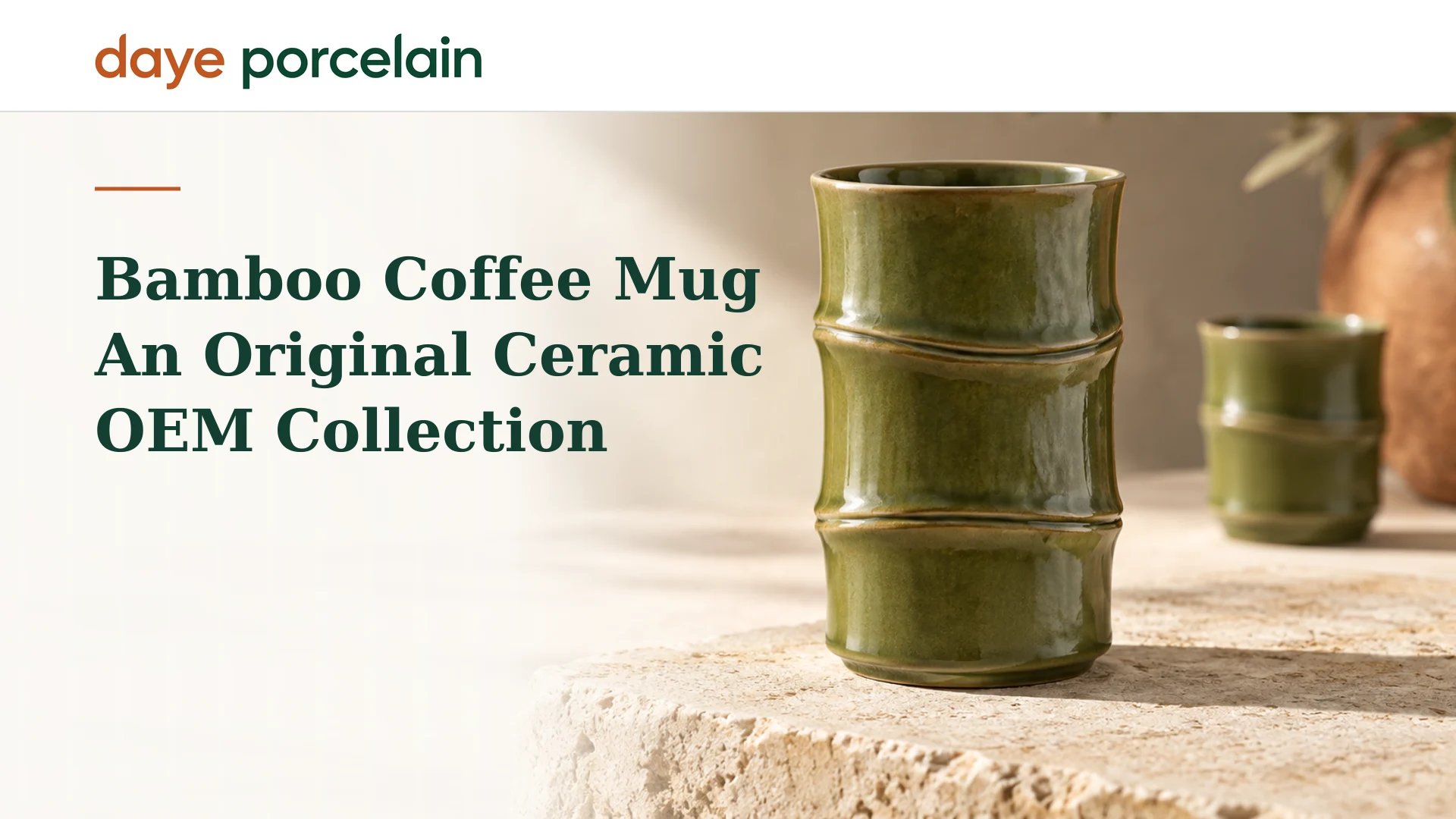
A bamboo coffee mug can be a distinctive ceramic object without containing a piece of bamboo. In the product direction considered here, “bamboo” describes the sculpted stalk form: a porcelain or other ceramic cup with node-like bands, a considered green or neutral glaze, and a clean drinking surface. The entire vessel is ceramic. This distinction matters to a retail buyer writing a material specification, to a designer preparing a mold brief, and to a customer deciding what is in the box.
For an OEM or ODM collection, the strongest result is an original interpretation of bamboo that works as a cup first. A photograph of another brand’s sculptural mug is useful to communicate the broad category, but it is not a production drawing or a license to copy its exact silhouette. This guide shows how brands, distributors, and coffee businesses can turn the motif into a defined form, a repeatable fired finish, and a wholesale product that can be sampled and replenished.
Key takeaways
- Specify a bamboo-inspired ceramic cup, including body material, useful capacity, rim, foot, and exterior relief.
- Develop an original node rhythm and silhouette instead of reproducing a recognizable existing design.
- Approve the fired glaze and the feel of the actual cup; a rendering cannot establish color, grip, or care performance.
- Price and inspect the finished packed SKU, including relief protection, rather than judging an isolated prototype.
Start with the form customers will hold
The bamboo cue should be legible from a few feet away but still feel natural at the table. A vertical body, slight changes of diameter, and two or three carefully placed nodes can suggest a stalk. The bands do not have to be mechanically identical. Their spacing, height, and transition into the wall can create a visual rhythm that belongs to the brand. A restrained raised detail on one side or an incised line can make the concept more ownable without turning the cup into a literal imitation of a plant.
Sketch the front, side, top, and base. Mark the intended drinking edge separately from the decorative zone. A beautiful knot directly beneath the lips may make sipping unpleasant; a deep channel near the foot can trap residue. Define where fingers naturally rest, particularly if the design is handleless. The relief can offer a tactile grip, but only a hot-drink trial on a fired sample will show whether the wall feels comfortable in use. No bamboo-like exterior automatically makes a cup insulating.
Think about proportion before adding detail. A tall, narrow silhouette may read most strongly as a stalk but can become top-heavy with liquid. A wider base and a controlled useful fill may serve a café or gift customer better. If a handle is desired, integrate it into the body language rather than attaching an unrelated generic loop. A handleless design can be elegant for a short coffee serving or a smaller gift cup; the intended beverage temperature and use setting should inform the decision.
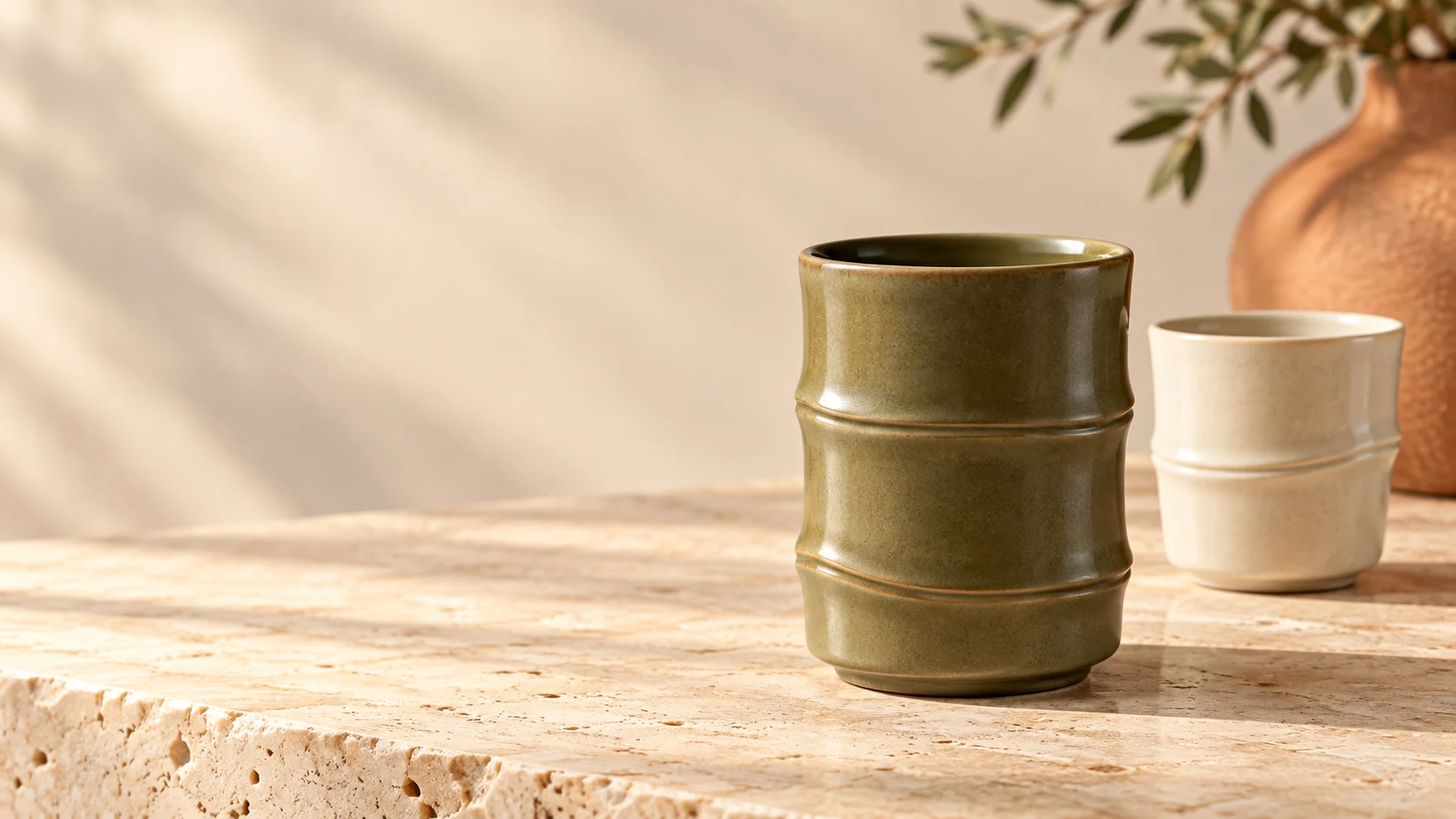
Original editorial concept of bamboo-inspired ceramic cups; the image is not an existing Daye product.
Make the botanical reference original
Many designers can draw inspiration from bamboo. What makes a collection recognizable is the particular combination of taper, node spacing, surface transitions, color, and brand detail. Begin with several rough concepts and compare them against the intended shelf presentation. Is the cup serene and architectural, playful and giftable, or closer to quiet tea ware? A consistent design language is more valuable than adding every botanical feature to one object.
Treat the reference photograph as a category signal, not a specification. Do not reproduce another maker’s stackable puzzle arrangement, distinctive joins, exact proportions, or decoration without rights. Commission new drawings, retain dated design iterations, and record who owns the final artwork and any commissioned mold. If the brand hopes to extend the range later, define a family language that can adapt to a second size or a matching tray without depending on someone else’s product geometry.
For a buyer, originality is a practical sourcing issue as well as a creative one. A supplier may already have a textured cylindrical blank, but the right to use that form, the exclusivity of a new mold, and the ownership of design files are separate questions. Ask these questions before the sample looks final. An original bamboo coffee mug should remain clearly identifiable in its unbranded white prototype; the glaze then strengthens the identity rather than hiding a weak shape.
Compare three ceramic design routes
|
Design route |
Visual result and likely use |
Buyer checks on the sample |
|---|---|---|
|
Sculpted node relief |
Strong three-dimensional bamboo silhouette for a signature gift or retail line |
Grip, mold parting, relief edge durability, glaze pooling, and pack protection |
|
Quiet incised node lines |
Subtle botanical detail on a simpler ceramic profile for a coordinated tableware range |
Line clarity after firing, cleanability, repeat position, and photograph legibility |
|
Glaze-led bamboo interpretation |
Mostly clean body with a controlled tonal green finish and minimal form cue |
Actual fired shade range, surface feel, interior glaze, and honest product naming |
These are design routes, not promises about one factory process. A sculpted form may need dedicated tooling and more development work. An incised version may use a different method or body, depending on the drawing. A glaze-led version may be easier to coordinate across several shapes, yet it can lose the bamboo idea if there is no convincing form detail. Request quotations against the same target capacity, finish, packaging, and quantity so the comparison is useful.
If a buyer wants two sizes, make the contrast deliberate: perhaps a smaller coffee cup and a larger morning mug sharing the same node language. Do not assume that one mold scales directly to another or that two nominally related cups can nest. Test the actual fired pair together. A retail set should explain whether it includes one cup, a pair, or a coordinated size assortment; photographs alone can make a single vessel look like a set.
Translate the sketch into a buildable ceramic body
Relief requires attention to wall thickness and the transitions around each node. A sharply undercut band may look dramatic in a drawing but complicate release from a mold or leave a vulnerable projection. Ask the development team to mark parting lines, likely finishing points, and any geometry that needs adjustment. Preserve the core visual rhythm while allowing technical refinement. A sample should be assessed from all sides, not just from the marketing camera angle.
Define brimful and useful capacity separately. The useful fill is the amount a person would actually serve without bringing hot liquid to the very lip. Record overall height, top diameter, base diameter, approximate weight, rim profile, and target dimensions after firing. Ceramic bodies shrink during firing according to their formulation and process, so the drawing and the finished standard should be connected through a physical sample. A small deviation at each node can noticeably change the proportions of a sculptural cup.
The rim deserves a quiet finish. A cup with a striking textured exterior still needs a smooth, comfortable drinking edge and an interior that can be cleaned. Put the underside on the checklist as well: the foot should sit evenly, resist casual tipping, and avoid scratching the intended surface when used as specified. Evaluate a handleless sample with the target hot drink and a realistic holding time. If the user needs to move a very hot, large serving across a busy café, the concept may need a handle or a different body construction.
Ask for a plain or minimally glazed shape proof before approving a final color. That early piece can settle proportions, capacity, grip, and the sharpness of the raised bands. Then evaluate a fully fired glazed sample for appearance and care. Keep a master sample with its drawing revision and color reference. A beautiful one-off prototype is the beginning of the specification, not evidence that every production unit will match it.
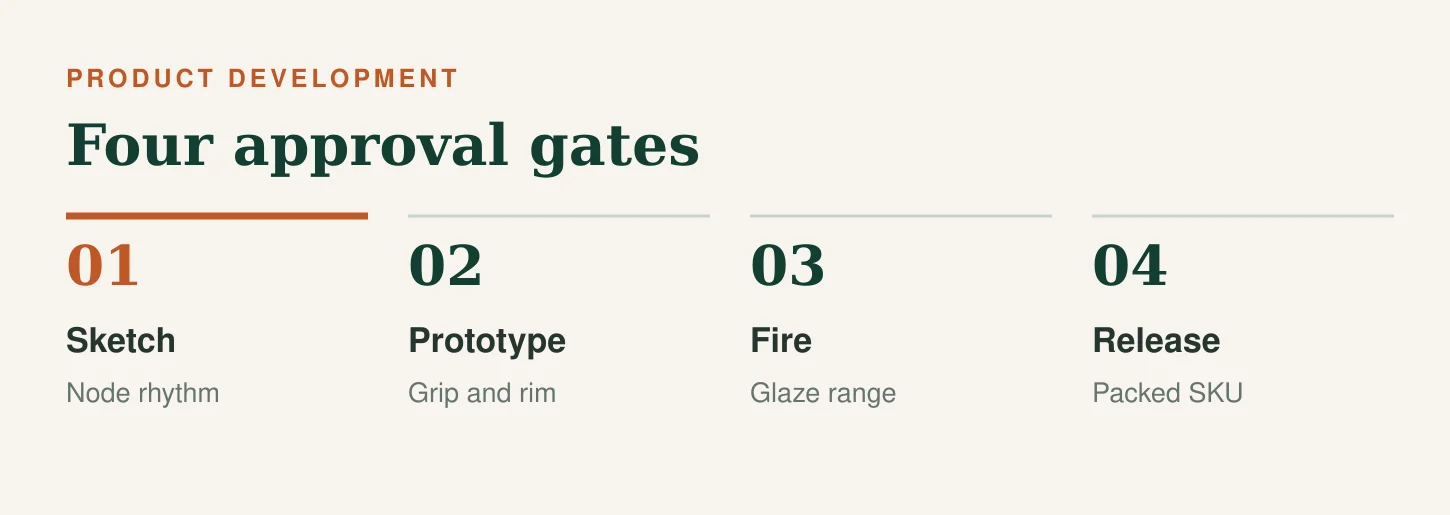
Approval gates for this product brief; the final steps depend on the project.
Use glaze to reveal the nodes
A muted olive, celadon-like green, deep forest green, or warm off-white can make the same bamboo relief feel very different. Green may be the obvious route, but the form should still read clearly in neutral light. Request several fired color trials on the actual cup. Flat digital swatches do not show how glaze changes over a raised ring, gathers at an edge, or looks inside the vessel. Review samples together under daylight and the kind of retail or hospitality lighting the product will encounter.
Agree on what variation is acceptable. If a glaze moves or breaks lighter across relief, the buyer should see several pieces from the intended process. Set an approved range of shade and coverage, including the drinking rim and inner wall. Photograph the reference pieces, but keep physical examples where possible. Avoid calling a finish “celadon,” “hand-glazed,” or “reactive” in sales copy solely because it resembles that look; confirm the actual materials and method used for the finished SKU.
The interior can be visually calmer than the exterior so coffee marks are easy to see and the cup can be cleaned. If the exterior has matte or rougher areas, test how they feel in a damp hand and after normal washing. An embossed logo or small mark may be placed on the underside if branding on the stalk would interrupt the silhouette. Confirm whether a printed logo or metallic decoration changes the intended care statement, and proof every element on the fired body.
Design the assortment for buyers and distributors
A signature mug can lead a small range, but each additional variant adds a purchasing and stock decision. Start with the primary bamboo coffee mug: one approved shape, one finish, and a clear pack. A second glaze may be useful if it serves a distinct channel, such as an earthy green gift line and a quiet ivory hospitality version. Too many near-identical greens can make sampling and reorder control expensive without giving a retailer a clearer choice.
Name each SKU by its actual size, finish, and pack content. If a ceramic lid is developed, it becomes another fitted component that needs its own sample, breakage allowance, and cleaning review. A lidded home cup should not be described as leakproof or a travel mug without a design and test program that supports those uses. Likewise, a cup with a bamboo motif is still a ceramic product; its material listing should not suggest plant fiber or a wooden component.
For a trade company or distributor, request a consistent set of product assets: dimensions, useful fill, net weight, pack dimensions, care text supported by the finished product, color range, and clear photos of the rim and base. The hero image communicates the mood, while the technical images prevent a retailer from guessing whether the cup has a handle or what one box contains. If the product is made to order for a brand, the samples and listings should reflect that exact program.
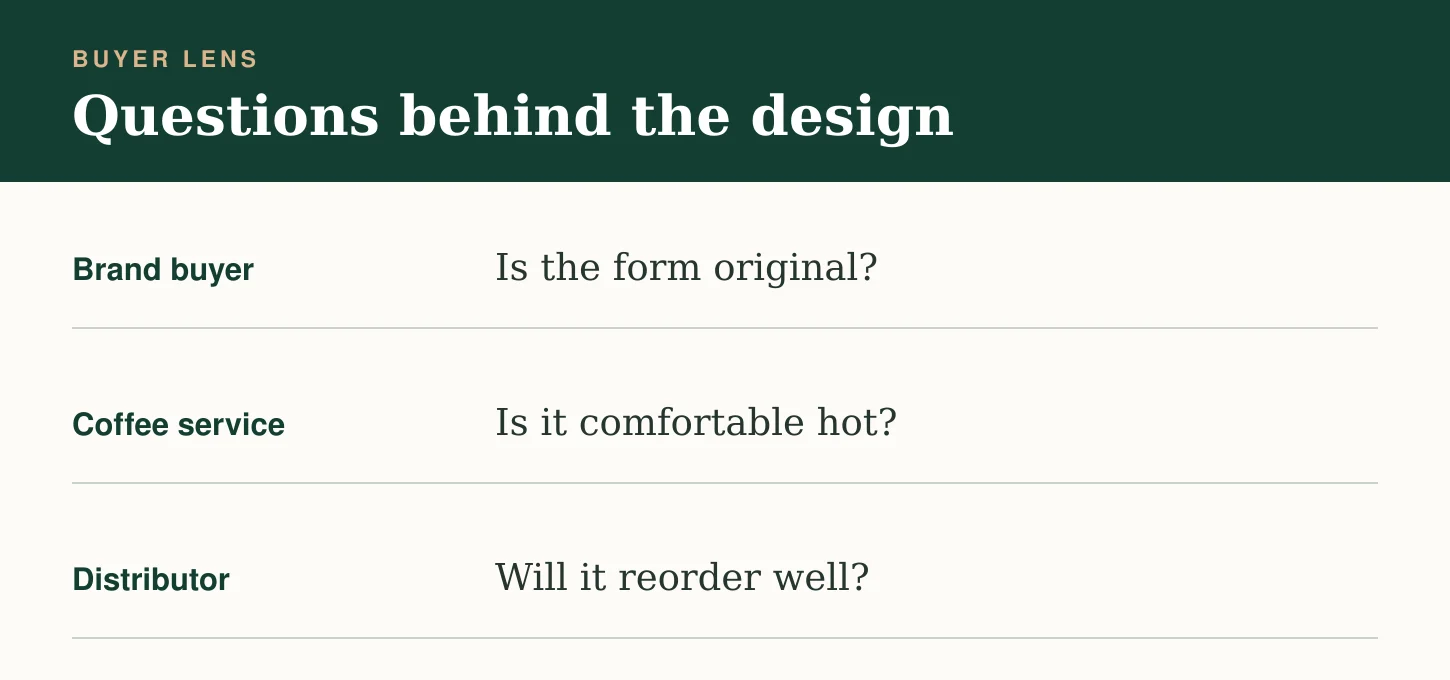
Buyer questions that should inform the approved product specification.
Sample, test, and pack the finished product
Build the approval sequence around decisions: first silhouette and handling, then fired glaze and branding, then repeatability, care, and packaging. At each stage, consolidate comments into a single marked drawing or review sheet. Check the node edges for chips, pinholes, and inconsistent finishing. Look at the line where a mold closes and any area where excess material is removed. Inspect the interior and rim under good light as carefully as the sculptural exterior.
For food-contact use, test and documentation should be tied to the finished cup and its destination market. The US FDA addresses extractable lead and cadmium in ceramicware; EU rules for ceramic articles address migration of those substances and accompanying documentation. A decorative form, green glaze, or porcelain body alone is no proof of compliance. Tell the supplier which markets the product will enter, identify the exact glaze and decoration in the test scope, and review evidence for the product offered. “Lead free,” dishwasher-safe, and microwave-safe are separate claims that need appropriate support.
The relief can create a packaging issue even when the cup is strong in everyday use. Measure the widest point at each node, separate adjacent cups so raised bands do not collide, and test the actual sales pack. A gift box may call for a shaped insert and visual storytelling; a wholesale outer carton calls for efficient spacing, clear counts, and damage control. Ask whether the same insert works for both glaze variants and whether a replacement cup can be supplied later without the full gift box.
Request a pilot quantity or representative pre-production set where the program warrants it. Compare several fired pieces for height, ring definition, shade, wobble, and pack fit. The approval record should state which features are critical and which small handmade-looking variations are acceptable. When a repeat order arrives months later, that record is more useful than a single attractive product photograph.
Brief Daye on an original collection
A useful inquiry contains a sketch or controlled design file, visual mood references, desired ceramic body, target useful capacity, approximate dimensions, preferred glaze range, handle choice, logo placement, destination market, packaging format, initial quantity, expected reorders, and target launch window. Flag the bamboo nodes as the defining feature, and identify any flexible areas where the form can be adjusted for production. If the cup is still only a concept, state that clearly so sampling and tooling can be scoped.
Daye Porcelain describes custom ceramic mugs, 3D and character mugs, and sampling and mold development on its website. Those are relevant routes for discussing a sculptural ceramic brief with a China-based OEM/ODM partner; they do not mean the concept shown here is an existing Daye SKU. Ask Daye to evaluate the original drawing, proposed relief, sample stages, tooling terms, finished glaze, testing scope, price, and schedule for your project. Use the project inquiry to send the design and commercial requirements together.
Frequently asked questions
Is a bamboo coffee mug made from bamboo?
In this design direction, no. The mug is a ceramic drinking vessel whose shape and surface relief evoke a bamboo stalk. Describe the actual ceramic body and glaze in the product specification and listing. The word “bamboo” communicates the motif, not a bamboo-fiber composite or a separate plant-material part.
Can a ceramic bamboo mug be used for hot coffee?
It can be designed for hot-drink service, but the particular sample should be evaluated for grip, exterior temperature, stability, rim comfort, and care. A handleless sculptural cup may suit a smaller serving better than a large, very hot drink. Avoid claiming an insulating effect from the node relief alone.
Does sculpted bamboo relief require a new mold?
It may. A distinctly original three-dimensional silhouette can require dedicated tooling, while a quieter surface interpretation may allow a different development route. Send dimensioned drawings and ask the maker to explain the proposed process, tooling cost, revisions, ownership, and approval stages before committing to a volume order.
Can the same concept be made in two colors or sizes?
Yes, if each variant is sampled and approved as its own finished SKU. Colors can behave differently at the raised nodes, and a second size changes handling, useful fill, packaging, and perhaps tooling. Keep a controlled reference and item code for each version so repeat orders match the intended assortment.
Is the reference image an existing Daye product?
No such claim is made here. The article image is an original editorial concept to communicate bamboo-inspired ceramic form. A brand should submit its own brief and confirm what Daye can develop, make, test, and supply for the specific project. The finished product and its rights must be established through that development process.