Table of Contents
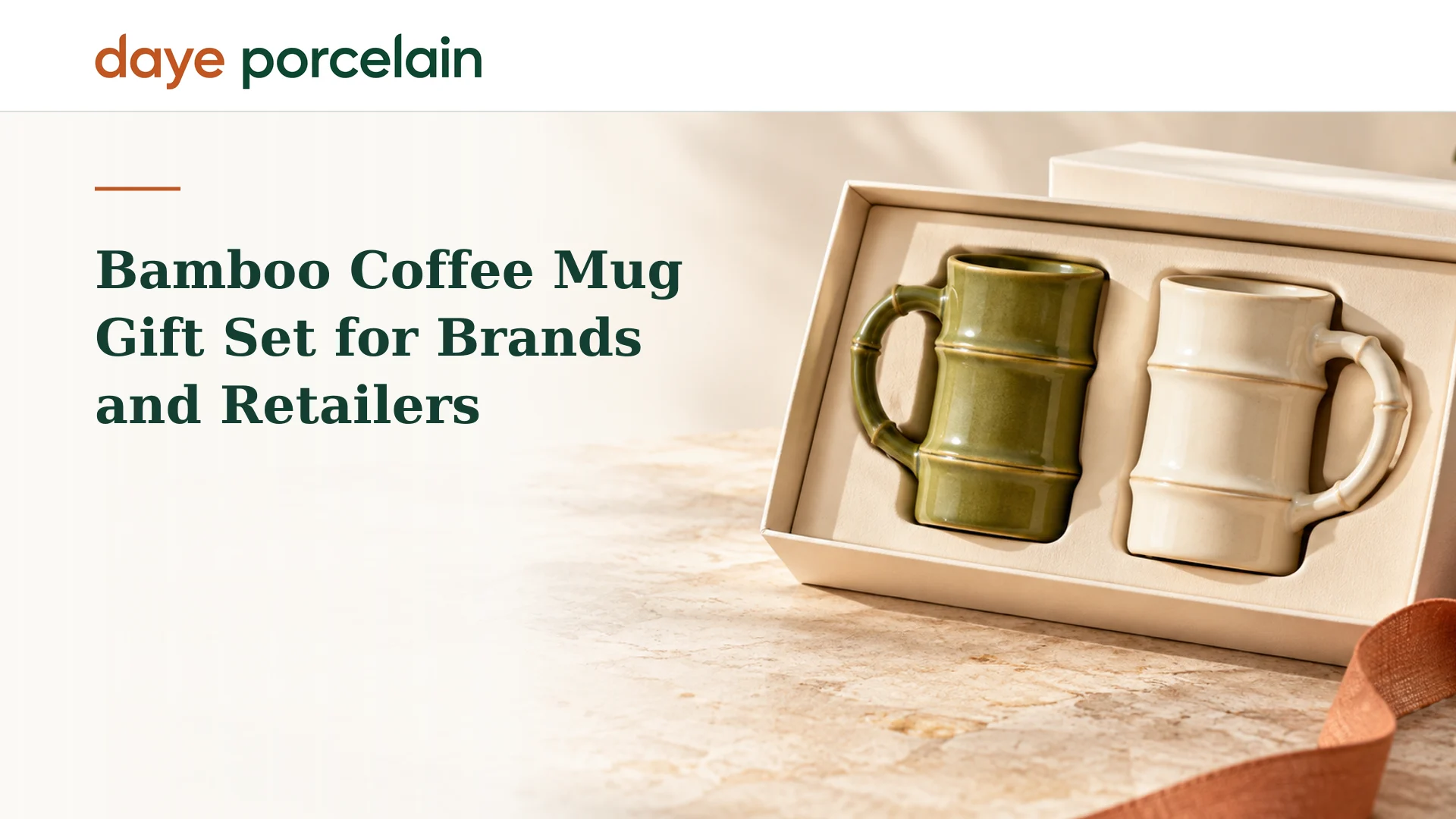
A bamboo coffee mug gift set can turn a sculptural ceramic cup into a complete retail or corporate offering. The bamboo reference is in the molded node-like form and considered glaze; the cups themselves are ceramic. A gift set introduces decisions that a single open-stock mug does not have: pair selection, presentation, insert geometry, brand story, shipping protection, and what a recipient sees when opening the box.
This guide is for homeware brands, corporate buyers, promotional agencies, and distributors planning an original bamboo-inspired ceramic set. It does not prescribe a specific box or cup design. The goal is to choose a set architecture that suits the recipient and budget, then sample the exact finished contents and pack rather than assuming two attractive cups automatically make a good gift.
Key takeaways
- Decide who receives the gift and what the sales unit includes before designing the box.
- Make the ceramic cups useful on their own, with comfortable rims, stable feet, and clearly stated capacity.
- Protect handles and bamboo-node relief in a fitted insert, then test the packed set.
- Build the visual story from an original design and supported material and care claims.
Choose a recipient and occasion
A retail gift for a design-conscious homeware customer may emphasize the ceramic form, a two-color pairing, and a box worth keeping. A corporate gift may need a discreet logo, greeting card, delivery to multiple addresses, and a repeatable production schedule. A café gift item may be sold near beans or brewing equipment and should match the shop’s actual serving style. These programs can share a cup body but differ in decoration, pack, and order logistics.
Name the primary occasion without turning the bamboo motif into an unsupported cultural claim. The form can convey calm, growth, or a botanical mood in visual copy. Avoid claiming an origin, artisan tradition, environmental benefit, or symbolic meaning that the brand has not researched and can substantiate. A restrained story about the original design and the ceramic-making process is more useful to an international buyer than generic “eco” language based on a plant motif.
Start with a recipient scenario: Is the set for one person, a couple, a team, or client gifting? A pair of cups can work when the person is likely to share coffee. A single mug with a ceramic rest or an accompanying saucer may be preferable for an individual desk gift. Define the sales unit in writing. The box photograph should show precisely what is included.
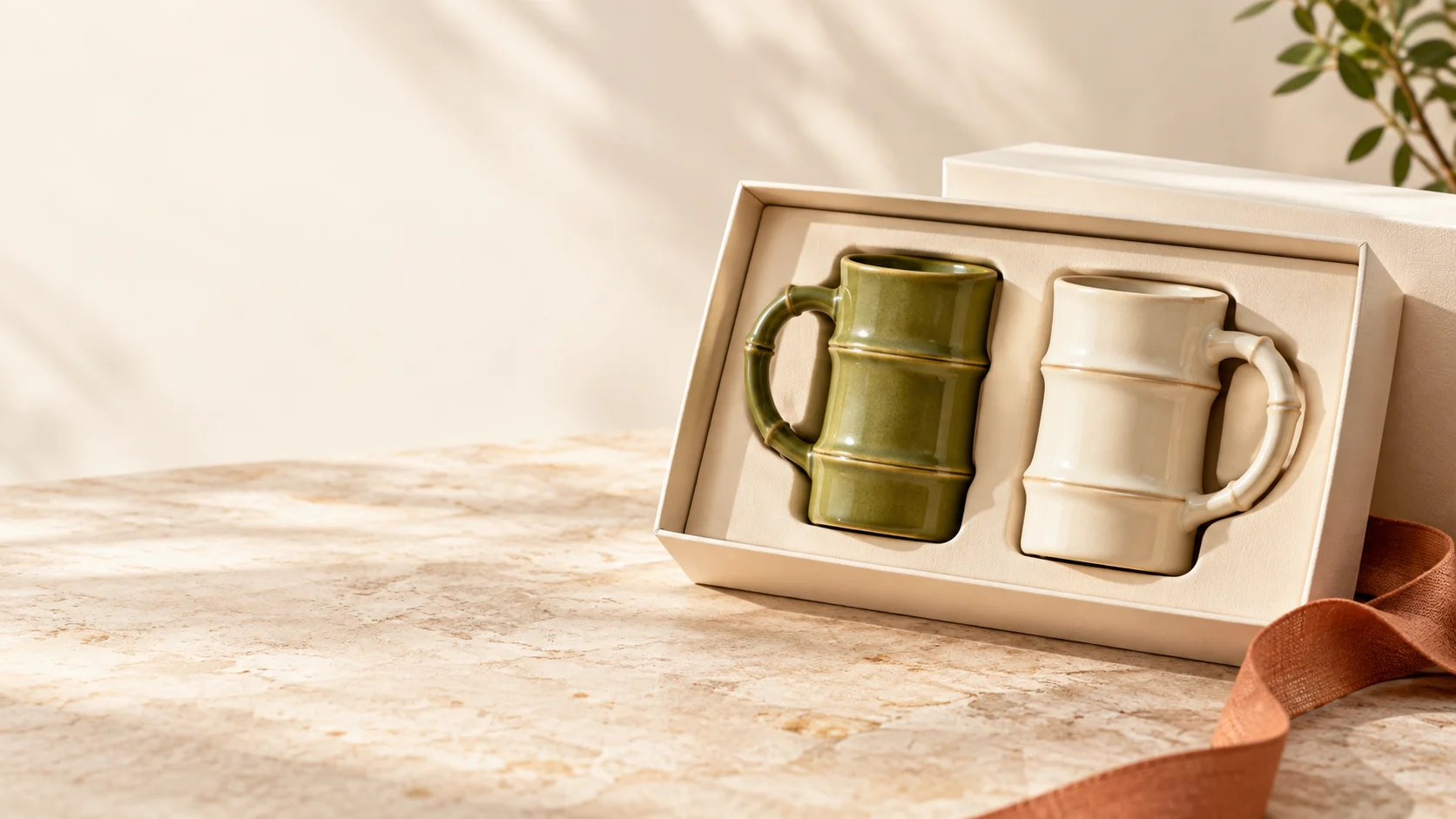
Illustrative gift presentation of sculpted ceramic cups; final contents and pack require approval.
Compare practical set formats
|
Set format |
Presentation advantage |
Buyer risk to resolve |
|---|---|---|
|
Two matching ceramic cups |
Calm, easy-to-understand pair |
Both units must look consistent after firing |
|
Green and ivory ceramic pair |
Strong color story and visible choice |
Glaze variation and pair matching need approval |
|
Cup and ceramic saucer |
Complete table setting for one recipient |
Foot and saucer well must fit after firing |
|
Cup with removable ceramic cover |
Distinctive desktop object |
Lid fit, safe handling, and replacement component planning |
These alternatives should be quoted as complete packed units. A gift box is a sales item with its own bill of materials, artwork, testing, and quality checks. Do not show a cup-and-saucer illustration if the quoted SKU includes only a cup. When a lidded version is chosen, the cover is not a spillproof travel closure by default. When two sizes are paired, each cup needs its own useful-capacity statement.
A brand can keep the first assortment focused by using one cup mold and two finishes. But a two-color pair still requires approval of both glazes, a packing sequence, and a rule for replacements. If every gift box contains one green and one ivory cup, the outer carton, barcode, and pick instructions should make the composition unmistakable. The warehouse should not be asked to assemble pairs from loose unmarked stock.
Design the unboxing around the ceramic
The raised bamboo nodes and any sculpted handle are the most visually distinctive parts of the cup. They also need clearance inside the insert. A photograph can make a foam or paper cavity look snug, but the cavity must be tested against the widest points of multiple fired pieces. Leave enough room for production variation without allowing cups to move into one another. The drinking rim and foot need protection as well as the decorative bands.
Place the cups so the recipient sees the intended front orientation on opening. A logo printed across a node may look warped; a small mark on the underside or an insert card may preserve the ceramic silhouette. Decide whether the gift message belongs on the outer sleeve, inner card, or cup. A personalized name on every ceramic piece complicates production and picking more than a common logo on a fixed run. Price those routes separately.
Packaging materials should suit the intended retail and delivery channel. A delicate rigid presentation box may need an additional shipping carton for parcel delivery. A bulk corporate drop to one office has different handling from individually mailed gifts. Ask for a packed sample and run the transport evaluation appropriate to the route. The insert should support the cup without pressing on a narrow handle or projecting node edge.
Make the cups enjoyable to use
The gift will outlast the unboxing moment only if the cups work well. Define useful fill instead of relying on a decorative vessel’s brimful measurement. Check rim comfort, stability, weight, handle clearance, and the feel of raised relief with a warm drink. If the cup is handleless, test whether the recipient can hold the intended serving comfortably. A deep sculptural groove may collect residue and should be reviewed during normal cleaning.
The interior glaze may be calmer than the exterior so coffee marks can be seen and washed away. If a metallic accent or transfer is added for a celebration, consider its effect on care instructions. Do not print “dishwasher safe” or “microwave safe” because the undecorated ceramic body might tolerate those conditions. Evaluate the final decorated SKU and provide clear instructions inside or on the box.
A matching pair should look related, not necessarily identical to the pixel. If a glaze is designed to vary, show the acceptable range in sampling and marketing. A recipient may notice a very light cup next to a dark one more readily when both arrive in a shared box. Decide whether intentional tonal differences are part of the appeal or a quality issue for this program.
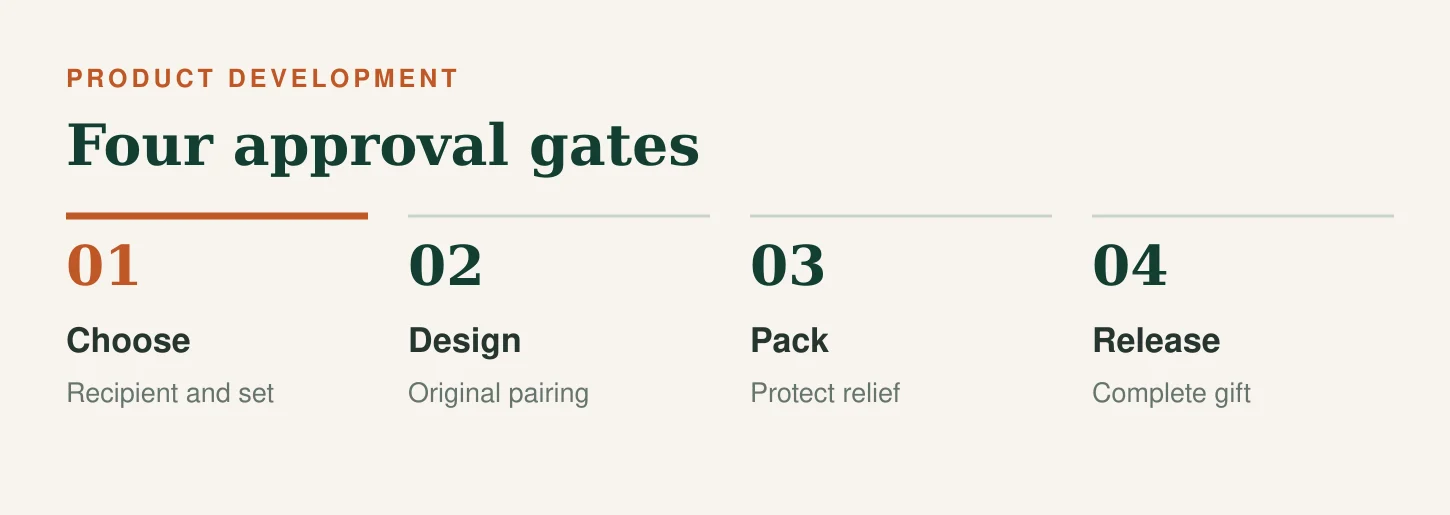
Approval gates for this product brief; the final steps depend on the project.
Match the gift story to the actual materials
Use “ceramic bamboo-inspired mugs” or similarly clear language. The botanical motif does not mean the cups contain bamboo fibers, bamboo wood, or a compostable material. Packaging claims about recycled content or sustainability require evidence for the actual box, insert, and process. Avoid transferring a property of one component to the whole set.
If the brand wants to use the word porcelain, confirm the proposed body. “Ceramic” is a broader material description, while porcelain refers to a particular ceramic type. An earthy speckled look might be achieved through different bodies or glazes; the listing should identify the actual finished cup. The customer will infer material from the item title and specifications, so precision is part of a premium presentation.
Use original drawings and rights-cleared brand artwork. Bamboo as a natural source of inspiration is open-ended, but an exact named designer’s stackable cup arrangement or proprietary sculpted shape should not be copied from an image search result. A commissioned gift can express the client’s identity through its own node rhythm, glaze palette, and packaging composition. Confirm ownership of the artwork and any exclusive mold in the project terms.
Plan personalization and quantities
A fixed logo edition and individual name personalization are operationally different. A fixed edition can be produced and packed as a controlled SKU. Names may require unique artwork approvals, order-file handling, quality checks for each variant, and individual shipping labels. Decide whether personalization belongs on the ceramic itself or on a replaceable card or sleeve. A card may let the recipient receive an individual message without multiplying ceramic production variants.
For a company ordering across several regions, prepare a small approval set that includes the exact printed message, chosen color pairing, and packed box. Have the buyer responsible for the brand sign off the visual details and the buyer responsible for logistics sign off the carton and recipient data format. Changes to addresses or cards late in the program should be managed separately from changes to fired ceramic. This prevents a simple message revision from reopening the cup specification.
Forecast by design and destination. A program of 1,000 identical pairs sent to one warehouse is different from a similar number divided among offices, dates, and recipients. Ask the supplier which packing and labeling can be performed at the factory and which should be handled by a fulfillment partner. Do not assume a porcelain factory provides direct-to-recipient gift fulfillment. Agree on the scope before using it in a client proposal.
Set a date for final artwork and sample approval that leaves room for fired color review and packaging trials. A paper box proof alone cannot approve the ceramic. If the design includes a matching saucer or lid, test that assembly after firing and protect each component. Order a few extra finished sets for photography, internal approval, and potential replacements if the program justifies it.
Quote the finished set and test its route
Ask for pricing that identifies cup production, each glaze, logo method, insert, box, sleeve or card, master carton, tooling, sample charges, and requested tests. A lower cup-only price says little about the completed gift. Compare suppliers on the same set contents and pack quality, including shipment configuration and delivery basis. A usable quotation should also specify the quantity of each variant and how a later reorder will be handled.
Food-contact documentation should follow the final cups and destination market. FDA information addresses extractable lead and cadmium in ceramicware; EU ceramic measures address migration and documentation. Identify the actual body, glaze, and decoration on the test evidence. The pack may have its own labeling or retailer requirements. Confirm all proposed claims before they appear on a printed gift sleeve.
Inspect a representative group of finished sets. Check cup stability and rims, node detail, shade pairing, logo position, insert clearance, lid or saucer fit if included, box finish, and exterior labeling. Keep a complete approved set as the reference for reorders. A beautiful unboxing video does not reveal whether cups knock together during a courier journey.
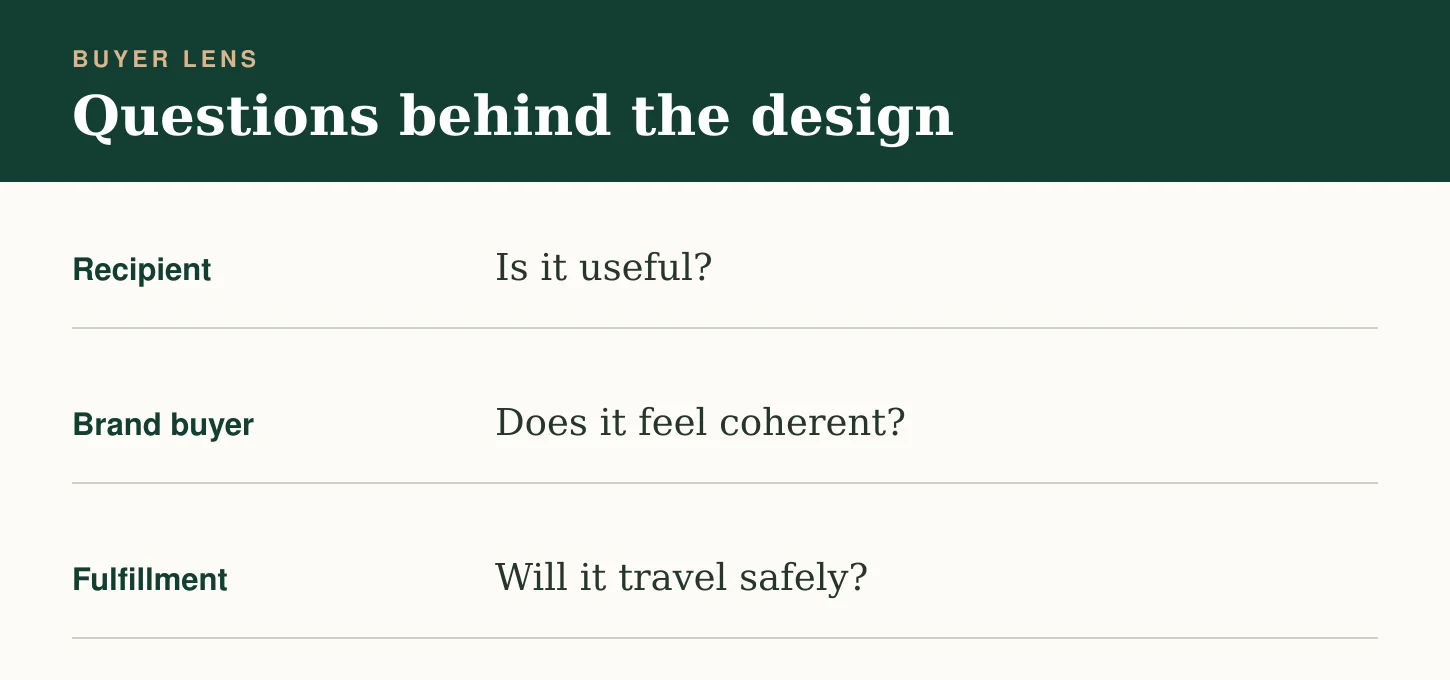
Buyer questions that should inform the approved product specification.
Develop the concept with Daye
Daye Porcelain’s custom ceramic mugs page describes branded retail and promotional programs, while ODM development addresses form and finish. Its sampling and tooling page is relevant when the bamboo relief or matching component needs a new design. The images here are original editorial concepts, not existing Daye catalog claims.
Send Daye the recipient and sales channel, original cup concept, contents per box, material and glaze preferences, useful capacity, target quantities, personalization plan, destination market, pack requirements, and date through the project inquiry. Ask the team to scope shape sampling, pack development, testing, finished-set pricing, and reorder control for that specific brief. The answer should describe a complete gift unit.
Frequently asked questions
What is included in a bamboo coffee mug gift set?
That depends on the SKU. It may be a pair of ceramic cups, a cup with saucer, or a cup with ceramic cover. The listing and box should state the exact contents and show the actual approved finished items.
Are the mugs made from bamboo?
In this concept, no. The mugs are ceramic with a bamboo-stalk-inspired shape. The material specification should name the actual body and glaze. Botanical styling does not support a plant-fiber or environmental claim.
Can a corporate buyer add its logo?
Yes, logo placement can be explored on the cup, underside, card, or box. Proof the chosen method on a fired sample or finished printed pack, and confirm artwork ownership and the exact production scope.
Why test the full boxed set?
Raised nodes, handles, rims, and any lid or saucer can strike other pieces in transit. The approved insert and outer carton must protect the complete unit through its intended delivery route.
Can a gift program be reordered?
A repeat program is easier when drawings, fired glaze samples, artwork revisions, component codes, box materials, and inspection criteria are retained. Confirm reorder quantities and schedule for the actual set configuration.