Table of Contents
A bamboo coffee mug for cafes can be a memorable piece of ceramic serviceware when the stalk-inspired form works in a busy hand as well as in a photograph. The bamboo feature is sculpted into the cup; the drinking vessel is ceramic. For a café, hotel lounge, or specialty coffee venue, the buying question is whether the mug suits the menu, feels safe with the intended hot drink, survives normal handling, and can be reordered in matching batches.
This article looks at operational use. A retail gift program can tolerate a striking cup that is handled occasionally; a café may wash, carry, and stack its cups many times a day. The original design still matters, but it has to meet a practical service brief. A trial in the actual venue will reveal more than a styled shelf image.
Key takeaways
- Choose the beverage and useful serving volume before finalizing a sculptural bamboo form.
- Test a fired, filled cup for grip, rim comfort, base stability, and staff handling.
- Plan washing, storage, breakage, and replacement stock alongside the visual design.
- Keep food-contact and care statements tied to the exact finished ceramic SKU.
Start with the menu, not the motif
List the drinks the cup might serve. A short black coffee, a filter coffee, and a milky beverage create different capacity, temperature, and handling needs. Define the intended useful fill for the lead drink and the headroom needed for ordinary service. The decorative silhouette should not force an awkward serving size. Record brimful volume separately to prevent a buyer from interpreting the maximum fill as the menu portion.
Consider how the cup is presented. Does it travel on a tray, come with a saucer, sit beside a pastry, or stay on a hotel room desk? A raised node can make the cup memorable in a customer photograph, but an excessively wide band may crowd a small tray. A narrow base could feel unstable on a busy table. Draw the full setting with the coffee vessel, spoon, and any saucer rather than evaluating the mug as an isolated sculpture.
If the concept is handleless, test it with the hottest drink and holding time likely in the venue. The sculpted nodes can provide a tactile location for fingers, but they are not an insulation claim. A smaller serving or a different ceramic wall design may be more comfortable. If the menu calls for a large, very hot beverage carried across a room, a handle may be the better choice. The handling decision belongs to the café’s real service conditions.
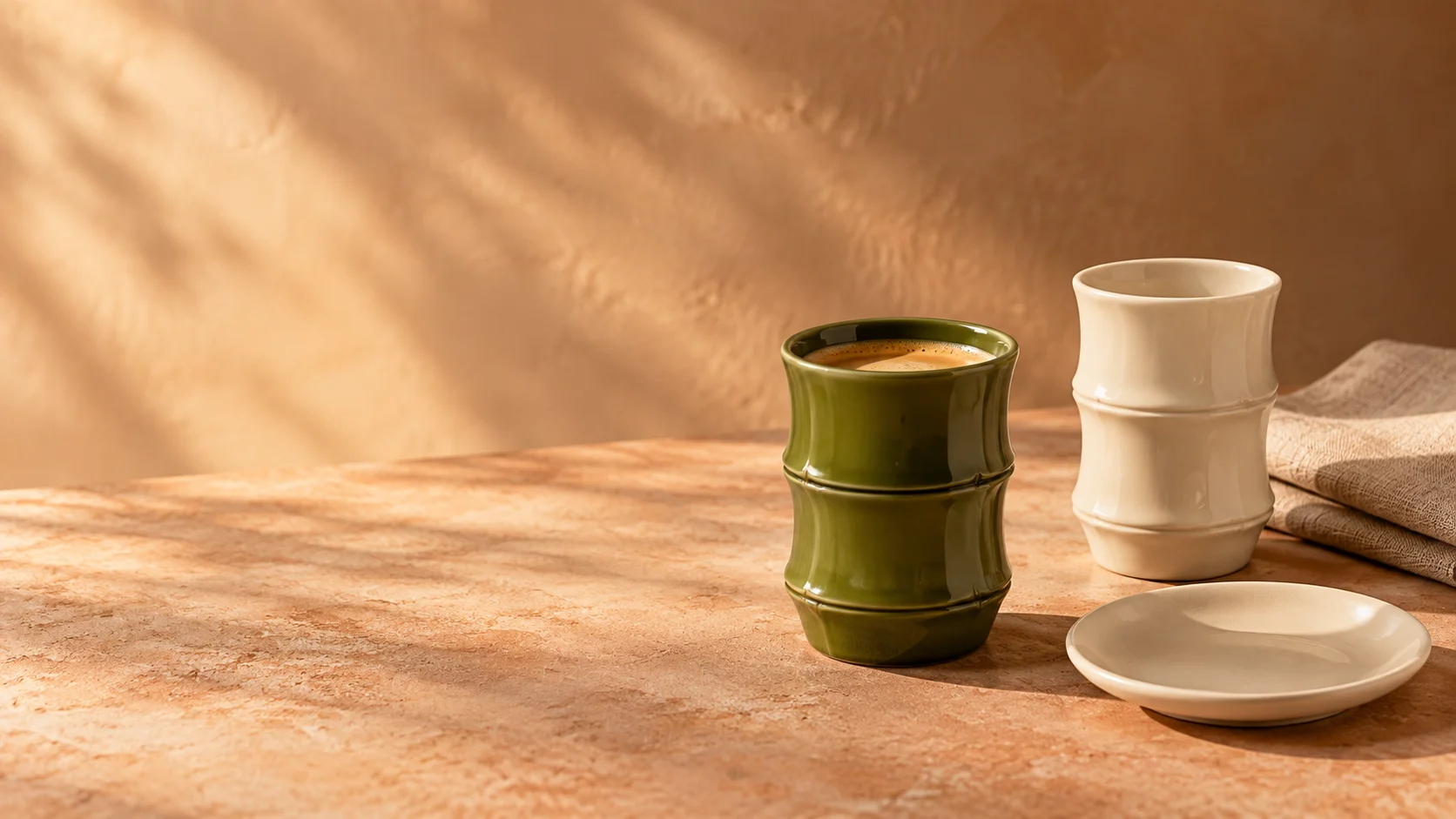
Illustrative ceramic bamboo-node cup for a coffee setting; service use must be tested.
Compare service formats
|
Service route |
Potential advantage |
Trial question |
|---|---|---|
|
Handleless sculptural cup |
Strong bamboo-stalk silhouette and compact setting |
Can staff and guests hold the filled cup comfortably? |
|
Bamboo-node mug with integrated handle |
Familiar hot-drink grip with a distinct form |
Is the handle secure, easy to clean, and balanced when filled? |
|
Cup paired with ceramic saucer |
More complete table service and place for a spoon |
Does the fired foot sit securely in the saucer well? |
|
Cup with removable ceramic cover |
Useful stationary desk or lounge presentation |
Is the cover easy to lift and store during drinking? |
The table is a set of design alternatives, not a claim that every format is available from stock. A handle, saucer, or lid changes tooling and the pack. It also changes how staff move the cup and how many parts must be washed. Request physical prototypes for the shortlisted routes, then conduct the same real-drink trial for each. A comparison made only from separate product photographs is unreliable.
If a saucer is selected, test the foot and saucer after firing as a pair. The sculptural mug’s center of gravity may differ from a conventional cup. A wide or raised lower node must not make the cup rock in the saucer. Specify whether the venue can reorder cups and saucers separately, since breakage rates may differ. A replacement cup should continue to fit the approved saucer range.
Check touchpoints in a live service trial
Give the sample to several staff members. Ask them to fill it, carry it on the usual tray, serve it at a table, clear it, wash it, and return it to storage. Watch where fingers land, whether a node catches a cloth, and whether the cup turns easily on the tray. Let guests try the rim and weight with a normal beverage. A form that looks effortless in a still-life may feel heavy or too hot in repeated use.
Inspect the rim for a comfortable drinking edge. Deep exterior channels can collect coffee splashes or washing residue; the interior should remain easy to see and clean. The base should sit evenly without scratching the intended table surface when used as specified. A slight handmade appearance can be welcome, but wobble or a sharp relief edge is an operational defect. Record comments from staff in concrete terms, with the sample version identified.
A café may value stackability, but it should not be assumed from an apparent nesting shape. Stacking can place pressure on raised nodes or glazed rims and may create chipping. If the brief calls for stacking, design and test the exact contact points. If safe stacking is not established, specify shelf or rack storage that keeps cups apart. The reference image of a different maker’s stackable design is not a license to copy its joins or a performance guarantee for a new cup.
Plan washing and back-of-house space
The venue’s washing routine should be written into the product brief. Will the cups go through a commercial dishwasher or be hand-washed? What chemicals, temperatures, and loading method are used? The answer affects the performance evidence needed for the actual glaze and decoration. A plain ceramic body that tolerated household washing does not automatically establish that a sculptural decorated mug can withstand the venue’s process.
Measure rack and shelf fit. The widest bamboo node, handle, or saucer may limit how many units fit in a wash basket or cupboard. A tall, narrow mug can waste shelf height if it cannot be stacked. Include the number of cups needed for peak service, those in washing, and a reasonable reserve. Do not rely on a single display set to estimate operational stock.
Brand marks should be placed where cleaning will not quickly wear the intended appearance. A large exterior transfer across a textured band may rub or become visually distorted. An underside mark or a quieter side logo can be considered, but it too must be proofed on the fired product. Ask for care and durability evidence that reflects the chosen decoration and washing conditions.
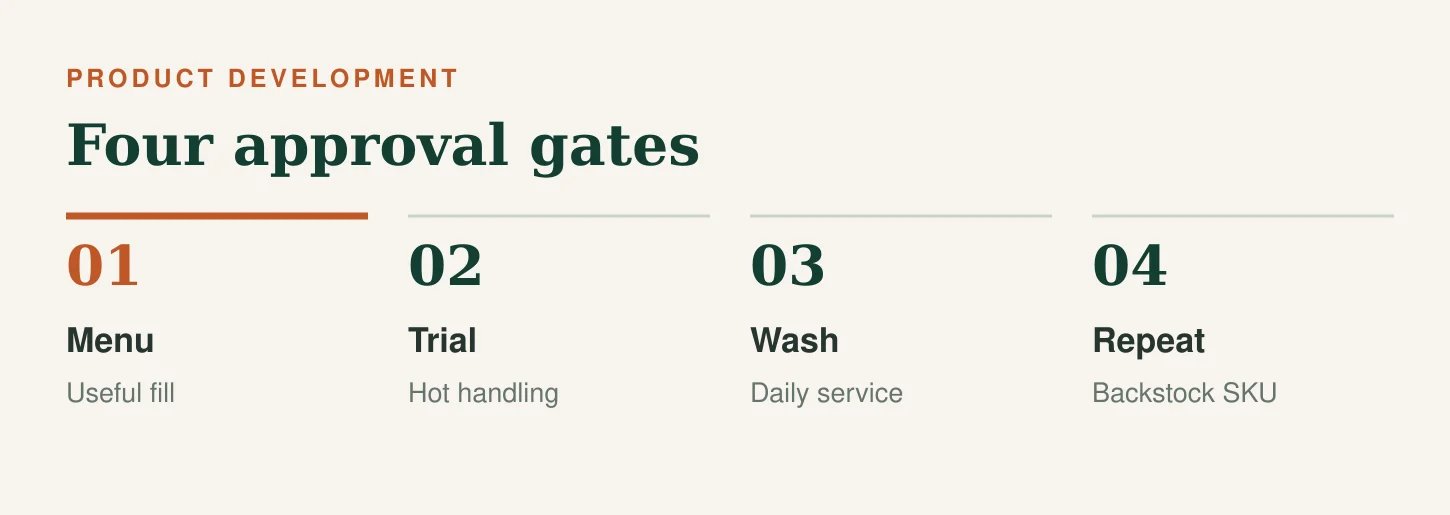
Approval gates for this product brief; the final steps depend on the project.
Balance the glaze range with service consistency
Green is not one defined finish. Olive, forest, and muted celadon-like tones can make the bamboo relief more or less visible. Review fired samples under the café’s actual lighting, beside the counter materials and food. A glaze may look sophisticated in warm studio light and muddy under a different lamp. The inside finish also affects how a dark coffee appears to the guest and how residue is noticed during clearing.
Decide how much variation the venue can accept. An intentionally varied glaze may create an artisanal mood, but a very mixed group can look accidental on a tray. Retain several approved light and dark reference pieces. Specify the rim, body, raised nodes, and foot separately. A repeat order should fit visually with the cups still in service, even if some natural variation is expected.
If different colored cups indicate drink types, make that operational rule clear and inspect whether the shades remain distinguishable. If colors are purely decorative, staff should not be asked to sort them unnecessarily in a rush. Every extra variant creates inventory and replacement decisions. A small, coherent service range often works better than a broad color menu.
Handle breakage and replenishment
Ceramic can break in a working café, and a sculpted node or decorative handle may be a vulnerable point. Ask for the expected packing format and test it through the distribution route. Loose cups in a carton should not knock raised bands against one another. A gift box may be attractive for retail sales but inefficient for routine bar replenishment; quote bulk protected packing separately if both channels are planned.
Assign codes to the exact size, color, handle type, and pack. Keep a fired reference and measurement sheet at purchasing level so a replacement batch matches the original program. When a breakage pattern appears, record where it occurs: in transit, at the dish station, during stacking, or in customer use. The remedy depends on the actual cause. Reordering identical cups without changing a failed storage or packing method will not solve the problem.
A café may also sell the cup to customers. If it does, decide whether retail units use the same finish and body as service stock and what packaging is needed. A customer-facing box can include a concise design story and care text, while service bulk units may omit that presentation. The SKU records should distinguish the channels even if the ceramic cup is shared.
Track usage during a short pilot before ordering the full service quantity. Note how many cups are in circulation, how many sit in the wash area, and whether the sculpted form slows rack loading or clearing. Ask staff where chips first appear and whether the mug feels different after repeated washes. A pilot can reveal that the form needs a wider foot, a smoother node, or simply a better storage layout. Make the correction while the design is still a sample, then use the approved version for both café service and any retail extension.
Food-contact and product claims
The finished cup must be assessed for the market where it will be used. FDA resources address extractable lead and cadmium in ceramicware for US food use; EU ceramic measures address migration and documentation. Identify the actual body, glaze, and decoration represented by any report. Changes to a pigment or transfer may require a fresh review. A green botanical look is not evidence of a safer or more sustainable material.
Performance language should also be specific. “Ceramic bamboo-inspired cup” describes the form. “Insulated,” “dishwasher safe,” and “microwave safe” require support for the finished item under relevant conditions. If a removable lid is added for hotel-room service, do not imply it makes the cup leakproof. Train staff and write customer copy around what the product actually does.
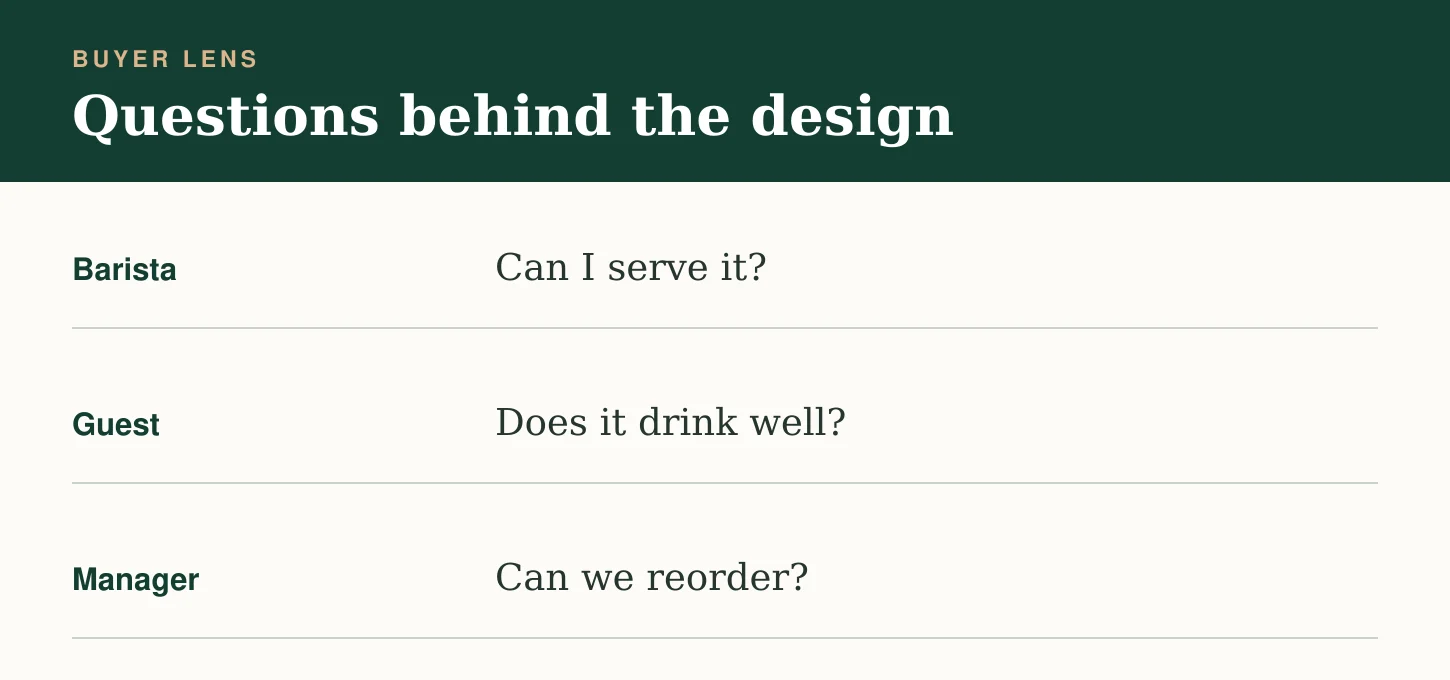
Buyer questions that should inform the approved product specification.
Brief a ceramic OEM for the venue
Send the drink menu and target useful fill, approximate dimensions, handling requirements, handle or saucer preference, original bamboo-node design, glaze range, logo artwork, washing method, storage constraints, planned first order and replenishment volume, pack configuration, target market, and launch window. Ask for shape proof, fired sample group, relevant test evidence, and a trial quantity if appropriate.
Daye Porcelain describes coffee cups and saucers, custom ceramic mugs, sampling and mold development, and quality control as routes for a defined program. The editorial bamboo cup images here are not presented as stock items. Submit the service brief through the project inquiry and ask Daye to evaluate feasibility, samples, care and test scope, pack, price, and reorder terms for the original design.
Frequently asked questions
Is a bamboo coffee mug for cafes made from bamboo?
The proposed cup is ceramic. The sculpted nodes and glaze evoke bamboo. A café should identify the exact finished body and finish in its purchasing specification rather than treating the motif as a material.
Is a handleless ceramic mug safe for hot coffee?
It depends on the design, serving temperature, fill, and handling time. Test fired samples with the intended drink and users. Raised nodes alone do not prove a cool exterior or comfortable grip.
Can these cups be stacked behind the counter?
Only if the particular design has been developed and tested for stacking. The raised bands and rims need suitable contact geometry. Otherwise plan separate shelf or rack storage.
Should a café order retail boxes or bulk packs?
That depends on the channel. Service stock often needs protective bulk packing and easy counting; retail units may need an individual gift box. Quote and identify the formats separately.
What should be retained for reorders?
Keep the approved fired cup and glaze range, drawing, useful capacity, logo file, inspection standard, pack details, and item code. Compare later samples and shipments with those references.