
Table of Contents
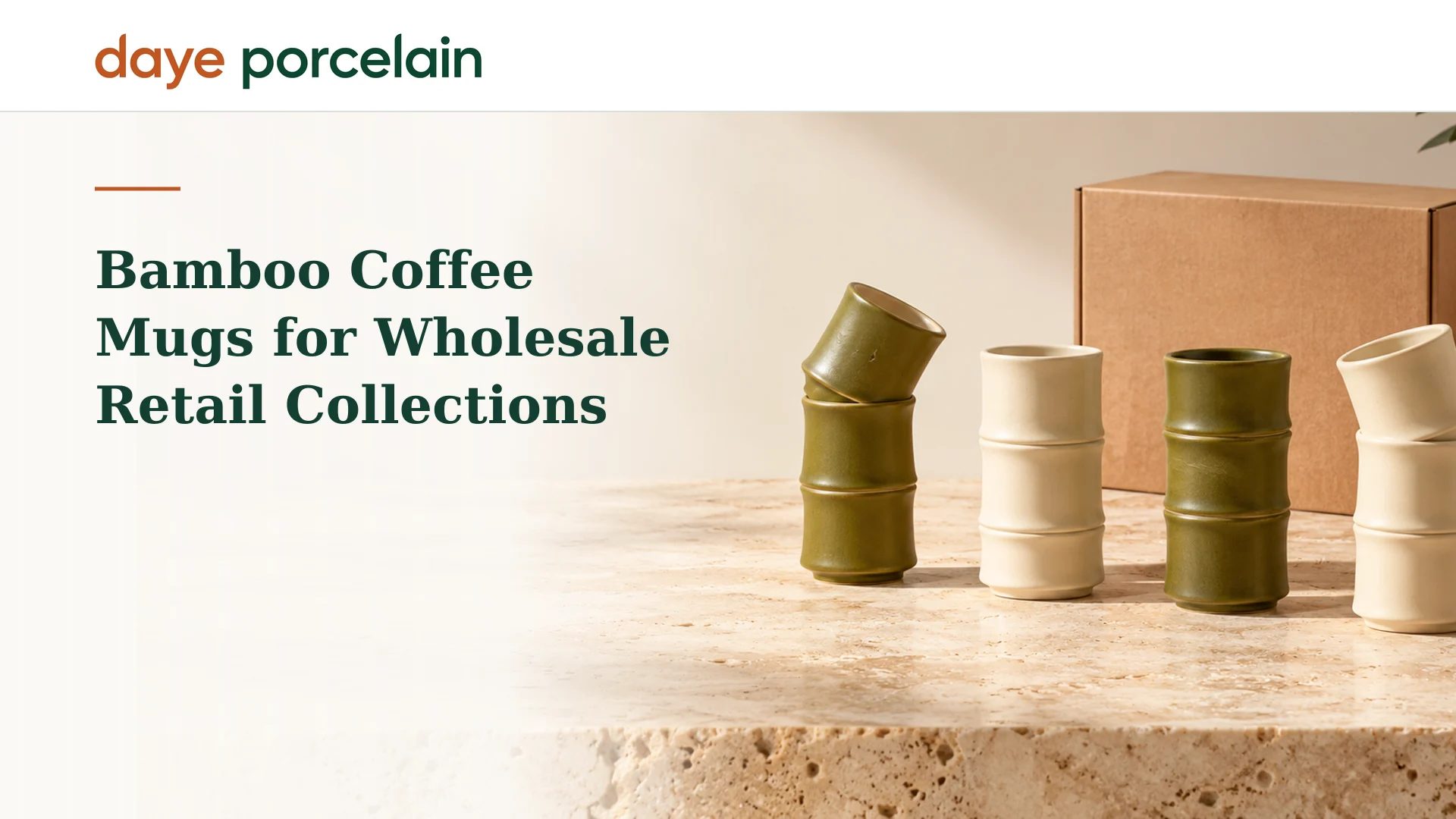
Bamboo coffee mugs can form a recognizable ceramic retail range when their stalk-like nodes, glaze, and packaging are specified as carefully as their appearance. The bamboo reference is sculpted into the ceramic cup; it is not a fiber-composite material. A wholesale buyer needs more than a beautiful sample. The range must be understandable to retailers, fit cartons efficiently, arrive with clear care information, and be available again in the same approved form.
This article looks at assortment and replenishment decisions for distributors, trading companies, and private-label brands. A factory discussion covers forming and tooling; wholesale planning starts with what will be sold, in what quantity, through which channel, and how the stock can be repeated. The strongest first assortment is usually small enough to explain in one product sheet yet distinct enough for a retailer to see why each SKU exists.
Key takeaways
- Start with one lead ceramic form and add variants only where they serve a different buyer or use.
- Identify size, finish, handle choice, and pack content for every wholesale SKU.
- Compare quotations on the same finished, packed, and documented product.
- Retain physical reference samples and component codes so reorders match the original range.
Build a coherent starting assortment
A bamboo-node mug has a strong silhouette. That does not mean a distributor needs every shade of green and every possible size at launch. Begin with a hero SKU and decide what a second item would accomplish. An ivory version may broaden a retailer’s homeware palette; a smaller coffee size may suit a different serving; a two-piece gift set may target a higher presentation level. Each addition should earn its place through an identifiable use or sales channel.
Write a range sheet before quoting. List useful capacity, approximate dimensions, body material, glaze, handle or handleless construction, and the number of pieces in each sales unit. If the design is all ceramic, say so. A title such as “bamboo mug” can otherwise lead to questions about a plant-material lid or fiber body. Show the rim and foot in technical images as well as the lifestyle view that establishes the mood.
The node rhythm should make the family related without forcing every form to be identical. A larger cup may need broader band spacing, a more substantial base, or a handle. A smaller cup may carry only two nodes. Agree which design elements repeat and which change with size. Ask for fired samples of the entire proposed family and view them together on a shelf, not only as separate studio photographs.

Illustrative ceramic assortment; the final wholesale range and packing are project-specific.
Compare sales-unit formats
|
Wholesale format |
Best fit |
What must be specified |
|---|---|---|
|
Single ceramic cup |
Open-stock retail, replacements, or a modest trial |
Individual pack, barcode or label space, color code, and carton count |
|
Coordinated pair |
Giftable homeware or color story |
Exact colors, matched sizes, insert protection, and set contents |
|
Mixed size collection |
Coffee and tea use in one range |
Separate capacity and dimensions for each size, price structure, and replacement policy |
|
Café bulk pack |
Repeat hospitality supply |
Inner dividers, handling and washing requirements, breakage planning, and reorder code |
The same cup can be sold in more than one format, but the packaging and unit economics change. A single gift box is not a bulk carton with a different label. Ask the supplier to quote each actual pack. A set may need a shaped insert around protruding bamboo nodes. A café pack may favor compact protection and easy stock counting. Decide whether a retailer can order one color independently or must buy a fixed assortment.
Avoid showing a picture of two cups if the retail unit contains only one. Conversely, a pair photograph should identify the included colors and any saucer or lid. Listing accuracy reduces customer-service questions and prevents a distributor from building a catalog around an ambiguous visual. If product assets come from a concept shoot before production, replace them with photographs of the approved finished SKU before commercial launch.
Specify the ceramic cup in terms buyers can use
Useful capacity is the amount normally served, not the liquid volume at the very brim. State how the figure is measured. Include overall height, maximum diameter at the node relief, rim diameter, base diameter, approximate weight, and any handle clearance. The widest node can determine the gift insert and master carton size even when the central body seems narrow.
A smooth drinking rim and cleanable interior matter in all channels. For handleless cups, the intended hot beverage and holding method should be tested. A sculptural band can feel secure in the hand but should not be assumed to insulate. A larger serving may call for a handle or a different body design. Wholesale buyers should try a fired sample with the drink it is meant to hold, then give the factory specific feedback rather than judging only the empty cup.
Define the glaze color with physical samples. A green glaze may move differently over raised rings than across the flat body. If intended variation is part of the collection, approve examples at the light and dark ends. Keep a reference for each color and size. A retailer can tolerate a natural-looking tonal range when it is described honestly; uncontrolled differences between repeat orders create returns and shelf inconsistency.
Prepare product information for retailers
A distributor’s product sheet should allow a store to create a listing without guessing. Include item code, exact material, useful fill, dimensions, net weight, pack count, country-of-origin information as applicable to the actual goods, care guidance supported by evidence, and clear images. State whether the mug has a handle, lid, saucer, or none of those. Provide box and outer-carton dimensions after the pack has been approved.
Think about search terms in relation to the object. The phrase “bamboo coffee mugs” can describe sculptural ceramic cups in the title, but the material attribute should say ceramic or porcelain if that is what the final product is. Do not tag an all-ceramic mug as bamboo fiber, compostable, or plant-based. A buyer trying to filter catalog materials should get the right answer. The botanical design story belongs in the description and images.
For a branded range, provide approved short and long descriptions, image rights, and a care statement that works across the exact variants supplied. If the green and ivory finishes have different cleaning limitations, the SKU data must reflect that. A shared product page should not apply an unsupported claim to every item just because one sample passed a test.
Build a retailer answer sheet from the questions that arrive after the first sample mailing. Buyers may ask whether the green is consistent, whether the cup fits a gift carton, whether an individual replacement can be purchased, and whether the image shows one or two units. Give the distributor one approved answer for each question, with a product photograph or specification where possible. This small document makes sales teams more accurate and helps identify unclear SKU data before a large rollout. Revise the listing and carton language when repeated questions reveal ambiguity rather than relying on sales staff to explain it each time.
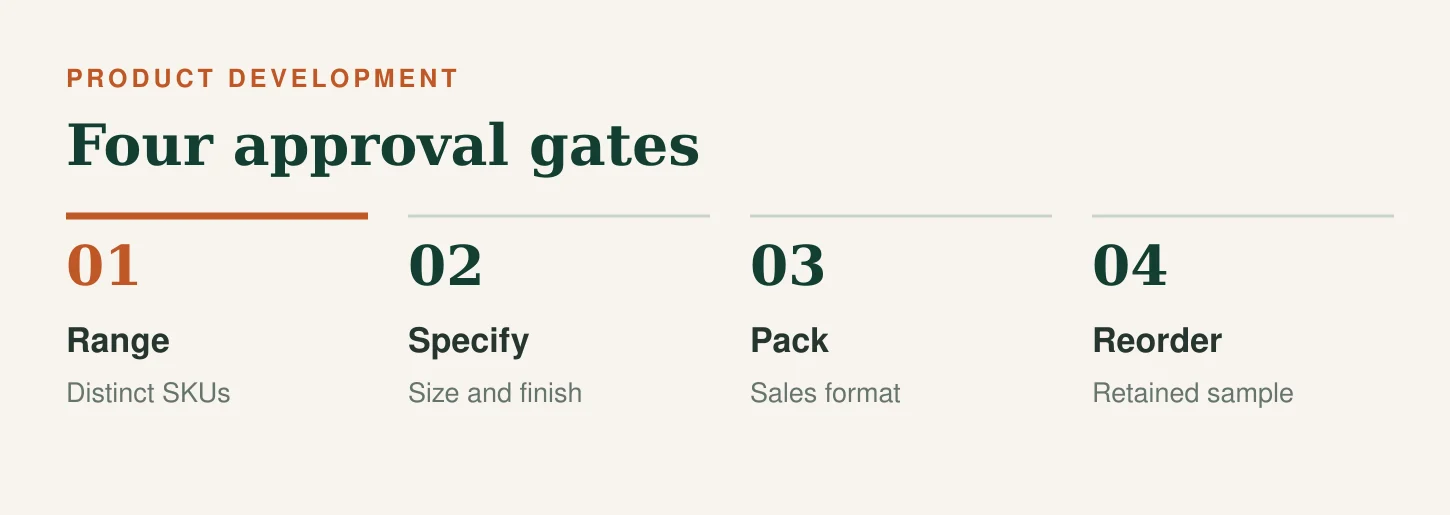
Approval gates for this product brief; the final steps depend on the project.
Control quotation and margin inputs
Ask for a quote that separates the cup, glaze or decoration variant, individual packaging, set insert, master carton, tooling or setup, and any requested testing. Compare the same order mix and delivery basis. One supplier’s unit price may include a printed gift box while another’s may cover only a naked cup. A distributor also needs the number of saleable units per carton and expected pack dimensions to estimate handling and freight.
Plan quantity by SKU, not merely by family. If 60 percent of forecast demand is green singles and 40 percent ivory pairs, state that mix. Setup and price can differ when artwork, glaze, and pack variants multiply. Minimum order and lead time should be confirmed for the actual combination, including repeat releases. Avoid announcing a generic minimum in the public article; it belongs to the product and quote.
Margin is affected by damage and replacements as well as factory price. Ask how spare cups are packed and whether a retailer can replenish a popular color without repeating the entire launch mix. Decide what happens if a pair loses one component in transit. A replacement policy may need additional stock, but it can protect the value of a gift program. Test the proposed pack with the real protruding relief.
Make reorders look like the first collection
Store the approved fired samples, drawings, glaze range, artwork revisions, pack specification, and item codes together. Mark the node bands and rim as features that should not drift. A later order may be placed by a different employee or purchasing office. The product record should let that person see exactly what was approved without reconstructing a conversation from old emails.
Review several pieces from a pre-production or early production set. Compare height, useful fill, node definition, foot stability, shade, rim quality, and pack fit. If the brand permits variation, specify the acceptable envelope rather than treating every difference as a defect or accepting every difference as “handmade character.” A distributor’s shelf presentation depends on a coherent group, not a single perfect hero cup.
A second glaze may require its own inspection sample. A changed pigment, transfer, or interior finish can affect product evidence and care claims. Treat the new SKU as a product decision even if it shares a mold. Keep the assortment small until demand shows which variations deserve regular stock.
Food-contact evidence and care
The finished ceramic drinking cup needs market-appropriate food-contact review. FDA sources discuss extractable lead and cadmium in ceramicware for US-market products. EU ceramic measures address migration and documentation. Ask which exact body, glaze, and decoration a report covers. A distributor selling in several markets should clarify the documentation and labeling expected in each destination before finalizing retail cartons.
Do not promise that the mug is dishwasher-safe or microwave-safe merely because it is ceramic. The finished item, including a logo or decorative accent, determines the question to test. If a metallic effect is introduced for a gift line, its instructions may differ from a plain glazed version. Keep the care statement close to the SKU data so retailers do not reuse outdated copy.
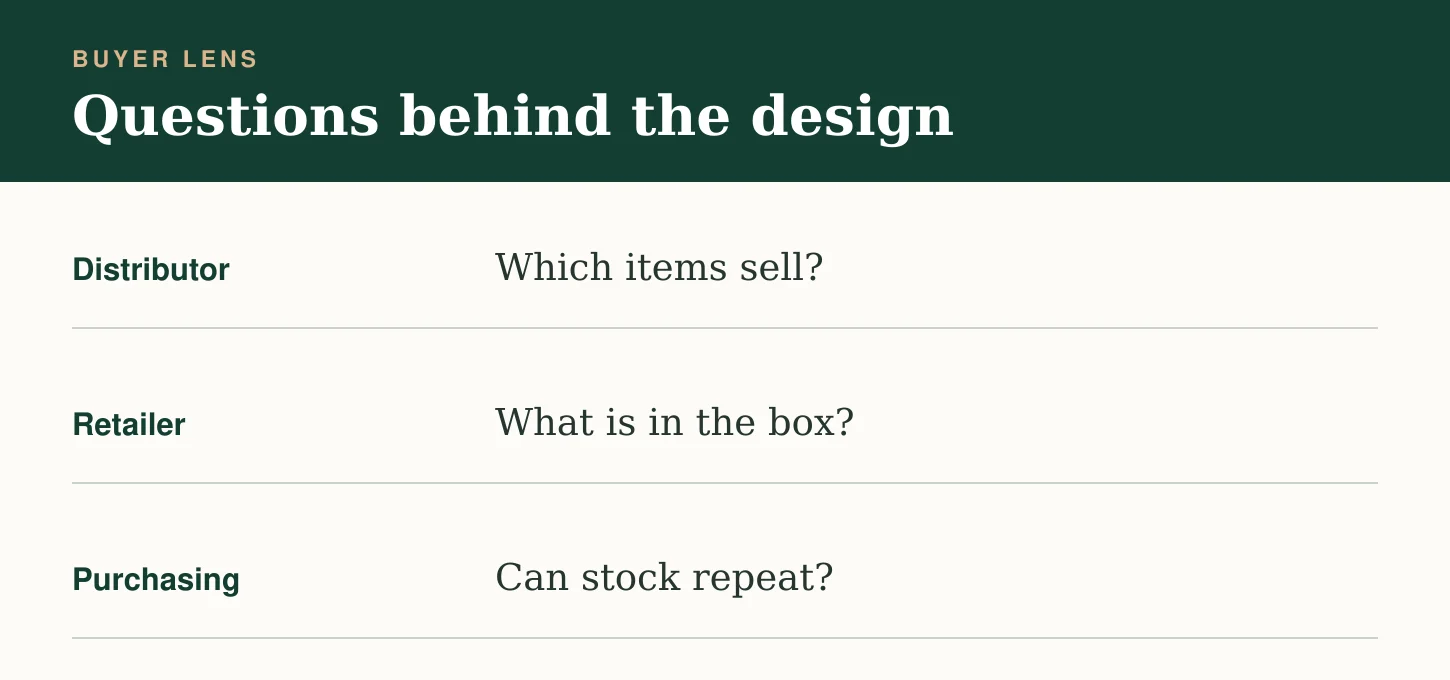
Buyer questions that should inform the approved product specification.
Work with Daye on a wholesale program
Daye’s custom ceramic mugs page asks buyers to define variants, quantities, and pack formats. Its ODM development and quality control pages describe the route from an approved form and finish to a repeat program. Those pages are relevant to a ceramic bamboo-node collection, though the editorial concepts pictured here are not presented as existing Daye stock.
Send a concise range sheet through the project form: drawings or original concept, material, sizes, glaze references, sales-unit formats, quantities by SKU, destination markets, care and test requirements, packaging, and launch window. Ask for physical samples, a complete pack quotation, tooling and design-rights terms where applicable, and a repeat-order process. This gives the manufacturing team a real assortment to evaluate.
Frequently asked questions
Are bamboo coffee mugs in this range made from plant fiber?
No. The proposed cups are ceramic vessels with a sculpted bamboo-stalk motif. The final catalog should state the exact ceramic body and finish and avoid material tags that describe another product.
How many SKUs should a first wholesale range include?
There is no universal number. Start with a lead form and add only variants with a distinct use, channel, or color story. Each extra size, glaze, or pack needs its own code, sample, forecast, and reorder plan.
Can singles and gift pairs use the same cup?
Potentially, yes, if the approved body and finish are shared. The pair still needs its own insert, pack tests, barcode, carton data, and clear statement of contents. Quote and inspect both sales units.
What measurements matter most for shipping?
Record the final cup’s maximum width at its nodes, height, weight, and the dimensions of the approved inner and outer packs. A plain cylinder dimension can underestimate the space and protection required by relief.
How should a distributor control a reorder?
Keep a physical approved sample and the drawing, glaze range, decoration, pack, and item codes. Compare production pieces with those references and update the specification whenever a real product change is approved.