Table of Contents
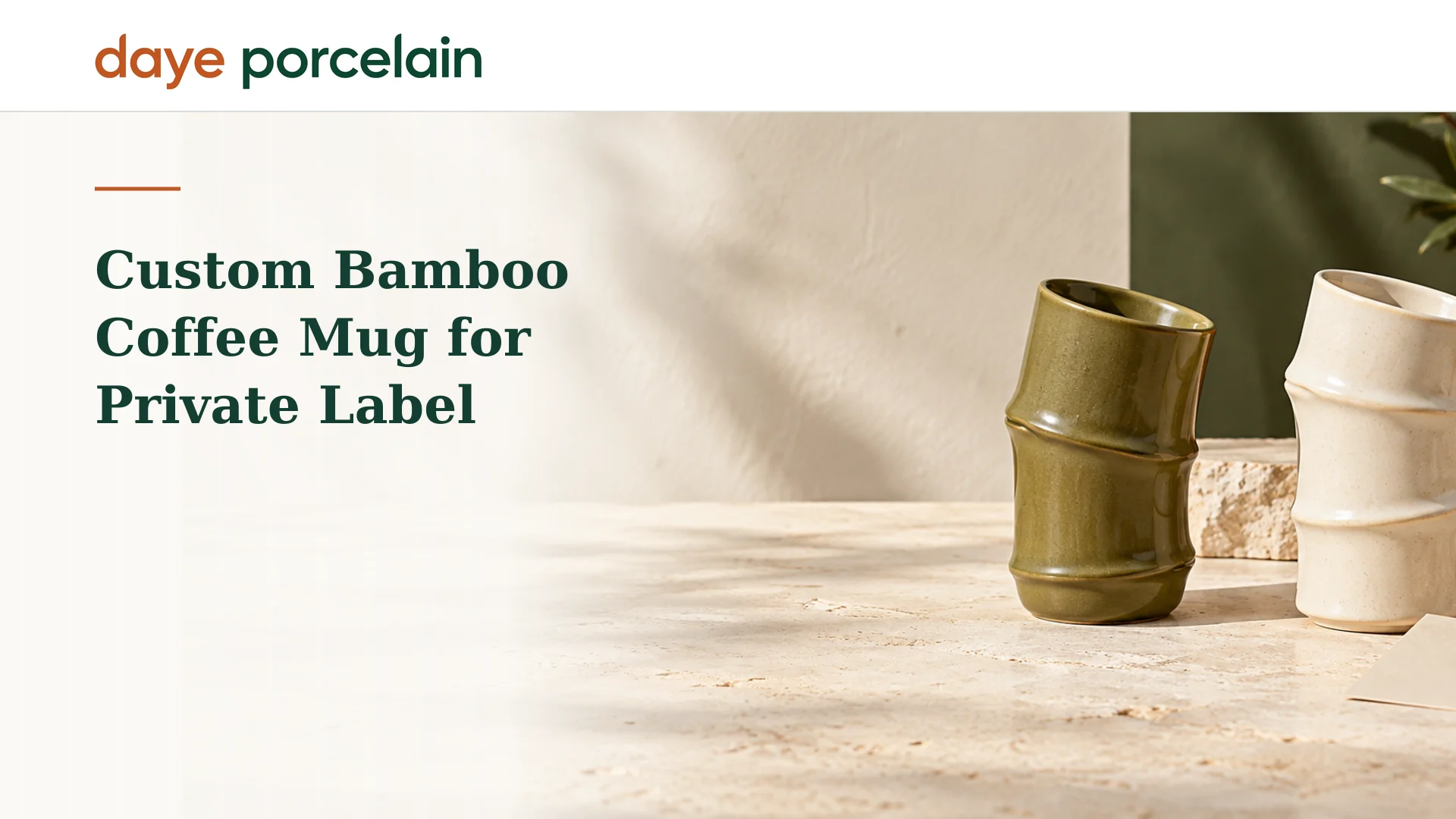
A custom bamboo coffee mug gives a brand more to own than a printed logo. Here the product is a ceramic cup with an original bamboo-stalk-inspired body: its raised nodes, proportions, glaze, and brand marks form a coherent object. The cup is not made from bamboo. For a retail or hospitality buyer, the value of customization depends on which choices are actually exclusive, how they are documented, and whether the approved design can be repeated on later orders.
This guide focuses on private-label decisions. The basic ceramic form and hot-drink handling are discussed in Daye’s custom ceramic mug and sampling resources. The specific question here is how a bamboo motif becomes a brand asset without losing clarity on artwork rights, tooling, cost, and the physical cup a customer will receive.
Key takeaways
- Decide whether the brand is customizing a surface, commissioning a new shape, or both.
- Make the bamboo-node rhythm original and keep the rights to commissioned design work clear.
- Approve logo position and fired color on actual relief, including the rim and underside.
- Quote the complete private-label SKU with mold, sampling, packaging, inspection, and reorder terms.
Choose the level of ownership
A buyer may start with an existing ceramic blank and apply a bamboo graphic, or commission a new body with raised stalk nodes. Those routes create very different products and development commitments. A print on a standard cylinder may suit a short promotion. A sculptural cup can support a distinctive signature collection, but it needs more design work, physical samples, and often tooling. Write the intended outcome in the brief before asking suppliers for a unit price.
There is also a middle route: an understated existing textured body can receive a custom glaze and small brand mark. Its shape may still be available to other customers. “Custom” alone does not establish exclusivity. Ask which elements are pre-existing supplier designs, which are commissioned for the brand, and which may be reused by either party. Record the permitted use of reference imagery and artwork files. A brand should not assume that sharing a competitor’s photograph gives it the right to reproduce that product.
A useful first decision is what a customer would recognize if the printed logo were removed. The node placement, taper, and lip could create a recognizable family across a small coffee cup and a larger mug. A strong private-label object remains coherent when viewed from the back, on a shelf, or in an unbranded sample. The logo then completes the identity instead of compensating for an anonymous form.
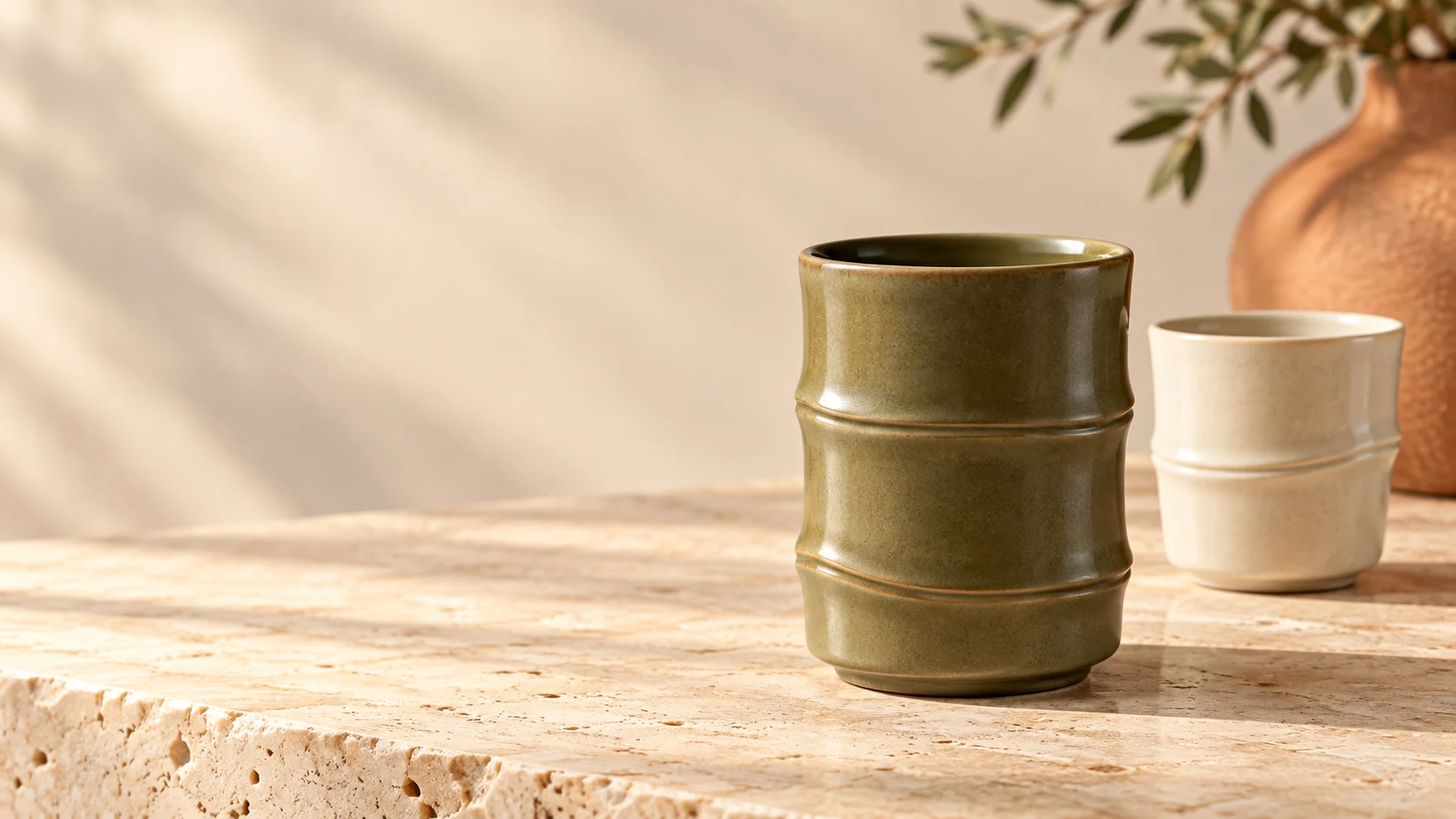
Original color and shape studies for an all-ceramic private-label collection.
Compare customization routes
|
Route |
Brand-controlled elements |
Commercial questions |
|---|---|---|
|
Logo and artwork on a selected ceramic body |
Graphic files, placement, packaging story |
Is the body available to other buyers, and what decoration method is used? |
|
Glaze and relief adaptation |
Color range, selected node details, brand mark |
Which changes need new samples or tools, and which design rights are exclusive? |
|
Original commissioned bamboo-node form |
Silhouette, relief rhythm, dimensions, finish, pack |
Who owns the drawings and molds, and how are reorders controlled? |
Do not compare the quoted prices without their development scope. A lower unit cost on an existing body may exclude tooling but leave the physical shape open to competitors. A commissioned body may involve a setup investment but support a more ownable product. Neither route is inherently best. The brand’s sales channel, forecast, launch timing, and appetite for design ownership determine whether the extra development work is justified.
For each route, ask the supplier to separate sample charges, mold or setup costs, unit price, decoration, individual packing, master carton, and any testing requested for the market. Include the quantities of every glaze and logo variant. A quote for a single plain cup is not a quote for a mixed, branded gift assortment.
Develop an original form and retain the record
Start with front, side, top, and base sketches. Mark which details are defining: perhaps the number of nodes, their spacing, a slight asymmetric taper, and the relationship of the foot to the main body. Leave technical room for the maker to resolve mold release and finishing without losing that signature. Include target useful capacity, height, diameters, approximate weight, and the intended beverage. A sketch can initiate a conversation, but a production approval needs measurable geometry and a retained fired reference.
Review intellectual property before asking for a close match to a photograph. A natural bamboo theme is broad; an exact commercial silhouette, arrangement of stackable components, or distinctive decoration belongs to its designer unless rights are established. Commission original drawings or license a form explicitly. Keep dated revisions and ownership terms with the product file. The first sample may reveal improvements that should also be reflected in the final design record.
Define the tooling terms in plain language. Who pays for the mold? Who owns it? Can it be used for other buyers? Where is it stored, who maintains it, and what happens if the program moves or ends? Do not confuse a supplier’s ability to make an original shape with a promise of exclusivity. These points need agreement in the project terms, alongside the approved production sample.
Place the brand without spoiling the stalk
The bamboo nodes create a strong texture, so a large front logo may compete with the form. Try several placements at actual size: a small mark near the lower body, an embossed sign on the foot, a restrained side mark, or branding primarily on the gift box. Look at a fired sample from the customer-facing side and from the side held by the hand. A graphic crossing a raised band can distort or break visually.
Choose the decoration method with the production team. An emboss or deboss may need a tool change; a ceramic transfer can carry fine artwork but must be proofed on the curved surface; a colored edge or accent changes the finish and potentially the care brief. The supplier should name the actual method offered. Do not describe a repeatable transfer as hand-painting or a sculpted relief as a separate bamboo material. Product copy should match the finished process.
If the logo is on the underside, confirm it remains legible after firing and does not interfere with the foot. If it is on a high-contact area of the exterior, review abrasion and handling. Keep a master artwork file with dimensions, orientation, approved colors, and revision number. A logo file sent casually in an email should not be the only record that controls a later production run.
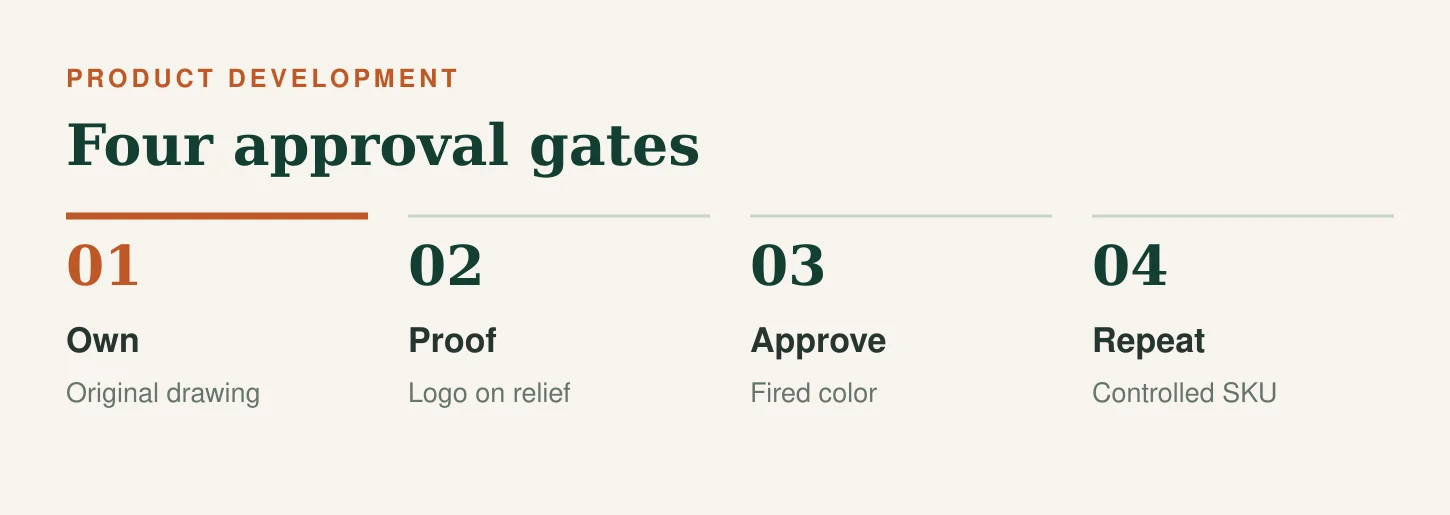
Approval gates for this product brief; the final steps depend on the project.
Control the fired color
Green is an obvious bamboo cue, but it is not a color specification. Olive, moss, forest, and pale celadon-like glazes have different shelf moods. Request color trials on the intended ceramic body, because a flat swatch does not show glaze gathering at the lower side of a node or breaking lighter along its edge. Review the cup in daylight and the retail lighting relevant to the brand.
A brand may want controlled variation, especially if the design feels handmade. Define the approved light and dark range across several physical samples. Specify the drinking rim, inner wall, relief channels, and foot separately. The logo must remain visible within the approved color variation. A photograph of one unusually dramatic sample can misrepresent a whole shipment; use a realistic range in marketing if variation is part of the design.
If a neutral ivory version joins the green, give it its own item code and reference sample. A common body mold does not make the glazes interchangeable in inspection. Confirm whether each variant has the same decoration, care instructions, and packaging. The goal is a coherent collection with predictable reorders, not a growing list of almost identical shades.
Make the cup usable and packable
A sculptural form must still hold coffee comfortably. Define useful fill separately from brimful capacity. Test the rim against lips, the base for stability, and the raised node area with a warm, filled cup in the hand. If the concept is handleless, verify whether the intended serving and beverage temperature suit that choice. A handle can be added if needed, but it should be drawn as part of the form and sampled with its weight and grip.
Inspect the interior for cleanability and glazing. Deep exterior channels may also collect residue in use, so consider both the aesthetic and the daily washing routine. A decorative visual does not prove dishwasher or microwave suitability. Verify the finished SKU and write care copy for that finish and decoration, not for a generic ceramic blank.
Packaging is another form of brand expression, but its first job is protection. The widest node may touch an insert even when the main body fits. Test the actual fired cup in the proposed individual box and outer carton. If a gift pair is sold, show both colors and protect their raised bands from striking each other. Establish whether spare units can be supplied without the presentation box.
Approve the exact SKU and the claims
A sample sequence can follow four gates: shape, fired finish, brand execution, and packed release. At each gate, consolidate feedback and record which drawing or artwork revision is being approved. Look at several pieces, not only a hero sample. Check node definition, seam finishing, wobble, glaze coverage, logo placement, capacity, and pack fit. State the acceptable variation and the rejection examples for critical features.
For US and EU markets, discuss food-contact documentation for the finished cup and its glaze and decoration. FDA sources address lead and cadmium in ceramicware; EU rules address migration and accompanying documentation for ceramic articles. Ask what was tested, which version it represents, and whether a new pigment or decoration requires an updated review. “Lead free,” “dishwasher safe,” and similar statements need their own substantiation.
A private-label listing should also avoid claiming that the pictured concept is an existing Daye item. The images in this article are original editorial design concepts, not factory catalog evidence. Once a brand develops and approves a real product, photograph the actual final sample and replace concept visuals in the sales listing.
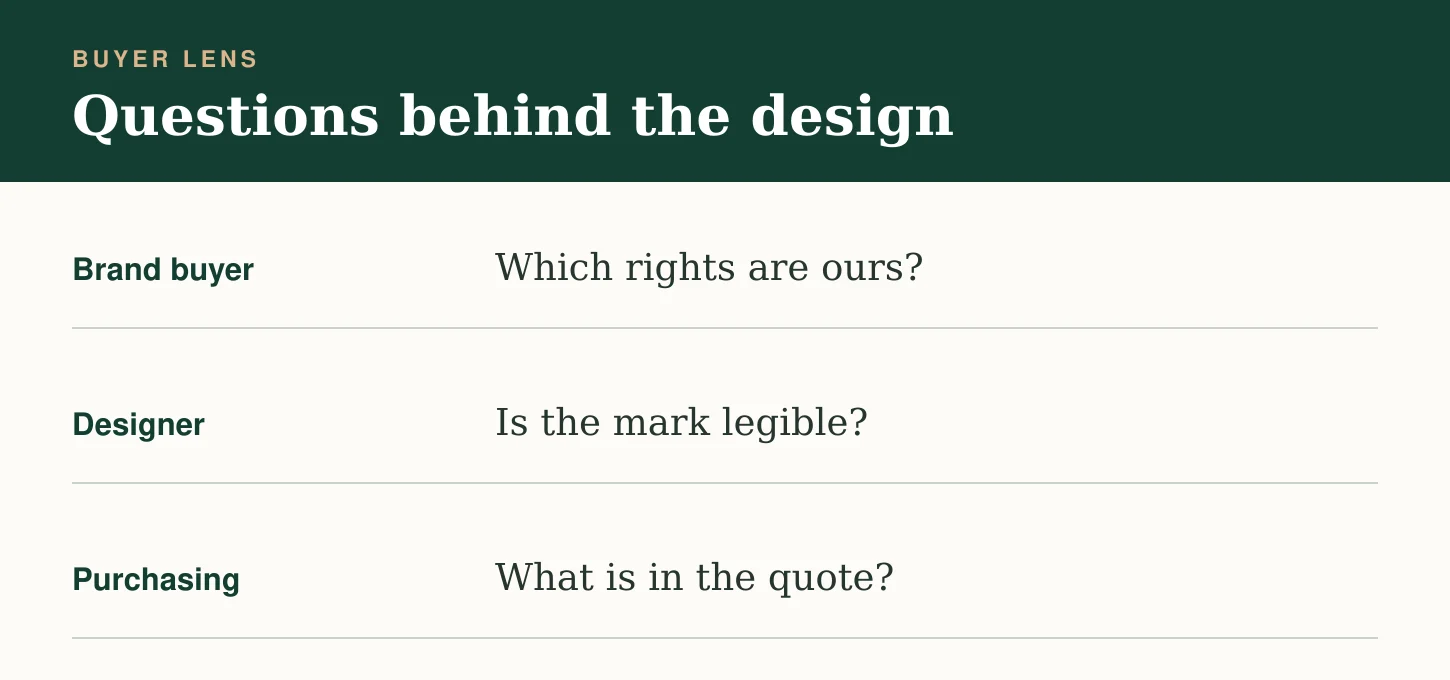
Buyer questions that should inform the approved product specification.
Prepare the RFQ for Daye
Send the design files and rights status, body material, useful fill, dimensions, raised-detail priority, glaze references, logo files, expected variants, destination markets, planned care claims, packaging, first-order quantity, repeat forecast, and launch date. Ask for separate lines covering development, molds, decoration, tests, packing, and finished unit pricing. If a design element may change after the first physical sample, identify who signs off on the revision.
Daye describes ODM development, custom ceramic mugs, and mold development on its site. Its quality control page connects an approved product with production inspection. These are appropriate starting points for a China-based OEM/ODM conversation. Feasibility, minimum quantity, tooling rights, finish, evidence, price, and schedule must be confirmed for the particular original design. Submit the brief via Daye’s inquiry form.
Frequently asked questions
Can a custom bamboo coffee mug be made entirely of ceramic?
Yes. In this concept, the bamboo reference is sculptural relief and color on a ceramic body. Specify the actual clay body and glaze, and avoid implying that the vessel contains bamboo fibers or wooden parts.
Does a custom color make the cup exclusive?
Not necessarily. A special glaze can distinguish a SKU, but exclusivity of the body, mold, artwork, or color needs clear agreement. Ask what the supplier already owns and what is commissioned for your project.
Where should the logo go on a bamboo-shaped mug?
Choose a placement that survives the curved relief and remains legible after firing. The lower exterior, side, or underside may work, depending on the form. Proof the artwork on a fired sample and view it from normal holding positions.
Can the brand add a second size later?
Usually it can be explored, but a second size is a new geometry and may require separate tooling, handling approval, pack design, and a new SKU. Do not assume the first mold can simply be scaled.
What must be fixed before the first production order?
Retain approved shape and glaze samples, rights and tooling terms, decoration files, acceptable variation, target market evidence, packaging, component codes, quantities, and inspection criteria. Those records make later reorders more predictable.