Table of Contents
ARTICLE 05 | DESIGN & PRODUCT DEVELOPMENT
CORE KEYWORD luxury scented candles wholesale
Luxury scented candles wholesale buyers evaluate more than scent. The vessel, finish, weight in hand, lid, label, unboxing and after-use value all shape a premium impression. But the collection must also survive production variation, shipping and repeat orders. A sculpted porcelain container can give a home-fragrance brand a recognizable form; its quality is credible only when the finished candle performs consistently and the product story matches the actual supply chain.
Daye Porcelain’s published capabilities cover custom ceramic design and manufacturing. It can be approached for a porcelain vessel or lid for a premium candle program. The available information does not confirm Daye as a wax filler or maker of finished scented candles. A candle specialist should develop the fragrance, wax, wick, pouring, finished-product testing and labels, while the brand coordinates the retail experience. This guide shows how to build a luxury range across those disciplines without confusing visual styling with product evidence.
Key takeaways
- Define the premium promise in specific, inspectable product features.
- Develop vessel form and glaze alongside the filler’s burn requirements.
- Treat scent architecture, pack, claims and reorders as part of the same wholesale specification.
- Price a finished, delivered and sellable candle, including protection and quality control.
Translate “luxury” into a product brief
A buyer may ask for a luxury candle but mean several different things: a refined neutral glaze, a collector’s object, a gift-ready box, a signature fragrance, or an elevated hotel amenity. State the consumer, channel, target shelf price, competitive context, and desired reasons to keep the vessel after the wax is used. Choose a limited number of design cues rather than layering embossing, metallic decoration, heavy lids and elaborate boxes without a clear hierarchy.
A strong brief describes form, finish, touch, legibility and presentation. For example, a quiet cylindrical porcelain jar with a subtle relief mark may support a fragrance-led brand; a sculpted lid and saturated glaze may suit a decorative homeware label. Both can be premium, but they imply different cost, pack and inspection decisions. Ask whether the range should look coherent across scents, sizes and seasons. If every SKU has a different shape, the collection may lose recognition and require separate tooling and technical development.
The luxury label should be earned in the finished unit. A beautiful empty jar with a rough rim, loose lid, uneven label or chipped gift box will not support the promised price. Agree on visible and tactile acceptance examples before bulk production. Photograph the approved physical master in consistent lighting for internal color reference, but rely on retained fired samples and defined tolerances for production approval rather than a screen image alone.
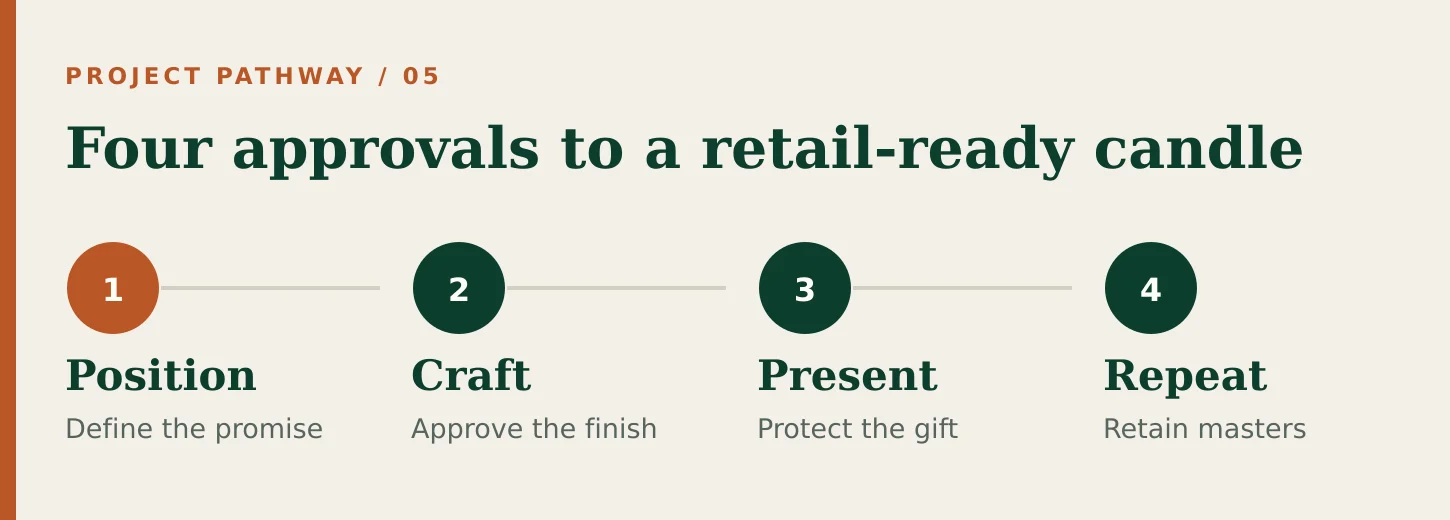
Illustrative approval sequence for the buyer, ceramic maker and finished-candle specialist.
Use porcelain as a design system
Porcelain offers a surface for glaze, relief, underglaze marks and matching lids, subject to the manufacturer’s process and technical approval. The vessel can become the recurring element while labels or sleeves distinguish scents. A shared signature silhouette makes later gift sets and seasonal editions easier to recognize. It can also simplify ceramic tooling compared with entirely new forms for every fragrance. Design the base, rim and interior as deliberately as the exterior, because they affect both the user experience and the candle specialist’s work.
Daye’s design development and manufacturing information provide a starting point for a custom vessel inquiry. Provide a dimensioned sketch, intended wax fill, proposed wick count, expected quantities, finish references, lid design, logo method and target market. Have the filler review the usable opening and internal profile before committing to a mold. A porcelain mug shape may inspire the collection, but a food-contact claim is not a substitute for finished-candle evaluation. The candle specialist should assess container performance with the exact wax, fragrance and wick system.
Consider what happens after use without promising universal reuse. If the brand wants the empty porcelain vessel to be retained as a decorative container, design a stable, attractive interior and provide appropriate cleaning and use guidance after a qualified review. Avoid implying the used vessel is automatically safe for food or drink; a finished candle’s residues and the intended reuse need separate consideration. A durable design story can be attractive, but it should be precise and supported rather than a vague sustainability claim.
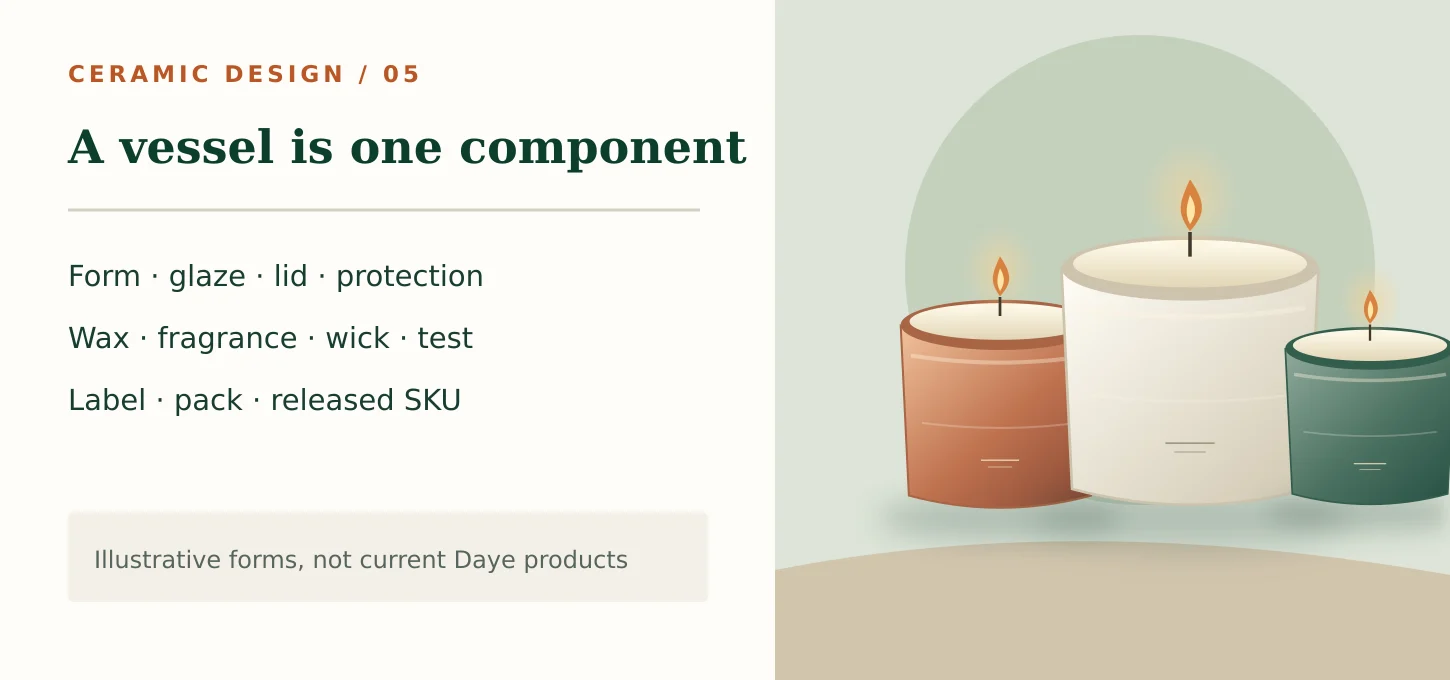
Conceptual porcelain candle-vessel illustration. These are not current Daye products.
Curate scents for a range, not a list
A luxury line benefits from a coherent fragrance point of view. A core collection might cover contrasting moods—fresh, floral and woody—while a limited seasonal scent adds a reason to revisit the brand. The fragrance house and candle maker should translate marketing language into a formula suitable for the wax system and target market. Ask for scent samples, formula references, stability observations and controlled evaluation of fragrance performance in the actual finished vessel. “Strong scent” is not enough: a buyer should understand character, balance and performance through intended use.
Each fragrance can affect burn behavior and chemical classification. A shared vessel does not mean every scent can use the same wick without evaluation. The candle specialist should retain formula and wick records and conduct appropriate testing for each relevant configuration. IFRA fragrance documentation can inform safe-use assessment of the fragrance mixture, but it does not replace a finished-candle burn test or market-specific label review. If a scent changes source or composition, require a documented technical decision before calling it the same SKU.
Names and claims must match the product. “Beeswax,” “soy,” “natural,” “non-toxic,” and fixed burn time are specific assertions that may require composition and test evidence. A poetic scent description can evoke a place or mood without making an unsupported therapeutic claim. A premium buyer will notice when the label, site copy and wholesale line sheet disagree about wax, fill weight, or scent notes. Maintain one approved product data sheet for each SKU and use it in all sales channels.
Engineer the gift presentation
A luxury scented candle gift box wholesale program needs a physical unboxing sequence. Decide whether the lid is secured, how the candle is lifted, where warning and ingredient information sits, and whether tissue, insert or ribbon is worth the cost. The box should support the brand’s visual language, but protection comes first. Porcelain is heavy and can scuff or break when cartons are handled. Approve the finished boxed unit and a master carton for the intended route. Direct-to-consumer parcels may need more protection than pallet delivery to a distributor.
Ask the pack supplier and filler to trial real assembled units. Look for glazed surfaces rubbing against inserts, lids shifting, corner crush, label abrasion and wax contamination. A beautiful rigid box that adds excessive weight or warehouse space may erode wholesale margin. A simple well-fitted carton can feel more considered than a complicated box with poor fit. Compare the cost of each presentation layer with its actual effect on shelf appeal, gift use and protection.
If the brand sells gift sets, plan the arrangement around the weight and size of several jars. A three-piece set should keep vessels apart and make each scent and warning accessible. A holiday sleeve can refresh a core box, but it should not obscure essential information. Seasonal packaging has a short selling window; order it against realistic forecasts and a dated production plan. The product’s permanent ceramic form should remain usable beyond one campaign.
|
Premium feature |
Product question |
Approval evidence |
|---|---|---|
|
Signature glaze |
Can the desired color and surface be repeated? |
Fired master and variation limits |
|
Porcelain lid |
Does it fit and ship without damage? |
Production samples and transit trial |
|
Fragrance range |
Does each finished SKU perform and label correctly? |
Formula, burn and label records |
|
Gift box |
Does it protect and present the candle? |
Assembled sample and pack test |
|
Brand claim |
Is the statement specific and supportable? |
Approved claims ledger |
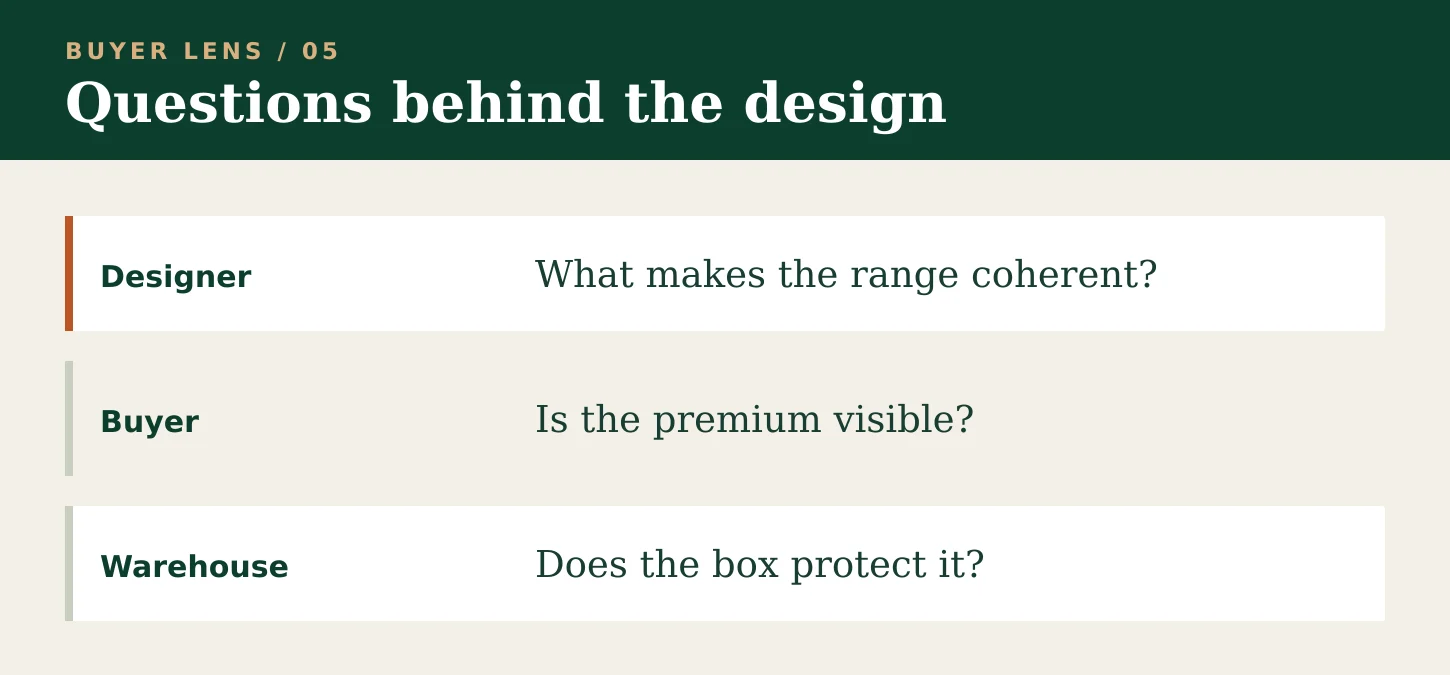
Buyer questions that guide scope, quality evidence and replenishment.
Price the whole premium experience
A luxury product may justify investment in a new mold, special finish, lid, or heavier box, but it still needs a sustainable wholesale price. Build a cost sheet from ceramic tooling, sampling, unit production, inspection, protected transport, wax, fragrance, wick, filling, testing, label, box, freight, duties where applicable, storage, breakage and retailer margin. Separate one-time development from repeat unit cost. A distinctive vessel that can support several scents and future seasons may spread tooling investment across a coherent line, but only if reorders are realistically forecast.
Set minimums for each component. Glaze color, printed box, fragrance batch and candle fill may all differ from the ceramic forming run. A supplier’s advertised “wholesale luxury scented candles” price may refer to stock finished candles, an empty container or a private-label service; clarify scope before comparison. A high unit price is not proof of high quality, just as a low one does not prove value. Ask what physical sample, test and inspection evidence is included.
Plan a pilot before a major retail rollout. Put a small representative range into the intended sales channel and record customer feedback on scent, vessel, packaging and price. Check delivery damage and returns by lot. A retailer’s reorder depends on sell-through and stock reliability, not only the launch photographs. Keep enough component and production information to reproduce the successful version without improvisation.
Brief Daye and the candle partner together
Send Daye a project brief for the ceramic scope: form, interior dimensions, glaze, lid, decoration, forecast, destination, pack and target schedule. Ask for a fired sample and agreed inspection criteria. Share the same drawing and samples with the candle specialist so it can propose wax, wick, fill level, fragrance development and test work. Record handover points and who approves a change. The brand should sign off the final sales unit after seeing the finished candle in its real box.
A premium wholesale line sheet should show authentic finished-product photographs, dimensions, net wax content, scent notes, material description, unit and carton quantities, lead time, care and warnings, and clear customization options. Do not present conceptual ceramic candle visuals as a currently available Daye finished SKU. A precise offer helps buyers order correctly and gives the brand a stronger basis for its premium positioning.
Set a visual tolerance that buyers can actually use
A glaze can vary subtly between firings. Agree on a range of approved physical examples, the lighting in which they are judged, and what constitutes an unacceptable mark or shade shift. Inspect sets together: a variation that is acceptable on one standalone jar may look inconsistent when three jars appear side by side in a gift box. Include the accepted range in supplier and retailer expectations so a natural ceramic character is described honestly and a genuine defect is still rejected.
Premium retail accounts often ask for exclusivity or a specific territory. If such a term is offered, define which form, glaze, artwork or fragrance it covers, for how long, and against what forecast or purchase commitment. A vessel silhouette may be exclusive while the filler uses a nonexclusive wax base; the contract should make that distinction clear. Confirm who may use development photographs and whether a sample can be shown publicly before launch. These commercial details matter because a distinctive ceramic object may be central to the brand’s identity long after the first fragrance is replaced. Resolve them before tooling and photography rather than after a successful retail pitch.
FAQ
What makes a scented candle “luxury” for a wholesale buyer?
A coherent design, controlled fragrance, well-finished vessel, accurate label, protective presentation and reliable replenishment matter together. The brief should specify the tangible features and evidence behind the price.
Can Daye make the porcelain jar and lid?
Daye’s published information covers custom porcelain design and manufacturing. Submit the specific vessel and lid brief for feasibility, samples and quotation. Arrange finished-candle work separately unless Daye confirms a broader scope.
Are luxury soy candles automatically better than other wax systems?
No universal wax choice establishes luxury or safety. A candle specialist should select and test a wax system for the desired scent, appearance and vessel, while the brand describes its composition accurately.
Should every scent use a different porcelain color?
Only if the design and commercial case justify it. A shared signature form and finish can make the range coherent and reduce complexity; labels or packaging can distinguish scents. Any material or finish change should be reviewed technically.
Can I promise the jar can be reused for food?
Do not make that promise from a candle-vessel design or mug specification alone. The intended post-candle use needs its own safety and cleaning assessment, and the final claim must be supported.