Table of Contents
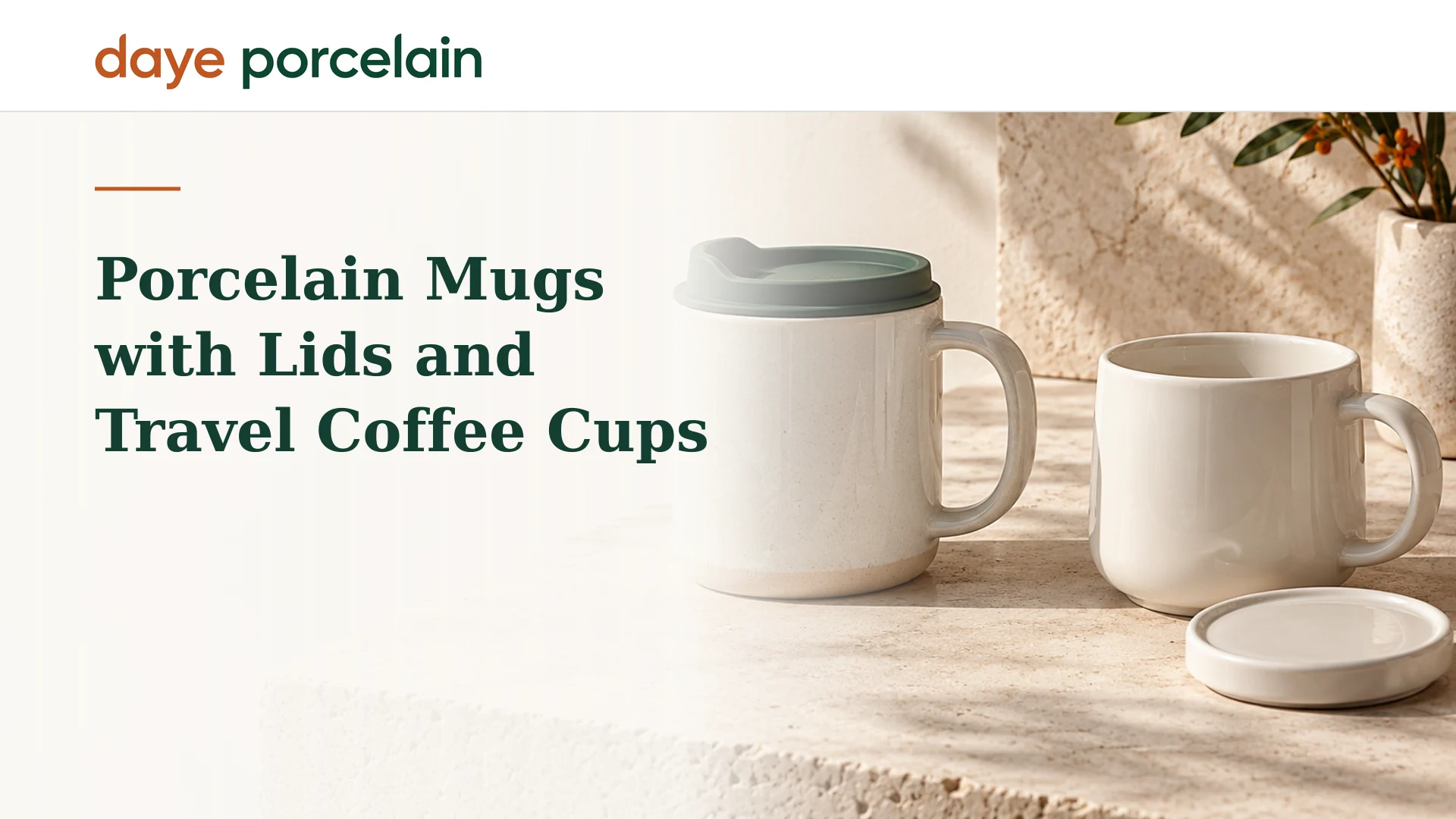
An image of a porcelain mug with a lid does not tell a buyer whether the lid is a dust cover, a splash guard, or a secure closure. Those are different products with different development and test needs. A ceramic lid that rests on a desk mug may be ideal for tea service and unsuitable for a commuter’s bag. A travel cup with a silicone seal may solve spills but add parts, cleaning steps, and new food-contact evidence.
This guide helps brands define a lidded porcelain coffee mug or travel coffee mug before asking for tooling and price. It compares use cases, body and lid interfaces, cleaning, safety claims, packaging, and supplier responsibility. It is for a new OEM or ODM program, not a claim that every lidded shape in a catalog is available for immediate wholesale purchase.
Key takeaways
- A desk lid, splash lid, and sealed travel closure support different claims.
- Test lid fit across normal ceramic rim variation, not one matched sample.
- Review every food-contact component and its separate cleaning instructions.
- Write spill, heat, and care copy from evidence for the final assembly.
Name the use case precisely
First decide whether the mug will sit on a desk, be carried across a café, ride in a car cup holder, or travel inside a bag. A desk cover may keep dust away and provide a resting place for a tea infuser. A café takeaway cup should resist splashes during walking and allow a comfortable sip. A bag-carried vessel needs a closure that remains secure under tipping and handling. These scenarios should not share the same unqualified “spillproof” or “leakproof” copy.
Define the beverage, practical fill, expected temperature, duration of use, and cleaning routine. A hot coffee cup may need a sleeve or a double-wall body for comfort, but no material label guarantees an acceptable outside surface temperature. A travel design should also be assessed for one-handed operation if that is part of the user promise. More complex mechanisms can be less pleasant to clean, so ask testers to use the cup for a week rather than approving only a showroom sample.
If the brand wants a full travel product, list the intended carrying conditions explicitly. “Splash resistant when upright” is a narrower claim than “leakproof in a bag.” A lid with a sip opening can still leak through the opening; a gasket may improve sealing but can be misplaced or worn. Decide the claim only after a defined test of the final assembly. Words on a pack are product specifications with consequences, not decorative adjectives.
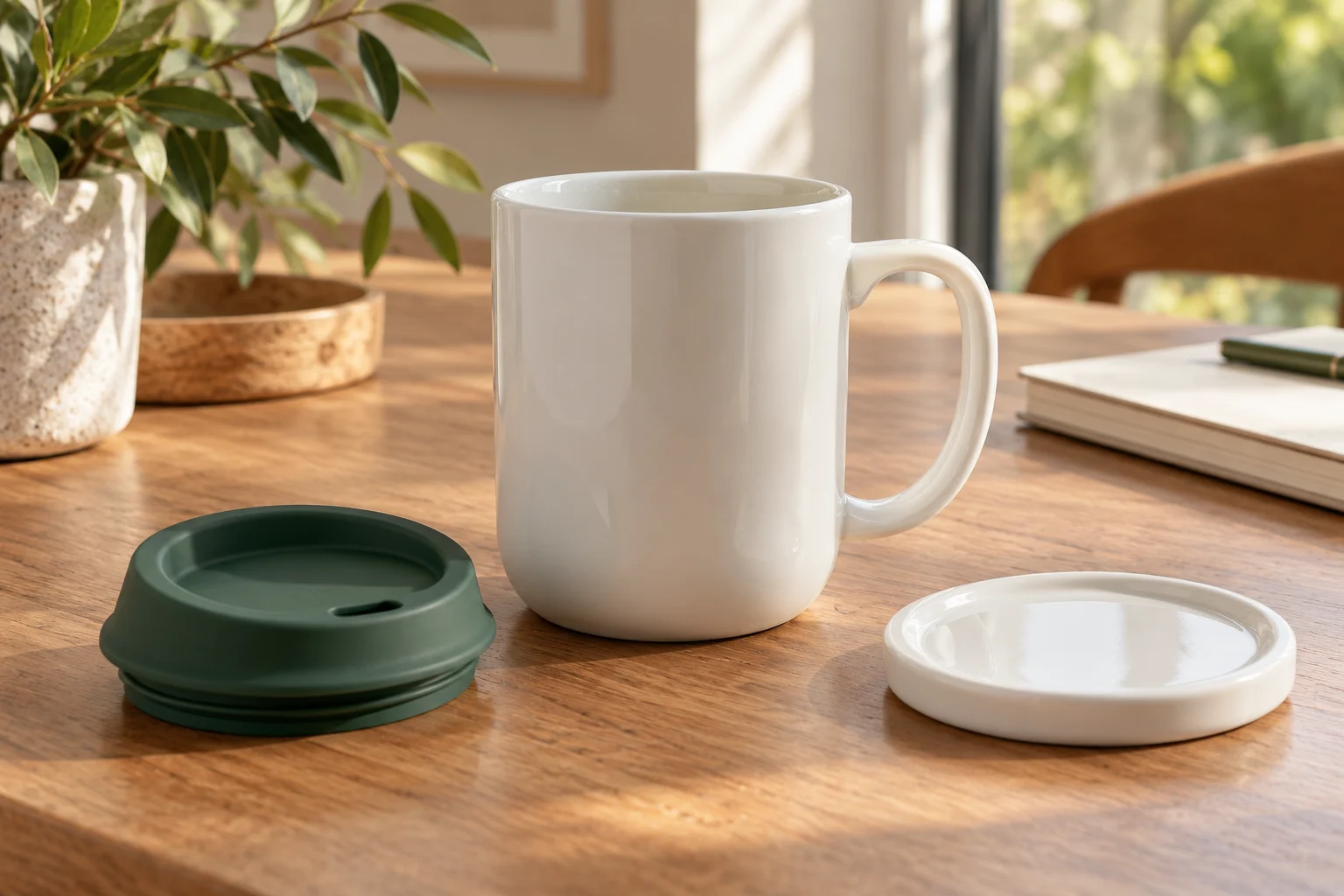
Illustrative component view: a desk lid and a sip lid serve different uses.
Compare lid architectures
|
Lid system |
Intended use |
Main concern to test |
|---|---|---|
|
Loose porcelain cover |
Desk or tea service |
Fit, heat handling, and ceramic contact in pack. |
|
Press-on sip lid |
Upright walking or takeaway |
Retention, splash behavior, cleaning, and material contact. |
|
Sealed closure |
More demanding carrying |
Leakage under defined motion, gasket life, and user operation. |
|
Lid with infuser |
Loose-leaf tea at a desk |
Drips, removal, component fit, and cleaning. |
The table describes development routes, not performance grades. A specific press-on lid may work well or poorly depending on its tolerance and the ceramic rim. The mug body itself has manufacturing variation; the lid needs to accommodate the allowed rim range without becoming too loose or too difficult to remove. Test several pilot bodies and lids across production tolerances, not only one perfectly matched pair.
If the lid is plastic, silicone, metal, or a combination, identify every supplier and material. The top of a hot beverage may contact the underside of the lid and sip opening, so the component’s intended contact conditions matter. A report for the porcelain body is insufficient evidence for the entire assembly. Request component drawings, care instructions, replacement-part policy, and any needed market-specific declarations.
Develop the ceramic body around the lid
It is tempting to design a handsome mug and search for a lid that almost fits. A travel program works better when the rim and lid interface are specified together. The rim diameter, roundness, lip profile, and glaze thickness influence retention. A lid designed for a perfectly circular drawing may behave differently on normal production pieces. Set fit criteria for ease of application, removal force, and leakage performance under the intended conditions.
The body still needs a comfortable drinking experience when the lid is off. Check rim feel, handle or sleeve grip, practical fill, base stability, and outside temperature. A tall porcelain travel cup may fit a car cup holder better than a wide handled mug, but vehicle holders vary. If that fit is a selling point, define the dimensional envelope and test several representative holders. Do not claim universal fit from one sample car.
Double-wall ceramic construction can change the hand feel, weight, and internal volume. Ask the manufacturer to explain the proposed structure and how it will be inspected. A double wall is not a promise of vacuum insulation. The design should be evaluated with actual drink temperatures and a defined measurement method before using comparative heat claims. The body may also have a small vent or structural details that affect cleaning and care; record them in the approved sample.
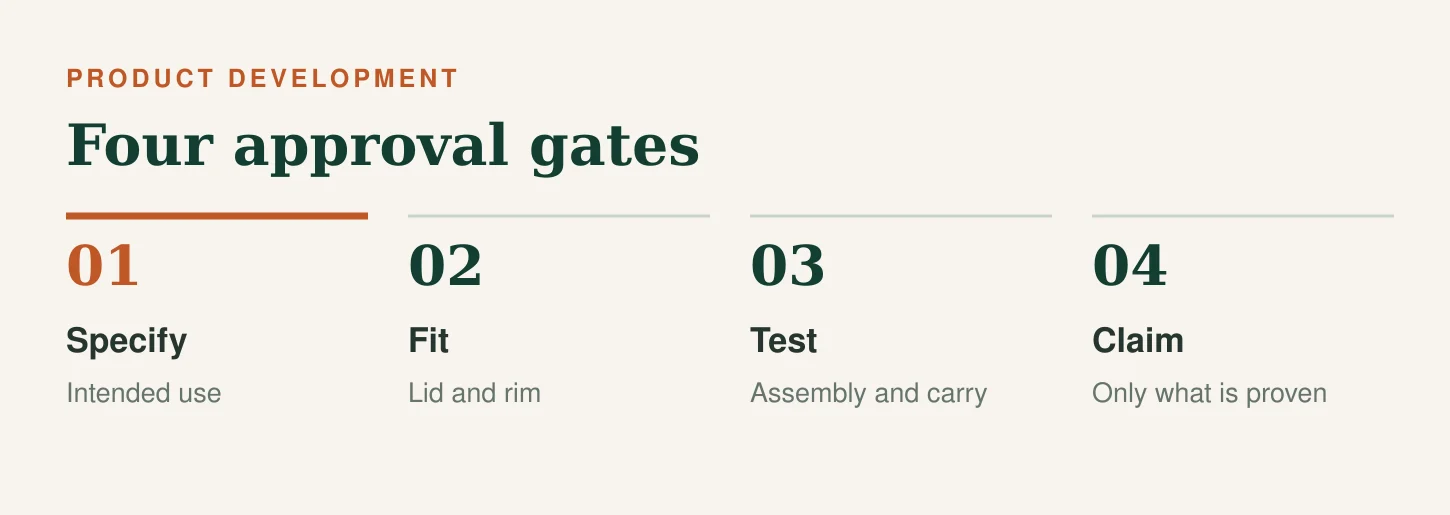
Approval gates for this product brief; the final steps depend on the project.
Test the system, not just its parts
For a desk lid, inspect fit and ceramic-to-ceramic contact. For a takeaway lid, evaluate splashing when carried upright and the comfort of sipping. For a stronger closure claim, specify how the assembled cup is filled, closed, tipped, shaken, and observed. Add repeated open-close cycles if the product will be used frequently. A consumer organization such as Poland’s UOKiK has tested travel mugs for temperature retention, lid function, leakage, and washing effects; that illustrates why these are separate dimensions of performance, not interchangeable labels.
Drop and transit assessment should reflect the chosen channel. Porcelain can chip or break if a cup falls, even when the lid stays attached. A bag-use promise raises different expectations from a desk cup. Do not imply that a ceramic vessel is shatterproof. Instead, define a realistic handling test and explain limitations honestly in consumer instructions. The result should determine packaging, care, and claim language.
Cleaning is a frequent blind spot. A gasket can trap residue; a sip valve may be hard to reach; a lid material may have different dishwasher guidance from the body. Ask the factory for an assembly diagram and demonstrate how a user removes and replaces any seal. If a component is not designed to be removed, evaluate cleaning access. A leak-resistant product that users cannot clean comfortably will generate complaints even if it passes a short bench test.
Food-contact and care evidence
The finished cup may combine porcelain, glaze, decoration, silicone, plastic, adhesive, and printing. Map each food-contact or likely beverage-contact surface. For US sales, FDA guidance addresses lead and cadmium leaching from ceramicware; other materials require their own applicable review. In the EU, the food-contact framework and GMP rules apply, with material-specific rules where relevant. The precise obligations depend on composition and destination, so collect product-specific evidence rather than calling the assembly “FDA certified.”
Microwave suitability is particularly easy to overstate. A plain ceramic body may have one care instruction while a metallic motif, lid, or seal has another. If the customer must remove the lid before heating, state that clearly and validate the remaining body. Dishwasher instructions can also differ by component. Put the actual approved care text in the product file and on consumer packaging; do not copy icons from a previous model without checking the construction.
Tie every report to the current configuration. A new gasket supplier, lid resin, glaze, or decoration can change the evidence basis. The buyer should maintain a bill of materials and a change-control process that identifies when a retest or label update is needed. An in-house physical test is useful, but it is not the same thing as an independent market-specific food-contact assessment.
Packaging and after-sales planning
A lidded cup ships as an assembly. A loose ceramic lid must not strike the rim; a press-on lid should not deform in its box. Test the packed unit and the master carton for the planned route to store or customer. A reusable cup may be sold with a sleeve, seal, or infuser, so the pack should list each included part clearly. Ask whether replacement lids or gaskets can be supplied if the brand expects an extended product life.
For a retail launch, decide how the customer will understand the claim on the shelf. An upright lifestyle photo can make a splash-resistant cup look bag-safe unless copy is specific. A diagram of the closure and honest care guidance may reduce returns more effectively than a vague “go anywhere” slogan. A hospitality buyer may prioritize a lid that is simple to wash and replace over an elaborate lock. Match the architecture to the channel rather than importing a feature list from a competitor.
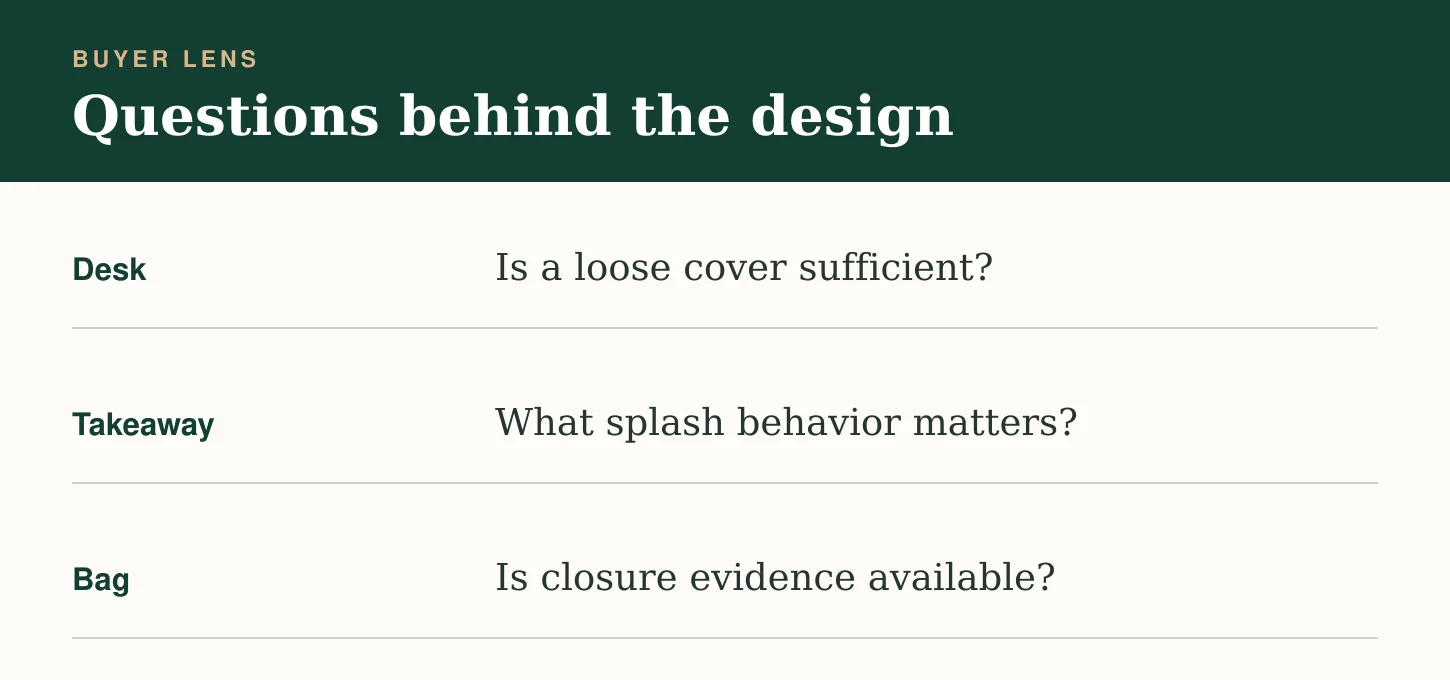
Buyer questions that should inform the approved product specification.
Brief a manufacturer for two alternatives
If the use case is uncertain, request two defined concepts: a lidded desk mug and a true takeaway design. Give both the target fill, preferred shape, sales markets, cleaning routine, packaging channel, and claim language you hope to substantiate. Ask for a sample path that checks fit across several ceramic bodies and lids. Require a cost breakdown for tooling, accessories, testing, and replacement parts. That comparison exposes the price and maintenance consequences of “travel” before a purchase order.
Run a short field trial before choosing the lid
Give representative users production-standard samples and ask them to repeat the intended routine. A café operator can fill, close, hand over, and clean the cup several times. An office user can carry it upright from a kitchen and leave it on a desk. A commuter can assess grip and cup-holder fit under safe, ordinary conditions. Do not turn the trial into an unsupported bag-leak claim; a formal claim still needs a defined test. The field trial reveals usability issues that a bench test may miss, such as a lid that requires two hands or a sip opening that drips on the rim.
Ask testers to clean and reassemble the product without instructions, then with the proposed instructions. If a gasket is hard to remove, record whether cleaning is practical and whether people put it back correctly. Compare the body and lid after repeated washing under the intended care method. If a part is likely to be lost, decide whether the brand can supply it and how the correct revision will be identified. A replacement lid for a subtly revised ceramic rim may not fit older cups.
Finally, make a claim table for the approved product: upright splash behavior, tip leakage, temperature, dishwasher instructions by component, and microwave instructions by component. For each line, attach the evidence and the exact wording the customer will see. If there is no supporting result, remove or narrow the claim before the box is printed. This process keeps marketing, engineering, and customer service aligned and prevents a desk mug from being sold as an all-purpose travel vessel simply because the images show someone outdoors.
Include a return-analysis plan in the first production order. If customers report leaks, determine whether the cause is a damaged ceramic rim, a missing gasket, incorrect closure, or a claim that set the wrong expectation. Photograph and code returns by failure mode. The remedy might be an instruction change, a tighter component tolerance, or a new lid; treating every complaint as “bad porcelain” will not solve the system problem. The buyer should agree with the supplier how a component defect is traced and corrected.
Daye Porcelain’s custom mug page and special-structure cup page are relevant starting points for feasibility questions. Its prototyping page describes the development path. Submit a drawing or reference, intended use, market, target volume, and lid performance target through the project inquiry form. Any claim about sealing, temperature, minimum quantity, or timing must be confirmed for the actual design.
Frequently asked questions
Is a porcelain mug with a lid leakproof?
No conclusion follows from the presence of a lid. A loose cover, splash guard, and sealed closure are different systems. Ask for a defined leakage test of the final assembly before using a leakproof claim.
Does a double-wall porcelain travel cup insulate like a steel vacuum flask?
Not by default. Double-wall geometry and vacuum insulation are different constructions. Compare the actual products under the same fill, starting temperature, and ambient conditions before making a duration claim.
Can the porcelain body and the lid go in the dishwasher together?
Only if the finished components and their decorations have been assessed for that use. A body and a plastic, silicone, or ceramic lid can carry different instructions. Make the labeling clear.
What should be included in a lidded cup RFQ?
Describe the use scenario, practical fill, lid type, desired spill claim, cleaning method, target market, materials, decoration, packaging, volume forecast, and sample tests. Ask who supplies each component and what happens when one changes.