Table of Contents
ARTICLE 06 | MARKET APPLICATIONS & TRENDS
CORE KEYWORD scented candles gift set wholesale
Scented candles gift set wholesale programs sell a complete occasion, not simply several candles in one box. The buyer must decide who will receive the set, how the fragrances relate, how the ceramic vessels are protected, and how each item and the outer pack will be labeled. A porcelain-led gift collection can give a brand a lasting visual signature, but the assortment should be planned against a real delivery date and a realistic sell-through period.
Daye Porcelain’s documented work is custom ceramics. A brand may discuss porcelain vessels, lids and decoration with Daye, while a qualified candle specialist supplies wax, fragrance, wick, pouring, finished-product testing and labels. Daye’s public materials do not establish a finished scented-candle line. This guide treats the two scopes separately so a retailer, distributor or corporate buyer can commission an attractive set with clear product accountability.
Key takeaways
- Design the gift set around a recipient, price point and unboxing sequence.
- Use a controlled vessel platform and a limited fragrance story to simplify sampling and reorders.
- Test each finished candle configuration and trial the assembled gift box for its shipping route.
- Build seasonal calendars around sample approval, labeling, pack production and final delivery.
Select the occasion and sales channel
A three-scent discovery set has a different role from one large candle in a presentation box. A boutique may want a small collection that customers can compare in person; a corporate buyer may need individual delivery and co-branded packaging; a hotel or event may seek a memorable welcome gift. State the recipient, retail or contract price, order volume, customization level, delivery route and the point in the year when the set must be in hand. These decisions guide candle size, vessel weight and carton structure.
For Christmas, identify whether the gift is a limited fragrance collection or a seasonal wrap around core candles. A seasonal sleeve or card may preserve the usefulness of standard vessels if demand is uncertain. A completely new vessel, lid and box can be more distinctive, but it needs earlier tooling, sampling and technical review. Avoid a large commitment based only on an attractive rendering. The commercial plan should show when unsold seasonal stock will be discounted, repacked or held, if that is feasible and truthful.
Corporate programs often involve a second brand’s logo. Agree on trademark permission, artwork ownership, exact placement, color approval, minimums, proofing and whether the co-branded item can be sold elsewhere. A buyer may also request a message card, outer sleeve, address label or individual mailer. These are different components with separate lead times. The supplier quote should specify whether it covers candles alone, assembled gift boxes, individual shipment or final distribution.
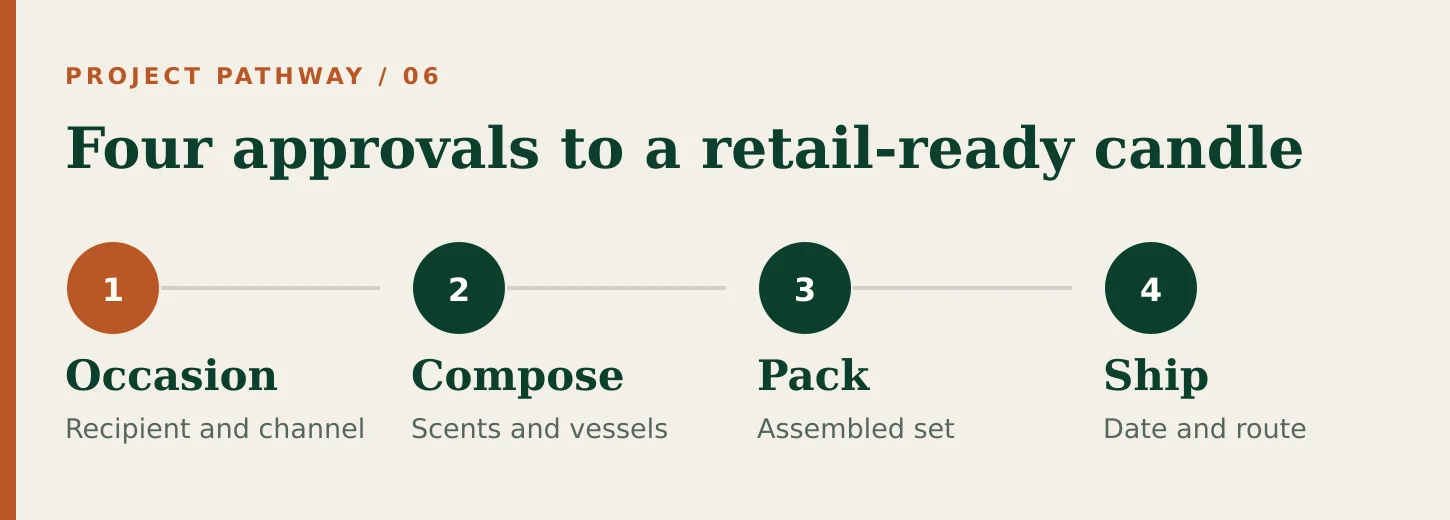
Illustrative approval sequence for the buyer, ceramic maker and finished-candle specialist.
Build a coherent fragrance journey
A gift set should give the recipient meaningful variety without feeling random. One approach is a progression from bright to floral to warm notes; another is a place or season story that unifies packaging and scent names. Test the selection with target users or experienced buyers, then lock the formulas with the candle maker. Fragrance language can be evocative, but claims about therapy, air purification or universal sensitivity need evidence and should be avoided unless substantiated for the intended market.
Different scents may require different wick choices or labels even in the same porcelain vessel. The filler should assess each wax, fragrance, wick and vessel combination and keep a distinct SKU file. IFRA documentation relates to fragrance ingredient use, while the finished candle still needs performance and market labeling review. A generic warning copied across the whole gift set may miss formula-specific information. Ask the responsible business to decide how the individual candles and the set’s outer packaging display required information without losing legibility.
A mixed gift set can use shared ceramic form and different scent labels. This is often easier to replenish than three different molds. The visual variety can come from a restrained label palette, small lid markers or sleeve. If the vessels have different glazes, obtain fired masters and make sure the candle specialist considers any difference that could matter to the final product. The customer should be able to identify each scent after removing the candles from the box.
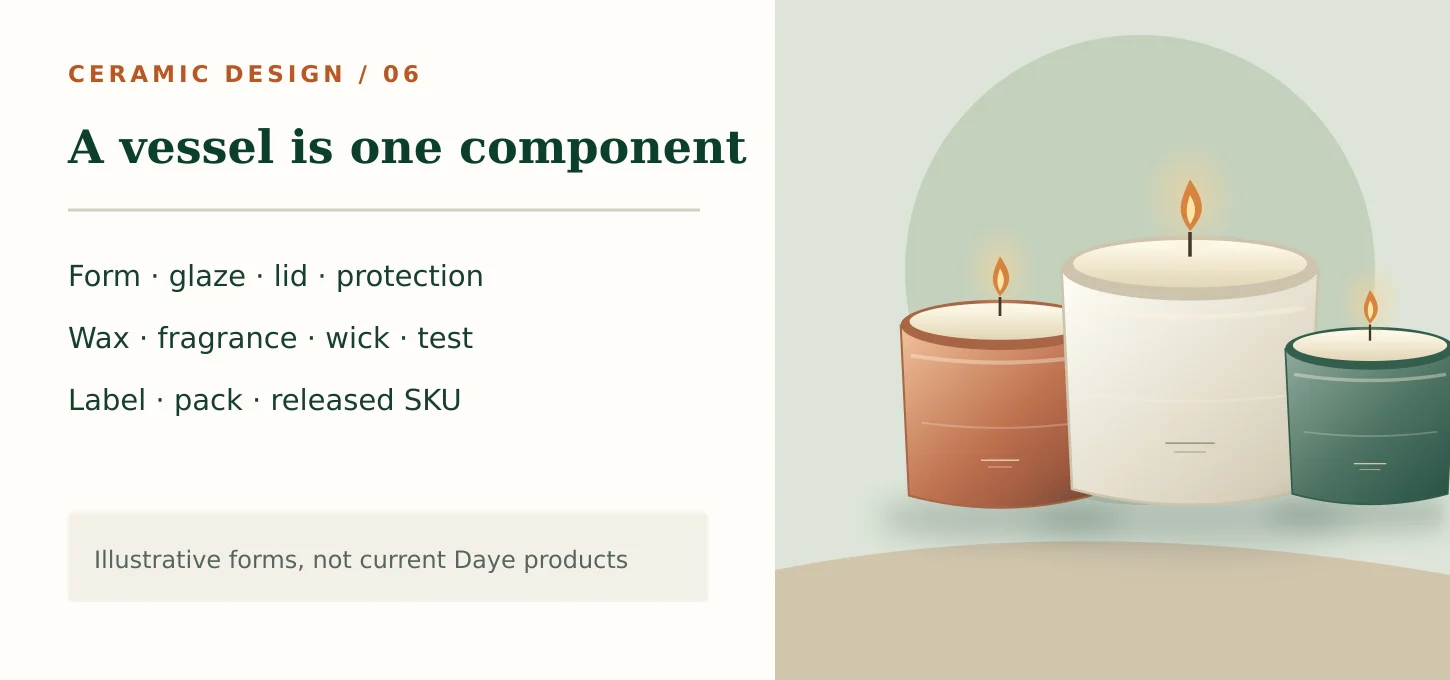
Conceptual porcelain candle-vessel illustration. These are not current Daye products.
Design porcelain components for gifting
A porcelain candle vessel can serve as the collection’s tactile anchor. Shape, glaze, relief logo, lid and base treatment determine whether the set feels coherent when opened. Daye’s design development and quality control information offer starting points for a custom ceramic brief. Send dimensions, required internal volume for the filler to validate, intended finish, logo treatment, expected variation, lid requirement, pack layout and quantity by variant.
A small gift candle is not automatically easier than a large one. A different vessel size changes the wick and burn system; a tight gift box may expose the rim to impact. Ask for fired samples from a representative process and let the filler develop the final candle within them. Inspect the rim, foot, glaze, lid fit and label area. If a ceramic ornament, spoon or accessory is added, clarify its intended use and safety requirements separately. Do not present decorative accessories as candle tools without evaluating their use.
Think about the weight and center of gravity of the entire set. Three porcelain vessels need dividers that prevent contact, a base that supports the load and a way to lift the first candle without damaging the finish. A satin ribbon may look good but should not be the only structural restraint. The outer box should open cleanly, display any required product information, and withstand the planned distribution route. The set should still look attractive after a buyer opens it to inspect the contents.
Make the pack work at three levels
There is the individual candle, the gift set, and the shipping carton. Each level needs a defined specification. The individual candle may carry a bottom or side label and a dust cover or lid. The gift box needs dividers, artwork and potentially a list of contents. The master carton must protect the full weight in warehouse and freight handling. A direct-to-consumer mailer may need additional cushioning. Photograph and retain a fully assembled approved example, not a collection of separate component swatches.
Run a representative transit trial with filled, labeled candles in final boxes. Check glaze scuffs, chipped rims, shifted lids, wax marks, crushed corners, torn inserts and barcode readability. An overseas vessel might reach the filler in one protective pack, then move into a completely different retail box; inspect the handoff for handling damage. Ask how rejected vessels and damaged finished sets will be recorded and replaced before a seasonal ship date.
If the set includes a candle care card, review it alongside the actual tested product. Avoid generic instructions that conflict with wick count, vessel size or warning label. Ensure the recipient can see the scent identity and correct use information after the outer packaging is discarded. A premium gift experience should make safe use simple and understandable.
|
Gift-set layer |
What to approve |
Typical failure to catch |
|---|---|---|
|
Porcelain vessel |
Fired form, finish, lid and variation |
Chips, rocking, mismatched lids |
|
Finished candle |
Formula, wick, burn and label |
Uneven performance or wrong scent |
|
Presentation box |
Fit, dividers, artwork and information |
Rubbing or unclear contents |
|
Shipping pack |
Carton count and route-specific protection |
Damage before retail delivery |
|
Reorder file |
SKU, revisions, component stock and dates |
Inconsistent second production |
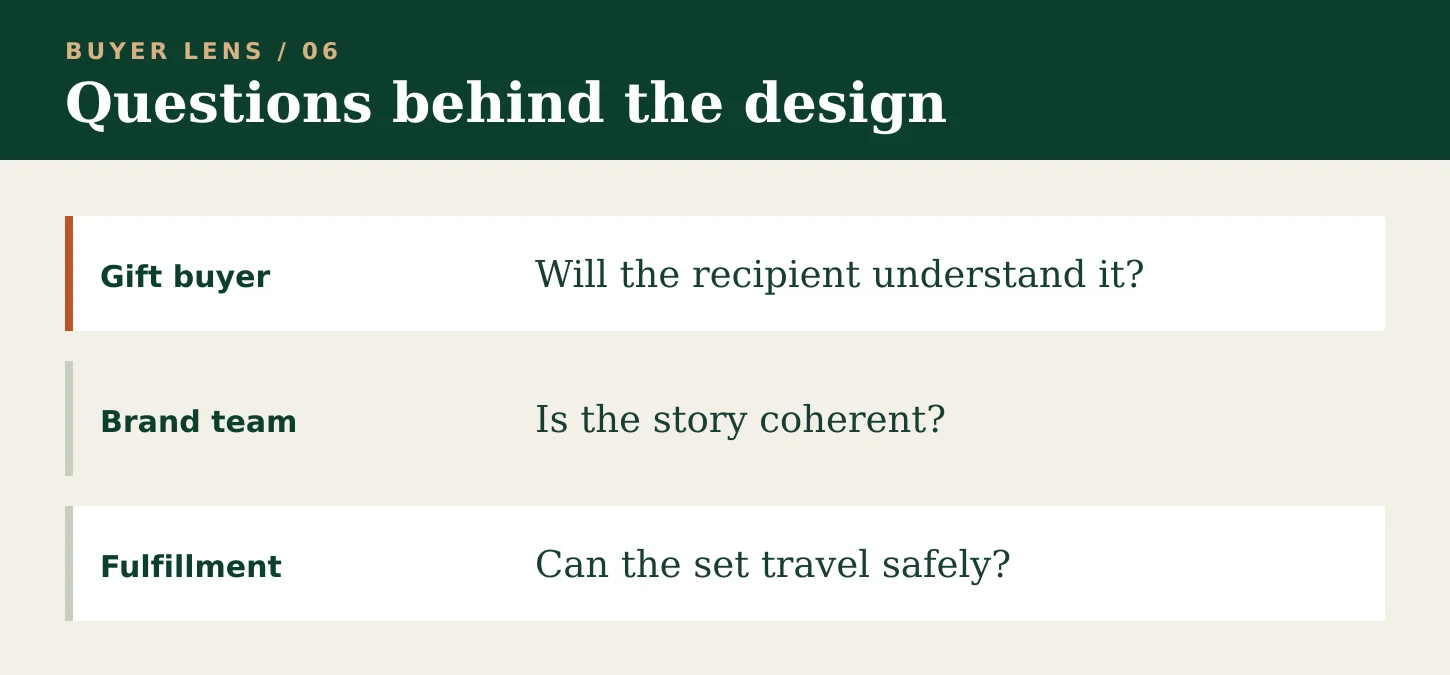
Buyer questions that guide scope, quality evidence and replenishment.
Schedule the seasonal program backward
Begin with the in-store or delivery date. Work backward through retailer intake, final inspection, filling, printed-pack arrival, vessel production and freight, approved fired samples, filled pilots, test work, label sign-off and artwork. Put a named owner and decision date against each gate. A holiday gift program can miss its selling window even when all components eventually arrive. Allow time for corrections after the first assembled sample; packaging fit problems often appear only when real production parts are used.
For a corporate program, confirm recipient counts and addresses by a contracted deadline, and distinguish bulk delivery from individual fulfillment. A buyer may want 500 gifts delivered to one warehouse or 500 individually boxed parcels; those are different unit economics and quality checks. If the brand offers personalization, define whether it is on a removable card, printed sleeve or permanent ceramic decoration. Late names or logos should not delay a vessel production run if a separate pack component can carry the variable content.
A seasonal forecast should be by gift-set SKU and by its individual candle components. If one fragrance sells out or fails inspection, can the set be assembled from approved stock, or does it require a new formula and test? Agree on overage, partial delivery and substitutions before the purchase order. Avoid unapproved replacement scents in a gift set whose box names a specific collection. The commercial team should understand what happens to surplus branded boxes if the season ends.
Calculate wholesale economics for a set
The cost includes ceramic tooling if applicable, each vessel and lid, transport to the filler, wax, fragrance, wick, filling, individual labels, test work, gift box, dividers, inserts, assembly, master carton, inspection, freight, storage and damage allowance. A “scented gift candle price wholesale” may cover only one candle, not the assembled presentation unit. Ask suppliers to quote component and final-set prices with the same delivery terms. The target retailer margin should be tested against a realistic shelf price and any planned promotions.
Simplify where it does not weaken the gift. One porcelain form across fragrances can reduce tooling; a well-designed printed sleeve may refresh a standard box; a single insert style can protect several scents. Spend where the customer sees and feels value, while retaining the technical controls that make the candle safe and repeatable. A lower purchase price does not help if boxes break in transit or the line misses the holiday launch.
For a Daye vessel inquiry, use its project contact and provide the set concept, vessel drawing, finish and lid, quantity per candle variant, target destination and filling partner. Ask the candle specialist to review the sample plan and pack arrangement early. The brand should sign off the fully assembled, labeled and tested gift set before placing a large wholesale order.
Give the recipient a useful product story
A concise insert can explain the fragrance selection and identify the porcelain vessel design without claiming that the ceramic maker produced the wax-filled candle. It can direct the recipient to the actual care and warning information. Keep the story consistent with the outer pack, the brand website and the wholesale line sheet. The gift should remain understandable after the recipient separates the individual candles from the presentation box.
A gift set also needs a clear replacement policy. If one candle breaks in transit, decide whether the retailer receives one replacement component or a complete new set, and how the damaged item is recorded. For a numbered or limited holiday collection, spare lids, vessels and outer boxes may be needed to keep replacements visually consistent. The plan should protect the customer’s experience without hiding a recurring packaging defect. Ask the warehouse to separate cosmetic box damage from broken ceramic or product-label errors in its reports. These categories lead to different fixes and different responsibility across the suppliers.
FAQ
How many scents belong in a candle gift set?
Choose a number that fits the recipient, box size, target price and capacity to test and replenish every finished SKU. A small coherent selection is generally easier to explain and control than many loosely related scents.
Can a Christmas sleeve turn a core candle into a seasonal gift?
It can be a useful merchandising route if the core candle and its required information remain accurate and visible. The sleeve, pack and assembled product still need physical approval for the intended channel.
Can Daye supply the whole filled gift set?
Its published materials establish custom ceramic manufacturing, not finished candle filling. Discuss vessels and lids with Daye, and confirm any broader scope directly. Assign the finished candle and set approval to the responsible program owner.
Must every scent have separate safety information?
The responsible candle specialist should assess each formula and finished configuration. Fragrance-specific classification or warnings may differ; final labels should be reviewed for the target market and actual formula.
What should a corporate buyer include in the order?
Specify set contents, approved artwork, logo rights, quantities, packing, message cards, recipient delivery method, evidence and inspection requirements, change rules and the date gifts must arrive.